Exoplanets: The Search for Earth 2.0
Discover how astronomers find exoplanets, what makes a planet habitable, and the latest discoveries in the search for Earth 2.0.
Discover how astronomers find exoplanets, what makes a planet habitable, and the latest discoveries in the search for Earth 2.0.
For most of human history, when we looked up at the night sky, we saw stars—and nothing else. The idea that those distant points of light might host their own families of planets was purely the realm of science fiction and philosophical speculation. Do other worlds exist? Could they support life? Are we alone in the universe?
Today, those questions are no longer science fiction. We are living in a golden age of astronomy. In just a few decades, we have gone from knowing only the planets in our own Solar System to discovering thousands of planets orbiting other stars. These distant worlds are called exoplanets (extrasolar planets).
Astronomers aren’t just looking for hot gas giants or barren rocks; the ultimate goal is to find “Earth 2.0”—a rocky planet with a breathable atmosphere, liquid water, and the potential to harbor life.
Let’s explore how scientists find these hidden worlds, what makes a planet habitable, and how close we are to answering whether anyone else is out there or not.
An exoplanet is simply any planet that orbits a star outside our solar system.
When we hear the world planet or exoplanet, we think of planets like Earth, Mars, and other from our solar system. But as astronomers have explored the night sky in search of exoplanets, they have found a vast variety of planet types and environment - some of which were thought not possible to exist.
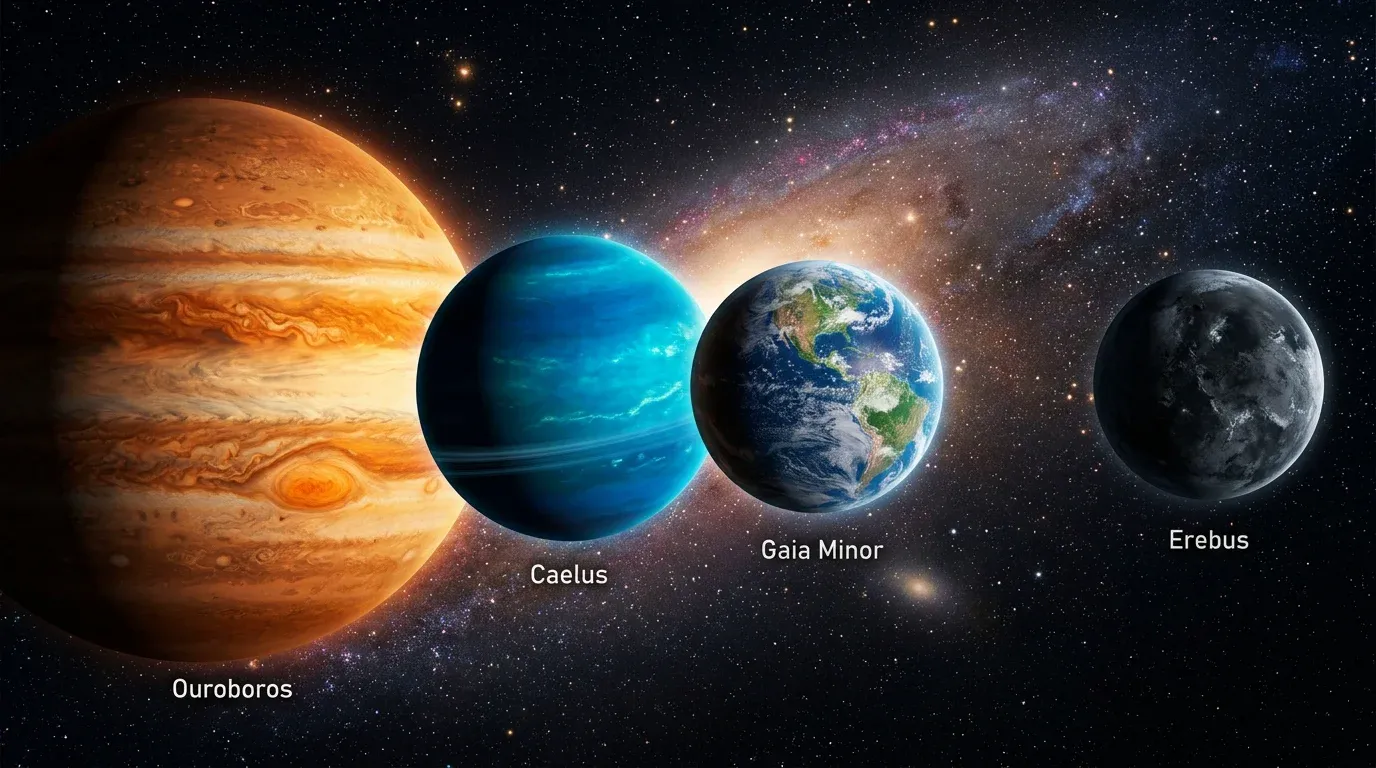
Our solar system has two main types of planets: small, rocky terrestrial planets (like Earth and Mars) and massive gas giants (like Jupiter and Saturn). However, the universe is far more creative. Astronomers classify exoplanets into several main categories:
[!NOTE] The very first exoplanets were discovered in 1992, but they weren’t orbiting a normal star. They were found orbiting a pulsar—the rapidly spinning, dead core of a collapsed star.
Stars are incredibly bright, and planets are incredibly dim. Trying to see a planet orbiting a distant star is often compared to trying to see a firefly buzzing around a searchlight from hundreds of miles away. Because direct observation is so difficult, astronomers had to get creative. They look for the effects a planet has on its host star.
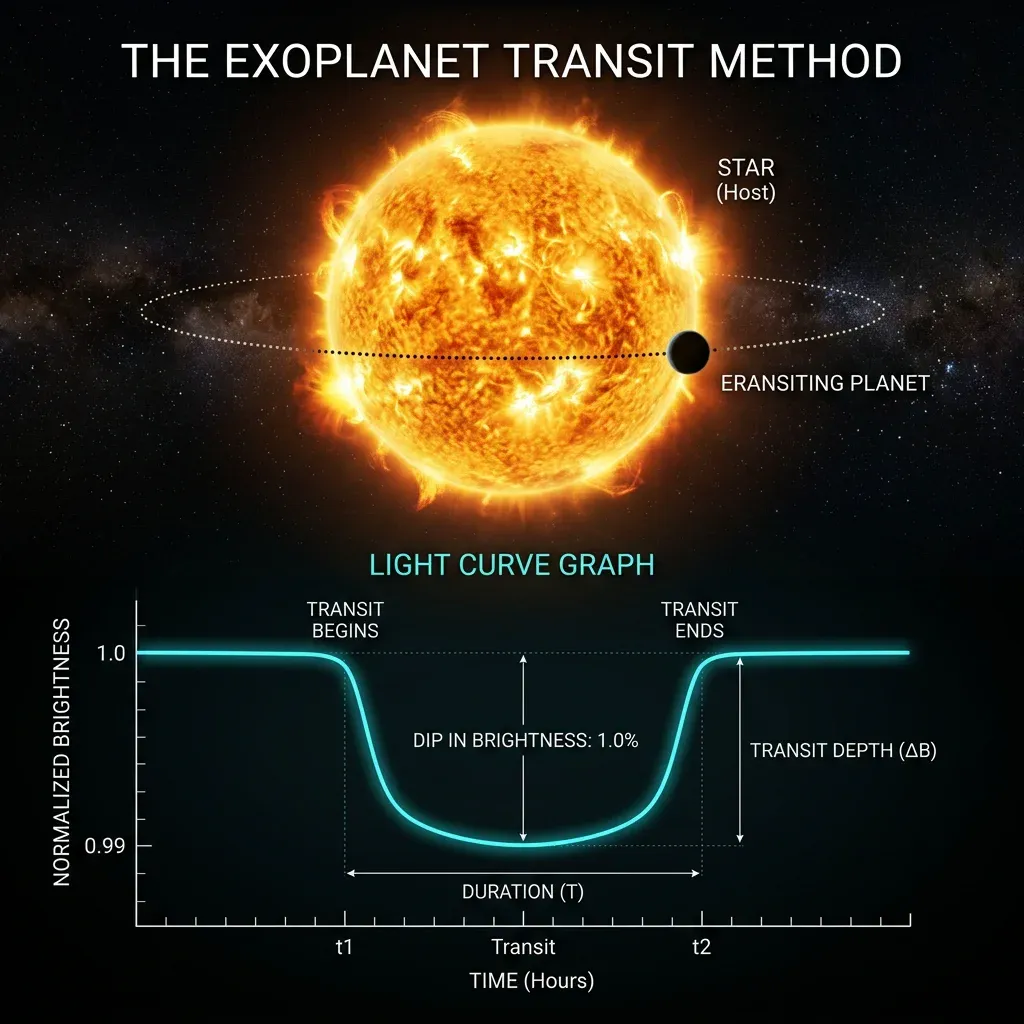
The transit method is currently the most successful way to find exoplanets. It works by measuring the brightness of a star over time. When a planet passes directly between its star and our telescopes (a “transit”), it blocks a tiny fraction of the star’s light.
By analyzing this microscopic dip in brightness, astronomers can determine several things:
The Kepler Space Telescope used this method to discover over 2,600 exoplanets by continuously staring at a patch of sky containing 150,000 stars.
While the transit method measures a star’s brightness, the radial velocity method measures a star’s movement.
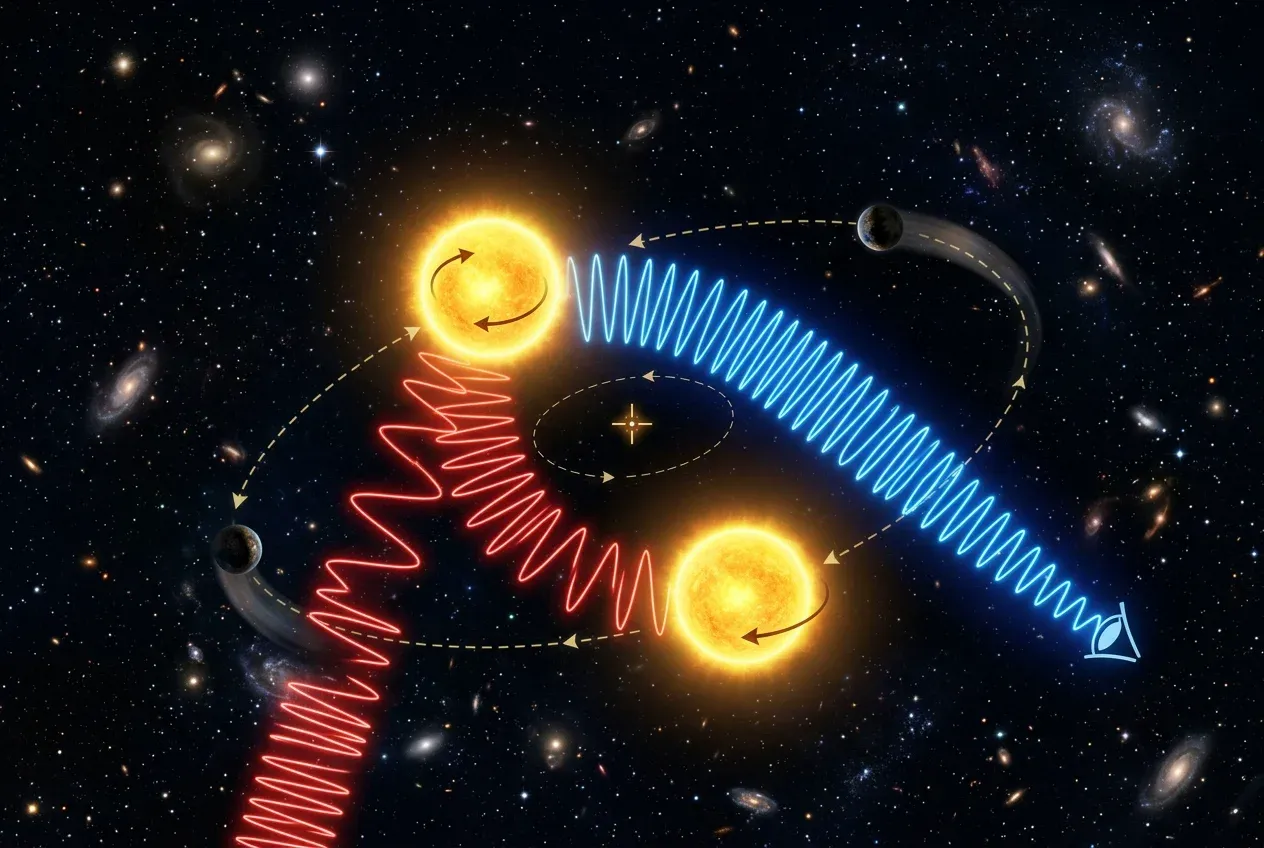
Gravity is a two-way street. A star pulls on its planet, but the planet also pulls on its star. This mutual attraction causes both bodies to orbit a common center of mass. Because the star is much heavier, the center of mass is usually inside the star itself, making it look like the star is “wobbling.”
As the star wobbles toward Earth, its light waves are compressed, shifting toward the blue end of the spectrum (blueshift). As it wobbles away, the light stretches toward the red end (redshift). By measuring this Doppler shift, astronomers can detect the planet and calculate its mass.
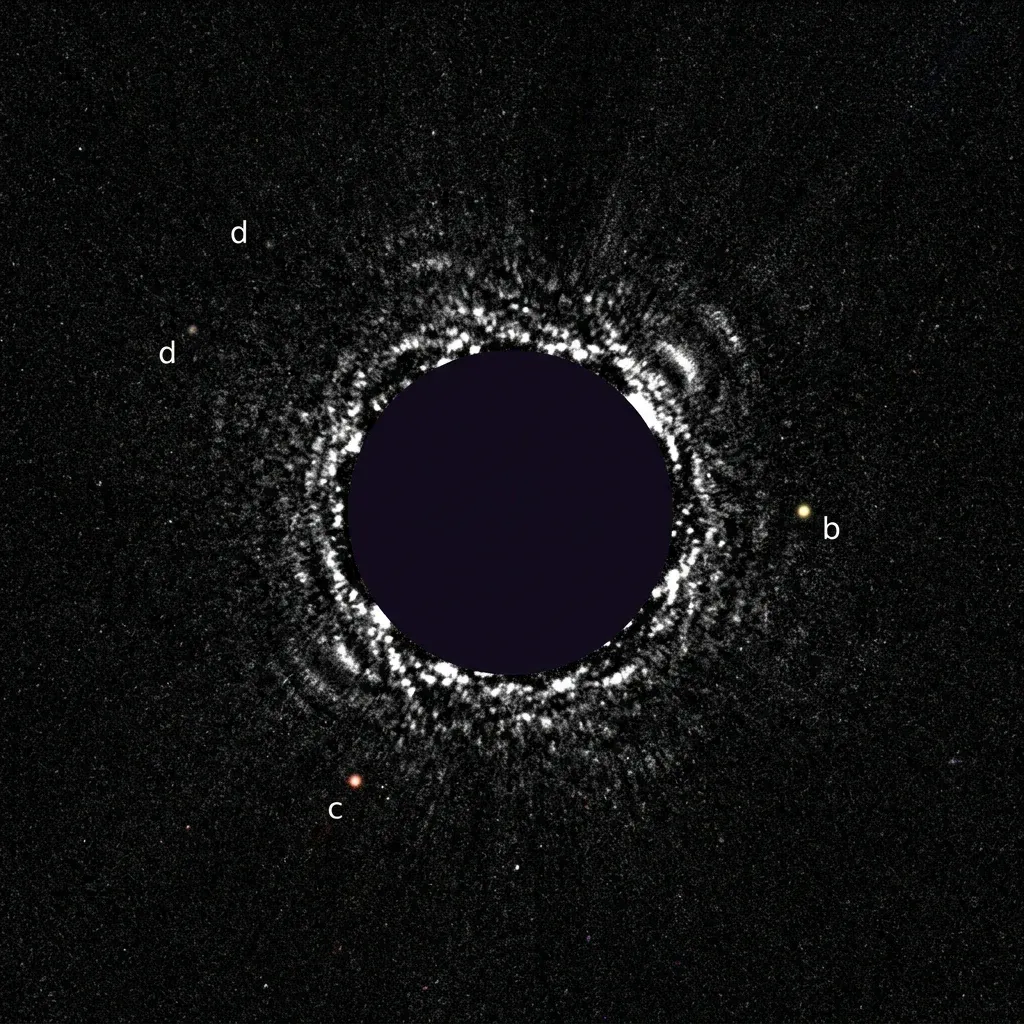
Direct imaging is exactly what it sounds like: taking a picture of the planet. Because of the glare from the host star, this method is incredibly difficult. Astronomers use devices called coronagraphs to physically block the star’s light inside the telescope.
Direct imaging works best for massive planets (like Jupiter) that orbit very far from their host stars and are young enough to still glow brightly with infrared heat from their formation.
Einstein’s theory of general relativity (which you can explore in Gravity in Einstein’s Way) tells us that massive objects bend the fabric of space-time.
When a star with a planet passes directly in front of a more distant background star, the foreground star’s gravity acts like a magnifying glass. This gravity bends and amplifies the background star’s light. If there is a planet orbiting the foreground star, it will create a secondary, smaller spike in magnification. This method is uniquely capable of finding planets in very wide orbits and even rogue planets.
Finding an exoplanet is just the starting point. The ultimate goal is to find a planet capable of sustaining life. Such planets are found in the habitable zones and we are in search of such regions.
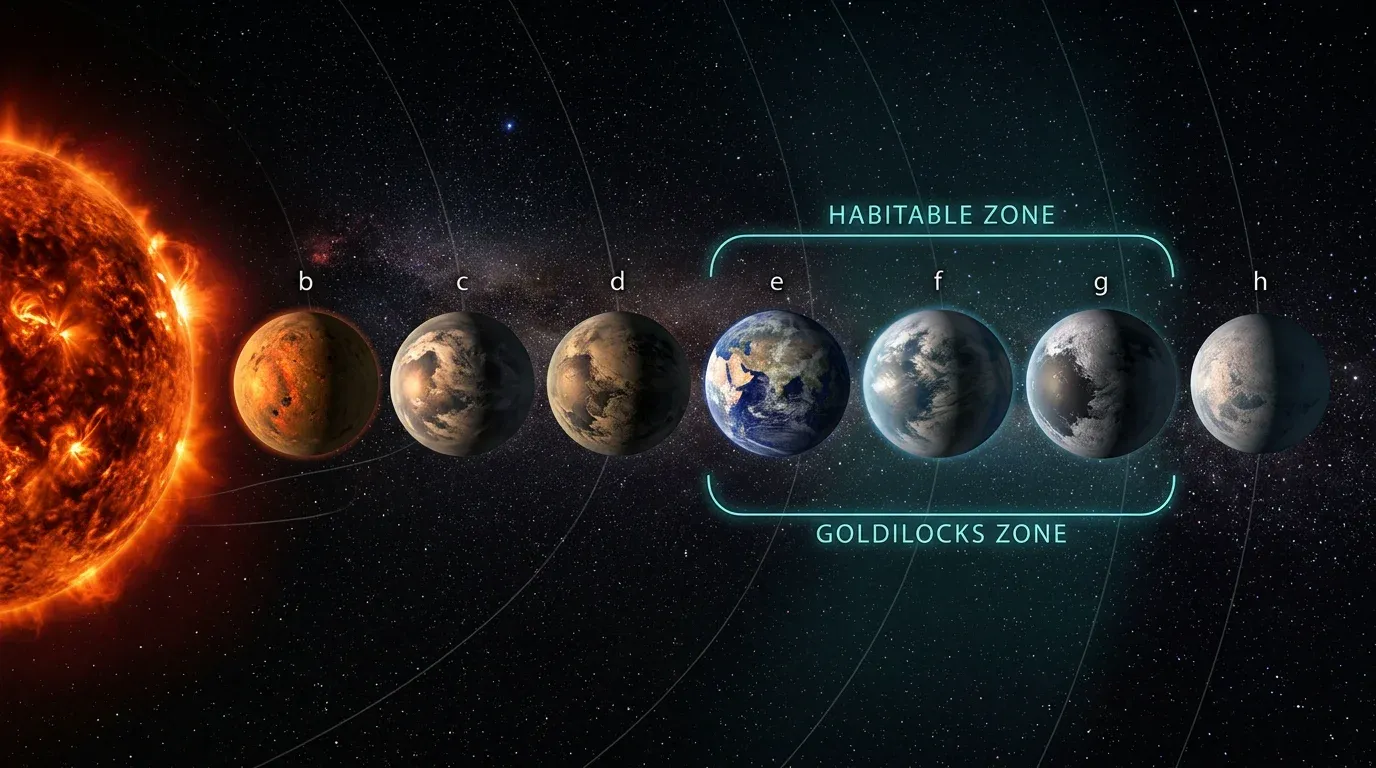
Often referred to as the “Goldilocks Zone,” the habitable zone is the specific region around a star where conditions are just right — not too hot and not too cold, for liquid water to exist on a planet’s surface.
Why water? On Earth, everywhere we find liquid water, we find life. It is the universal solvent that allows complex chemistry to happen.
Being in the habitable zone is a requirement for liquid water, but it is not a guarantee. Several other factors dictate whether a planet is truly habitable:
With over 5,000 confirmed exoplanets, astronomers have identified a handful of tantalizing candidates that might resemble Earth.
Our closest stellar neighbor is a red dwarf star named Proxima Centauri, located just over 4 light-years away. In 2016, astronomers discovered an Earth-sized planet, Proxima b, orbiting within its habitable zone. While it is the closest known exoplanet, we do not yet know if it has an atmosphere or if it has survived the intense stellar flares from its host star.
Discovered in 2017, the TRAPPIST-1 system is one of the most remarkable discoveries in astronomy. Located 40 light-years away, this ultra-cool red dwarf star hosts a system of seven Earth-sized rocky planets. Even more incredible, at least three of these planets orbit squarely within the habitable zone.
Because the star is so small and dim, the planets orbit very close to it. A “year” on these planets takes only a few Earth days. Furthermore, they are likely tidally locked. This means one side of the planet always faces the star in an eternal day, while the other side faces deep space in an eternal night. If life exists there, it might survive in the twilight zone between the two extremes.
Located 500 light-years away, Kepler-186f was the first Earth-sized exoplanet discovered in the habitable zone of another star. Its host star is dimmer and redder than our Sun. If plant life exists on Kepler-186f, its photosynthesis might have adapted to the red-wavelength light, resulting in forests that look red or purple rather than green.
Even if we find an exoplanet in a proper habitable zone, the main question would be if anyone or anything is living there or not?
Since we cannot travel many light-years to take a soil sample, astronomers must rely on biosignatures. Biosignatures are specific gases or combinations of gases in a planet’s atmosphere that are strongly indicative of biological activity.
For example, if alien astronomers were looking at Earth from 50 light-years away, they wouldn’t see our cities. But if they analyzed our atmosphere, they would see large amounts of oxygen alongside methane. In a lifeless atmosphere, oxygen and methane react and destroy each other quickly. The fact that both exist in abundance on Earth proves that something (plants and bacteria) is constantly replenishing them.
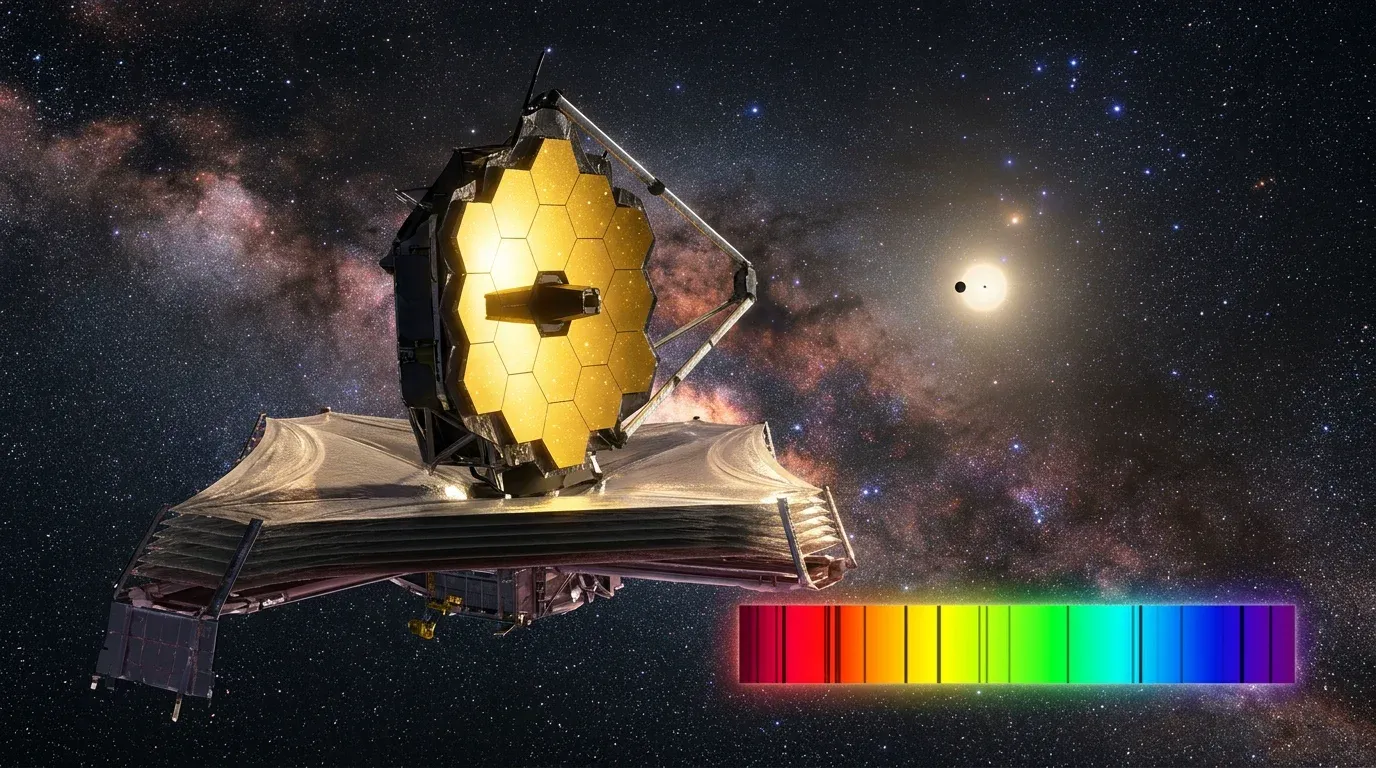
The James Webb Space Telescope (JWST) and future next-generation telescopes are designed to analyze the atmospheres of exoplanets. They do this as the planets transit their host stars. By looking at which wavelengths of starlight are absorbed by the planet’s atmosphere, scientists can determine exactly what gases are present.
Currently, no. The distances are unimaginably vast. Even traveling at the speed of light, it would take over 4 years to reach the closest exoplanet. With our current chemical rockets, the journey would take tens of thousands of years.
No. As of today, Earth remains the only place in the universe where we know life exists. However, the discovery of billions of potentially habitable planets makes many scientists optimistic that we are not alone.
Exoplanets are named after their host star, followed by a lowercase letter. The letter 'b' is given to the first planet discovered in the system, 'c' to the second, and so on. The star itself is considered 'a'.
Applaud the article to let us know. You can clap multiple times!