What Is Atmosphere?
Explore the layers of Earth's atmosphere, its composition, and why it is absolutely vital for sustaining life.
Explore the layers of Earth's atmosphere, its composition, and why it is absolutely vital for sustaining life.
Have you ever looked up at the sky and wondered what exactly is up there? The atmosphere is much more than just empty space; it is a dynamic, swirling envelope of gases that clings to our planet, making life possible. Far from being a passive blanket, Earth’s atmosphere is a complex, multi-layered shield that constantly interacts with the sun, the oceans, and the land.
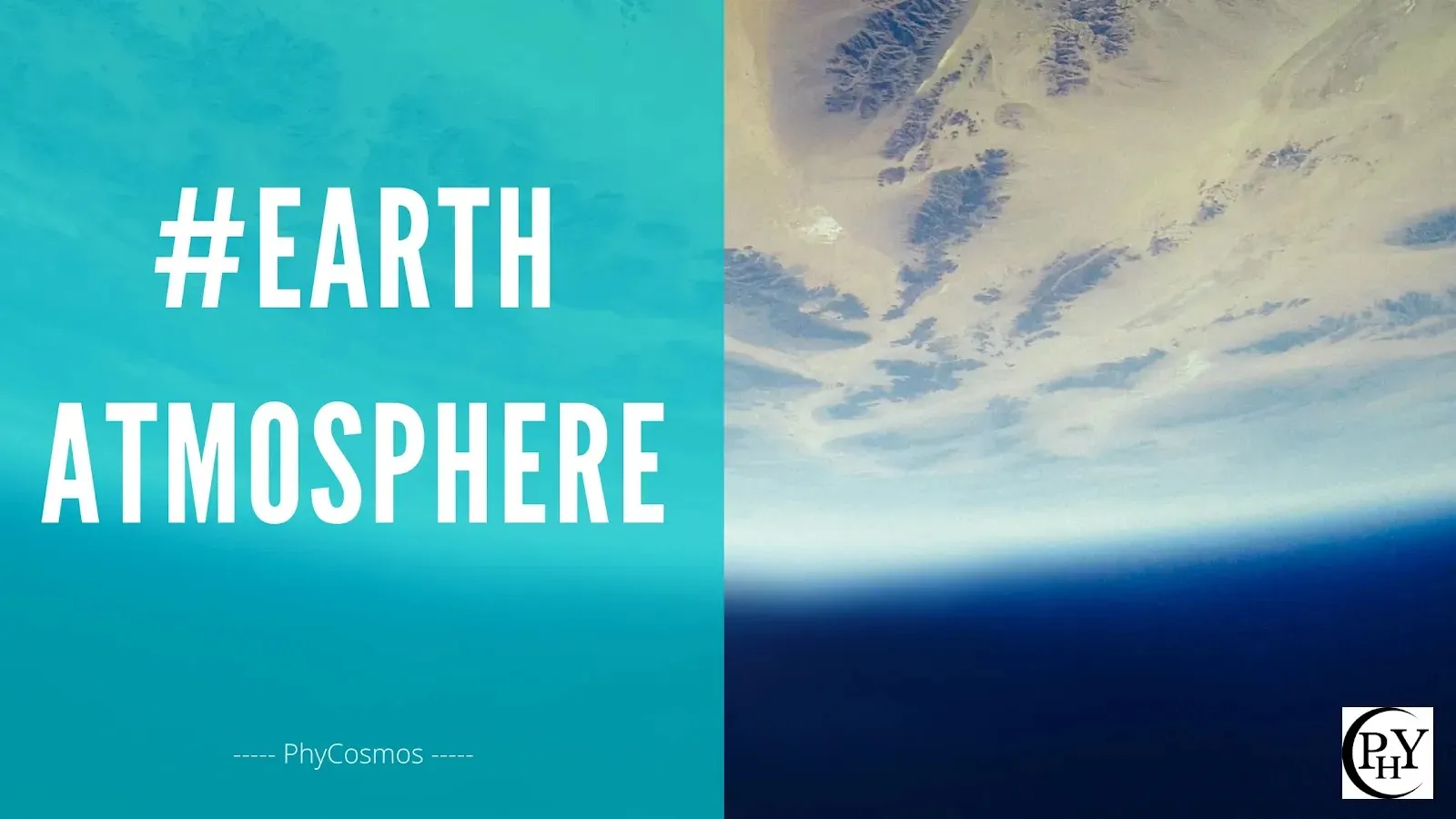
The atmosphere is one of the most critical components of the global ecosystem. It provides the human race and all aerobic organisms with oxygen, regulates the Earth’s climate, and acts as a planetary shield against solar radiation and cosmic debris. Without this delicate layer of gases, Earth would be a barren, frozen wasteland, much like the moon.
[!NOTE] Think About It! If the Earth were the size of an apple, the atmosphere would be no thicker than the apple’s skin. Despite its thinness, it holds the entire weight of our planet’s weather systems and life-support mechanisms.
While we often think of the air we breathe simply as “oxygen,” the atmosphere is actually a carefully balanced mixture of several gases.
| Component | Percentage of Volume | Role |
|---|---|---|
| Nitrogen (N2) | 78.09% | Dilutes oxygen and prevents rapid burning; vital for plant growth via the nitrogen cycle. |
| Oxygen (O2) | 20.93% | Essential for cellular respiration in most living organisms. |
| Argon (Ar) | 0.93% | An inert noble gas, mostly a byproduct of radioactive decay of potassium in the Earth’s crust. |
| Carbon Dioxide (CO2) | 0.04% | A crucial greenhouse gas that helps retain heat; essential for plant photosynthesis. |
| Trace Gases | ~0.01% | Includes neon, helium, methane, and krypton, along with variable amounts of water vapor and dust. |
The atmosphere isn’t uniform; it is divided into five distinct layers based on temperature changes. As you move higher, the pressure steadily decreases, but the temperature fluctuates wildly depending on the layer.
The troposphere is the lowest layer, extending from the Earth’s surface up to about 8 to 14 kilometers (5 to 9 miles), depending on the latitude. This is where almost all weather occurs—clouds, rain, snow, and thunderstorms are all born here. It contains about 75% of the atmosphere’s total mass and 99% of its water vapor.
Above the troposphere lies the stratosphere, extending up to about 50 kilometers (31 miles). Unlike the troposphere, the stratosphere gets warmer the higher you go. This temperature inversion is caused by the ozone layer, a concentration of ozone (O3) molecules that absorbs the Sun’s harmful ultraviolet (UV) radiation. By absorbing this energy, the ozone layer protects DNA in living organisms from mutating and stabilizes the thermal structure of the lower atmosphere. Commercial jet aircraft often fly in the lower stratosphere to avoid the turbulent weather of the troposphere.
Stretching from 50 to 85 kilometers (31 to 53 miles) above the surface is the mesosphere. Here, temperatures plunge drastically, reaching as low as -90 degrees Celsius (-130 degrees Fahrenheit), making it the coldest place in the Earth system. When meteoroids enter the atmosphere, the friction with gas molecules in the mesosphere generates intense heat, causing them to burn up and create the “shooting stars” we see at night.
The thermosphere extends from 85 kilometers up to roughly 600 kilometers (372 miles). In this layer, high-energy X-rays and UV radiation from the Sun are absorbed, causing temperatures to soar up to 2,000 degrees Celsius (3,600 degrees Fahrenheit). However, because the air is so incredibly thin, it wouldn’t feel hot to human skin; there simply aren’t enough gas molecules to transfer the heat. The International Space Station (ISS) orbits within this layer.
The exosphere is the outermost layer, expanding from the top of the thermosphere to approximately 10,000 kilometers (6,200 miles) above the Earth. Here, the atmosphere gradually thins out into the vacuum of space. Particles in the exosphere are so sparse that they can travel hundreds of kilometers without colliding with one another.
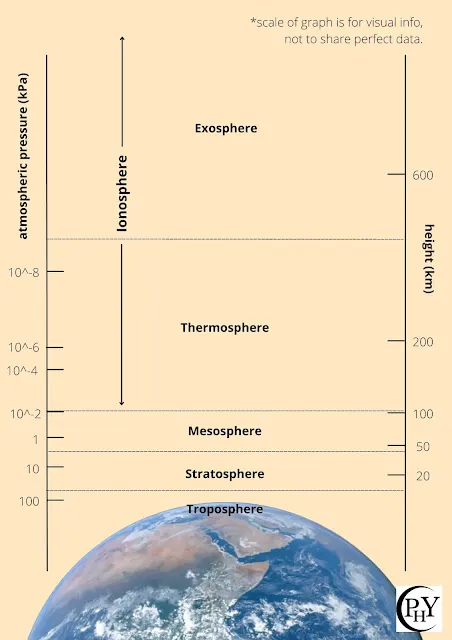
The ionosphere isn’t a distinct layer, but rather a series of regions within the mesosphere and thermosphere that are ionized by solar radiation. It consists of electrically charged particles (ions and free electrons).
These charged particles and our Earth’s magnetic field (magnetosphere) prevent solar winds and ionospheric storms from stripping away our atmosphere. This interaction creates breathtaking auroras (the Northern and Southern Lights) and shields us from the solar wind.
Scientists generally use the Kármán line, located at an altitude of 100 kilometers (62 miles), as the boundary between Earth's atmosphere and outer space, though atmospheric gases extend far beyond this line in the exosphere.
Through the greenhouse effect, gases like carbon dioxide, methane, and water vapor trap infrared radiation emitted by the Earth. Without this natural effect, Earth's average temperature would be a freezing -18°C (0°F) instead of a comfortable 15°C (59°F).
Yes, Earth loses about 90 tonnes of atmospheric gas (mostly hydrogen and helium) to space every day. However, this loss is negligible compared to the total mass of the atmosphere and is partially replenished by volcanic outgassing.
The atmosphere is a marvel of planetary engineering. By understanding its layers, composition, and functions, we can better appreciate the delicate balance that sustains life on our pale blue dot.