What are Tissues?
Learn about biological tissues, how specialized cells group together to perform complex functions in living organisms.
Learn about biological tissues, how specialized cells group together to perform complex functions in living organisms.
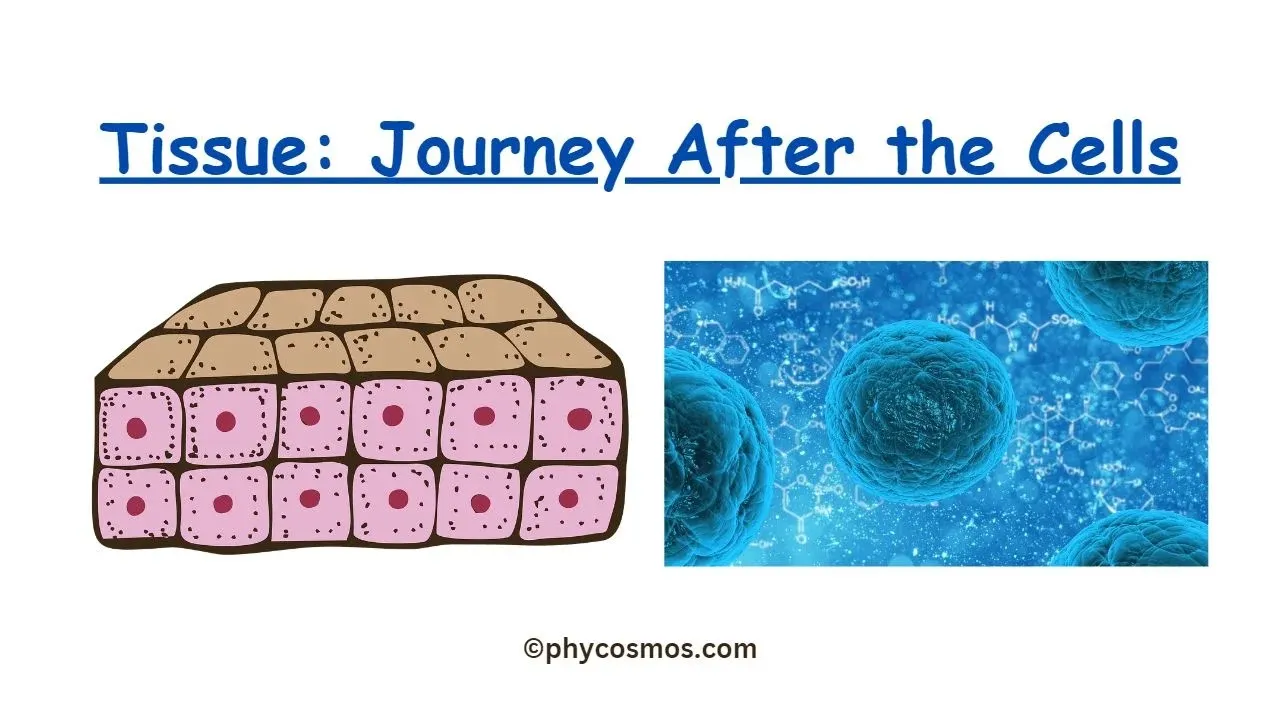
In unicellular organisms such as bacteria, paramecium all the functions that includes ingestion, digestion, metabolic activities, transportation, response to surrounding, and excretion are performed by just one single cell, since it has to maintain only its own single celled body. Whereas all multicellular organisms have a large system to take care of with utmost control and coordination. So in order to do everything efficiently, the work is being divided among various cell types and thus they become expert in a specific task such as ingestion, transmission of signals so that we can respond to stimuli, transportation of nutrients through blood, etc and these cell types are collectively known as tissues.
Tissue is a group of cells which are similar in structure and their specific function.
Some examples of tissues are blood, xylem, phloem, muscles, and nerves.
Well, in our day to day life, in terms of multicellular organisms we generally see humans (Of Course), dogs, cats, horses, insects, etc, which are Animals and we also see various kinds of trees, herbs and small grass which comes under plant kingdom and many more that we encounter and not all I can write here.
Now let’s check a quick difference between the tissues of plants and animals and after that we will get into depth through Classification of tissues.
| Plant Tissues | Animal Tissues |
|---|---|
| In plants, dead supportive tissues are more abundant as compared to living tissues. | In multicellular animals, living tissues are more common as compared to dead tissues. |
| They require less maintenance energy. | They require more maintenance energy. |
| There is a Differentiation of Meristematic and Permanent tissues. | Such Differentiation is absent in animal tissues. |
| Due to activity of meristematic tissues plants continue to grow throughout life. | Animals do not show growth after reaching maturity. Reparative growth is, however present. |
| Organization of plant tissues is simple. | Organization of animal tissues is complex with the development of more specialized and localized organs and organ systems. |
| Tissue organization is meant for the stationary habit of plants. | Tissues organization is targeted towards high mobility of animals. |
These are the tissues that are present in plants, mainly there are two of its kind, and that are meristematic tissue and permanent tissue.
First see the classification structure given below to be more specific, it will give you a clear idea of what awaits you ahead.
Classification of Plant tissues:
In the plant body, different types of tissues are present and the tissue which helps the plant body to grow is called meristematic tissue, these are present only in certain specific regions of the plant body. Meristematic tissues are of three types depending upon the region where they are present.
These tissues are present in the tips of roots and stems. Its main function is to increase the height of the plant body.
These tissues are present in the below bark. Its function is to increase the diameter and girth of the root and stem.
These tissues are present in the internodes of the stem. Its main function is to increase the length of an organ such as a leaf.
All the cells of this tissue are:
Permanent tissue is formed by the meristematic tissue. Once the meristematic tissue loses its ability to divide it becomes a permanent tissue by the process of differentiation.
The process of conversion of meristematic tissue to form a fixed shape, size and function in a specific manner is called differentiation.
So, now it is clear that meristematic tissue differentiate to form a permanent tissue.
These tissues are made up of similar types of cells which are also similar in structure and function.
There are 3 types of Simple Permanent Tissue:
We know, parenchyma is a type of permanent tissue. Lets see some points about its cells:
Important functions of Parenchyma:
It is a type of permanent tissue that provides flexibility to the various parts of the plant body (such as leaves and stem) and due to this property stems bends and does not break easily when forced. In other words it provides mechanical support to plants.
Cells of this tissue are:
It is a type of permanent tissue that provides hardness and strength to the plant body. Their walls (cell wall) are very thick due to lignin (a substance which acts as cement in the plants). That’s how it provides strength to the plant body.
The cells of this tissue are:
These tissues are present are stem, around the vascular bundle, leaves, hard covering of seeds and nuts.
The outermost layer of the cell is called epidermis. It is made up of a single layer of cells. Some plants which are living in very dry habitats, their epidermis may become thicker for protection against water loss (because excessive water loss may kill the plant). The entire outer surface of plants is covered with epidermis to protect the plant.
So it is clear that epidermis plays the protection role in the front end for the safety of plants.

On the layer of epidermis there are very small pores present here and there which are actually called stomata but only found on the leaves (not for all). Stomata is enclosed by two kidney shaped cells called guard cells. They help in changing the gases from the atmosphere. Transpiration also takes place through stomata.
Complex Permanent Tissues are made up of more than one type of cells. They are mainly conductive tissues and help in conduction of water and food from soil as well as transportation to various parts of the plant body.
There are mainly two types of Complex Permanent Tissue:
Que: What are Vascular Tissues?
Vascular tissues are those tissues that conduct both water as well as food from one part of the plant body to the other part of the plant body.
Therefore, Xylem and Phloem together constitute a Vascular Bundle.
| Xylem | Phloem |
|---|---|
| It conducts water from one part of the plant body to another part of the plant body. The cells of xylem tissue have thick walls. | It is responsible for conducting food from one part of the plant body to another part of the plant body. |
Constituents of Xylem:
| Constituents of phloem:
|
Some important points to be noted:
| All cells of Phloem are living except Phloem Fiber. |
Que: Write difference between Xylem and Phloem.
| Xylem | Phloem |
|---|---|
| It conducts water and minerals. | It conducts organic solutes or food materials. |
| Conduction is mostly unidirectional, i.e., from roots to apical parts of the plants. | In it conduction may be bidirectional, i.e., from leaves to storage organs or growing parts or from storage organs to growing parts of plants. |
| Conducting channels or treachery elements are tracheids and vessels. | Conducting channels are sieve tubes. |
| Components of Xylem include tracheids, vessels, xylem parenchyma and xylem fiber. | Components of Phloem include sieve tubes, companion cells, phloem parenchyma and phloem fibers. |
| Only Xylem Parenchyma is living among all the four of its components. | Only Phloem fiber (bast fiber) is dead among all the four of its components. |
| In addition to conduction, xylem provides mechanical strength to the plant. | Phloem performs no mechanical strength for the plants. |
Breathing is one of the most vital activities for humans. When we breathe, we can, in fact, feel the movement of our lungs and diaphragm. How do these parts move inside our body ? For breathing, we have specialized cells in our bodies, called muscle cells. The contraction and relaxation of these muscle cells result in movement.

During breathing, we inhale oxygen gas (along with air). Where does this gas go ? It goes to our two lungs and then is transported to all the cells of our body via blood. So, why do cells need oxygen ? Mitochondria is present in every cell of our body, utilizing oxygen to generate energy in the form of ATP (adenosine triphosphate) molecules. These ATP molecules provide energy for all sorts of activities performed by our body cells.
Now, let’s go into it.
Classification of Animal tissues:
I will recommend you to make a tree chart version of this classification in your notebook for better understanding.
The epithelial tissues work in the animal body as epidermis works in the plants. It is the protective tissue in the animal body. It separates different body organs from each other. The cells of epithelial tissue are tightly packed and form a continuous sheet. These tissues have no intracellular spaces.
Cells of this tissue are thin, flat and irregularly shaped. Our skin is made up of squamous epithelium tissues. It forms the delicate lining of cavities (such as mouth, esophagus, nose, lung alveoli, etc), blood vessels and covering of tongue and skin.
Functions:
This epithelium protects our internal body parts from any mechanical injury. It resists the entry of harmful germs and chemicals. It also acts as a selectively permeable membrane.
Stratified Squamous Epithelium is:
The structure of its cells are much like a cube, hence the name. It forms the lining of the kidney and salivary glands.
Functions:
It helps in absorption, excretion and secretion. It also provides mechanical support.
Its cells have pillar-like structure. Nucleus lies in the base. It forms the lining of the stomach, small intestine, colon, gall bladder and oviduct. It facilitates the movement across the cells.
Its main function includes absorption and secretion.
Sometimes cuboidal epithelium is folded inward and forms a multicellular gland. The result is that it evolves into a Glandular Epithelium.
Sometimes cuboidal epithelium is folded inward and forms a multicellular gland. The result is that it evolves into a Glandular Epithelium.
The cuboidal and columnar epithelium has cilia. These cells form the Ciliated Epithelium.
Function: The cilia are able to move and their movement pushes the solid particles in one direction through the duct.
Muscle tissues are elongated and fibrous, also known as muscle fiber. Muscle tissue is responsible for the movement of our body. Muscles have special types of protein that is contractile protein. Muscle tissues contract and relax to cause movement.
Striated muscles are also known as striped, skeletal and voluntary muscles. It is known as striated muscle because the fiber of its muscle cells seems to be striped. It is known as skeletal muscle because it is joint with bones and it also helps in the movement of bones and the whole body skeleton. It is known as voluntary muscle cells because they move as per our consciousness.
The cells of these tissues are long, cylindrical, un-branched, multinucleated.
Smooth muscles are involuntary muscles which can move or work on its own whether we want or not ! notice or not ! think or not!
These smooth muscles are found in the alimentary canal, blood vessels, iris of eyes, ureters, in the bronchi of lungs. Its cells are long, pointed at ends and uninucleate (meaning only one nucleus is present per cell).
They are also called non-striated because smooth muscles work whether we want or not, but striated muscle/ voluntary muscle works as per our conscious response.
The muscles of the heart have cardiac muscle which shows rhythmic (regular) contraction and relaxation throughout lifetime. As per its behavior it’s clear that it is an involuntary muscle. The cardiac muscle cells are cylindrical, branched and uninucleate.
These are the special types of tissues which connect one part of the body to another part of the body. The main function of connective tissues is binding and supporting. Its cells are living and loosely spaced. Its cells have a gel-like fluid called matrix. Matrix may be fluid (in case of blood) or may be solid (in case of cartilage and bones). Nature of the matrix decides the function of connective tissue. Do not confuse matrix with the matrix in mathematics.
Types of Connective tissues:
This connective tissue is found between skin and muscle as well as around blood vessels and nerves. This tissue helps to repair other tissues.
| Tendons | Ligaments |
|---|---|
| This is a fibrous tissue, has great strength but limited flexibility and helps to connect bones to muscles. | These tissues are very elastic, do not have very much strength and have very little matrix. It connects bones to bones. |
“remember everything has its own specialty, what one has the other may not and vice versa”
These tissues are found below our skin. Its cell stores fat and lipids. Its fat acts as an insulator. So be thankful that it reduces electrical shocks to protect our inner parts.
The skeletal or supporting tissue includes cartilage and bone which form the endo-skeleton of a vertebrate body.
Cartilage
Its cells are widely spaced. Matrix is composed of proteins and sugar. It smoothens the bone surface at joints. It is present in the nose, ears, trachea and larynx. That is why we can fold our ears.
Bones
This tissue forms our whole framework and supports the body. It is strong and non flexible. The matrix of bone cells in which its cells are embedded is composed of Calcium (Ca) and Phosphorus (P), which are very hard.
Fluid connective tissue links the different parts of the body and maintains a continuity in the body. It includes blood and lymph.
Blood
Blood flows to every part of the body and transports oxygen, digested food, hormones and waste materials for excretion. Blood has a fluid (liquid) matrix called plasma. Plasma contains proteins, salt and hormones. All the components of blood such as RBCs, WBCs and platelets are suspended into it.
Lymph
Lymph is a colorless fluid that is filtered out of the blood capillaries. Since it is a part of blood, its composition is similar to that of blood except that red blood corpuscles (RBCs) and some blood proteins are absent in it. White blood cells (WBCs) are found in abundance in the Lymph. It brings CO2 and nitrogenous wastes from tissue fluid to blood and also O2 and other needed chemical species from blood to tissues after passing through capillaries.
Since Lymph is loaded with WBCs such as lymphocytes, the lymph protects the body against infection. It forms the defense or immune system of the body.
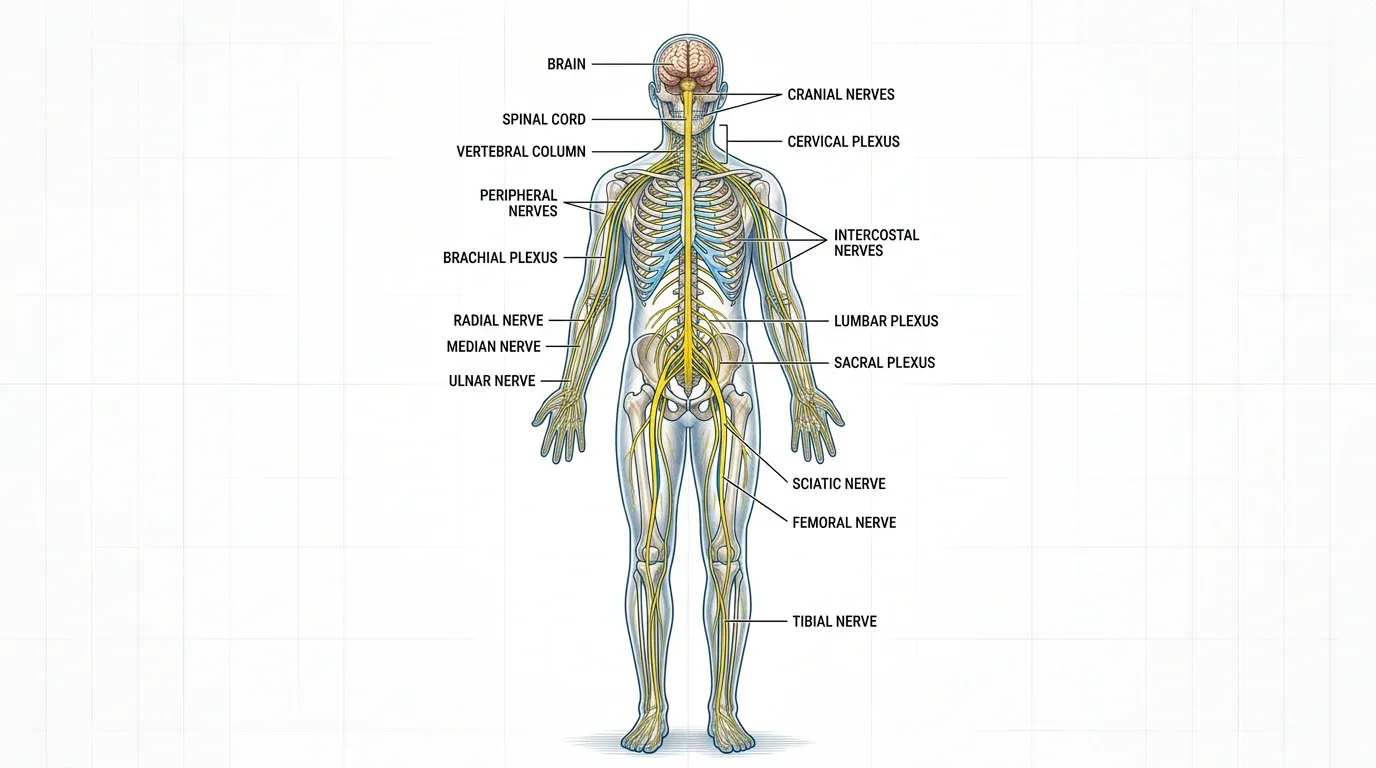
This is a very important tissue and plays a very crucial role for us. It transfers messages to our brain and also signals our parts with the coordination of our consciousness or thinking. They are found in the brain, spinal cord, and nerves.
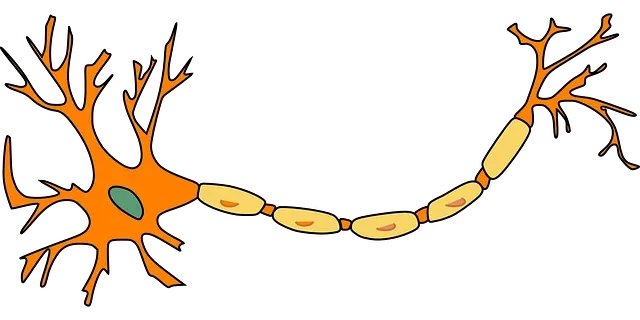
A single cell of nervous tissue is known as a neuron. Each neuron has a long part known as an axon and thin branched off hairs like threads called dendrites. Neurons are uni-nucleated.
A nerve is found when many neurons bond with connective tissue aligned with each other. Nerve transfer message of anything, like if we want to move our hand nerve transfer message rapidly and without any delay, in just instant our hand moves. The messages or signals via nerve or neuron are like an electric impulse, actually it is a neurotransmitter chemical that neurons release successively from one to another.
“An individual nerve or neuron can be up to 1 meter long though many are even smaller than a millimeter.”