Photosynthesis: How Plants Make Food
Discover how photosynthesis works — from chloroplasts and light reactions to the Calvin cycle — and why it is the engine that powers nearly all life on Earth.
Discover how photosynthesis works — from chloroplasts and light reactions to the Calvin cycle — and why it is the engine that powers nearly all life on Earth.
Stand in a forest on a summer morning and look up. The leaves above you are doing something extraordinary — something so fundamental to life on Earth that, without it, neither you nor almost anything else alive today would exist. Through photosynthesis, they are converting sunlight into sugar, using a process that has been operating continuously for more than three billion years.
Photosynthesis is the engine of the biosphere. It is the source of virtually all the food we eat, the oxygen we breathe, and the energy locked in the fossil fuels we burn. The plants, algae, and cyanobacteria that perform it are, in a very real sense, the primary producers that sustain every other living thing. And yet the process itself is subtle, intricate, and endlessly fascinating.
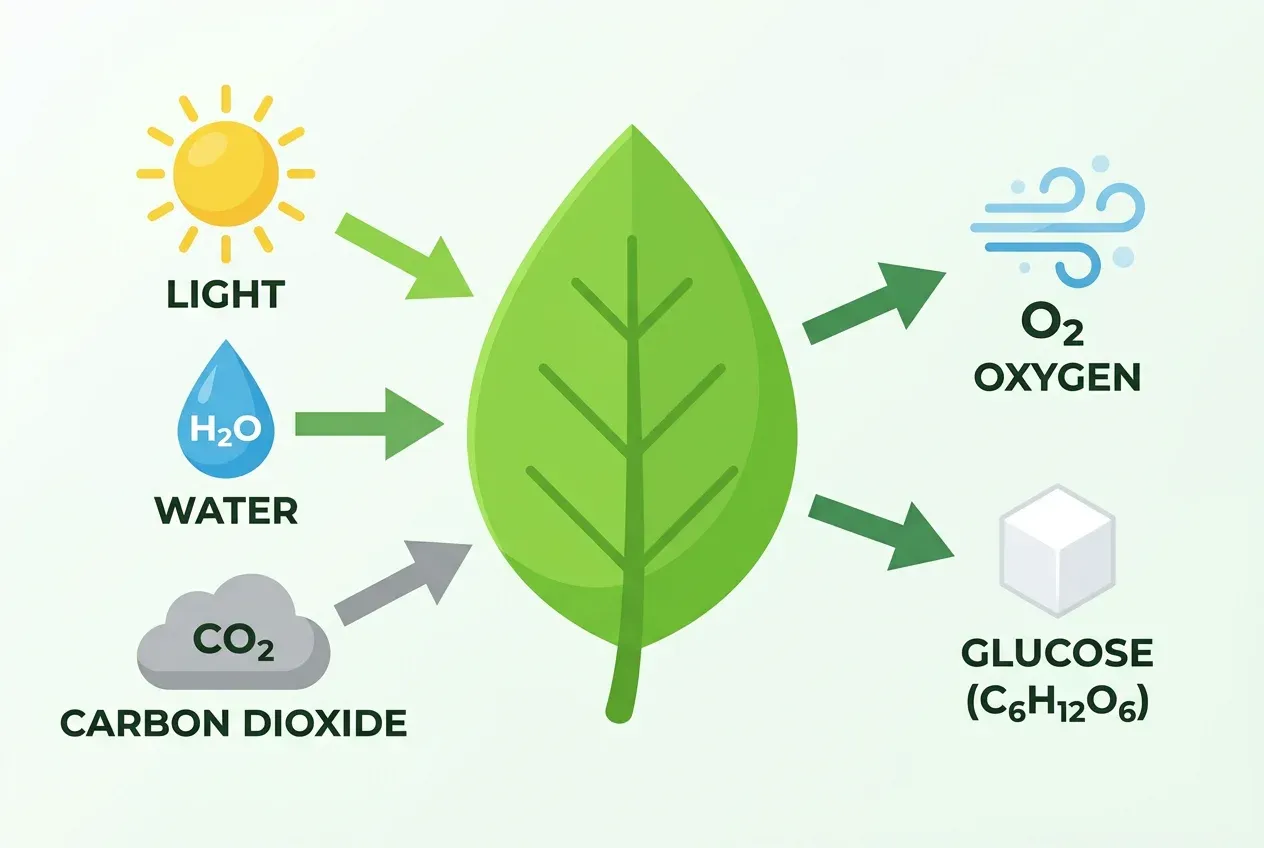
At its simplest, photosynthesis can be described by a single chemical equation:
6CO₂ + 6H₂O + light energy → C₆H₁₂O₆ + 6O₂
Carbon dioxide and water, energised by light, are converted into glucose and oxygen. The glucose is fuel and raw material for the plant; the oxygen is released as a by-product — and happens to be the oxygen that every aerobic organism on Earth depends on.
But that tidy equation conceals an extraordinary amount of molecular machinery. Understanding that machinery — and how it evolved over billions of years — tells us something profound about both life and our planet. The air we breathe was almost entirely shaped by photosynthetic organisms over a long geological timeline.
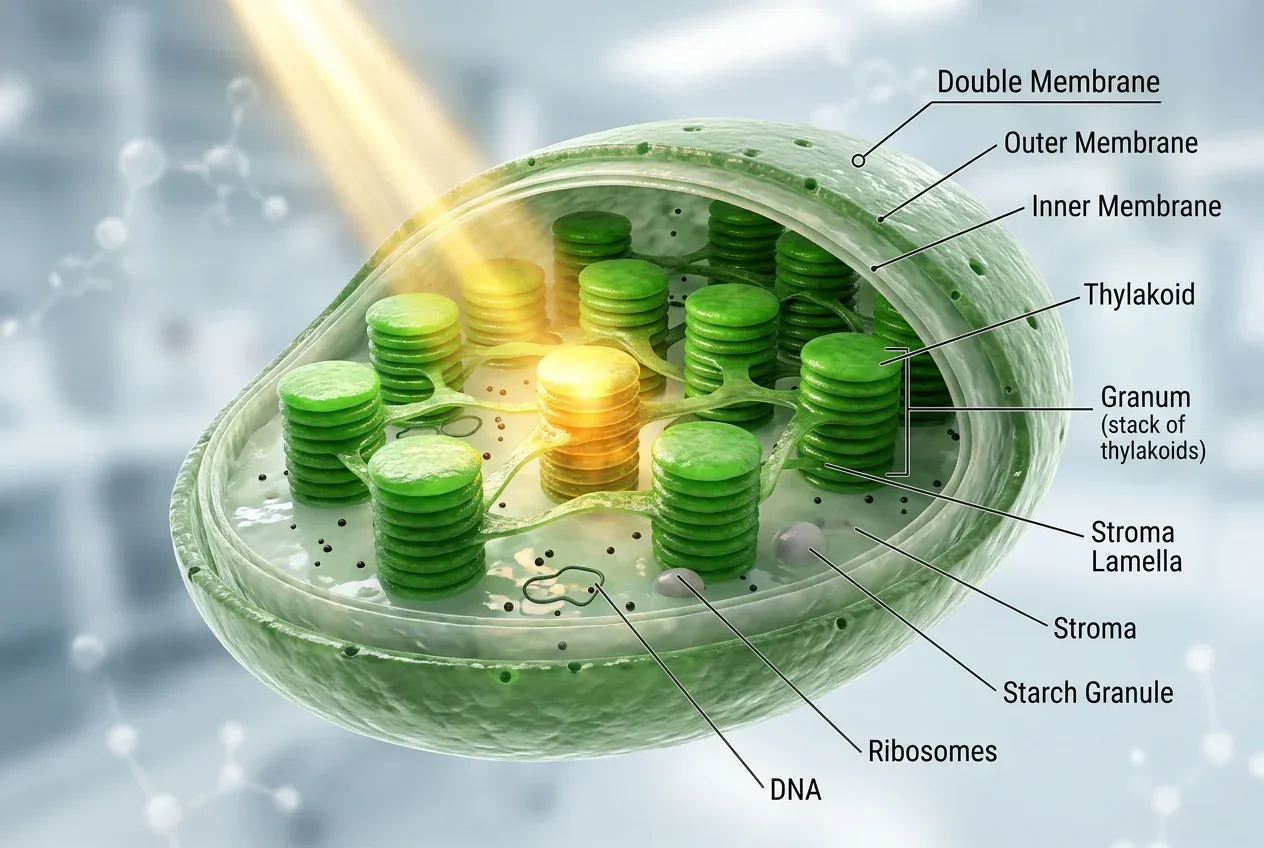
In plant cells, photosynthesis takes place in organelles called chloroplasts. These double-membrane structures are typically a few micrometres long and shaped a little like a thick lens. Inside the outer and inner membranes lies the stroma — a fluid-filled space — and within that, a system of interconnected membrane sacs called thylakoids. Thylakoids are often stacked into columns called grana (singular: granum), like stacks of pancakes.
This architecture is important because the two main stages of photosynthesis happen in different locations:
Chloroplasts also contain their own small circular DNA genome and ribosomes, reflecting their evolutionary origin as ancient cyanobacteria that were engulfed by a larger cell in a symbiotic relationship — one of the most important events in the history of life. This endosymbiotic origin is shared by mitochondria and is a fundamental feature of eukaryotic biology.
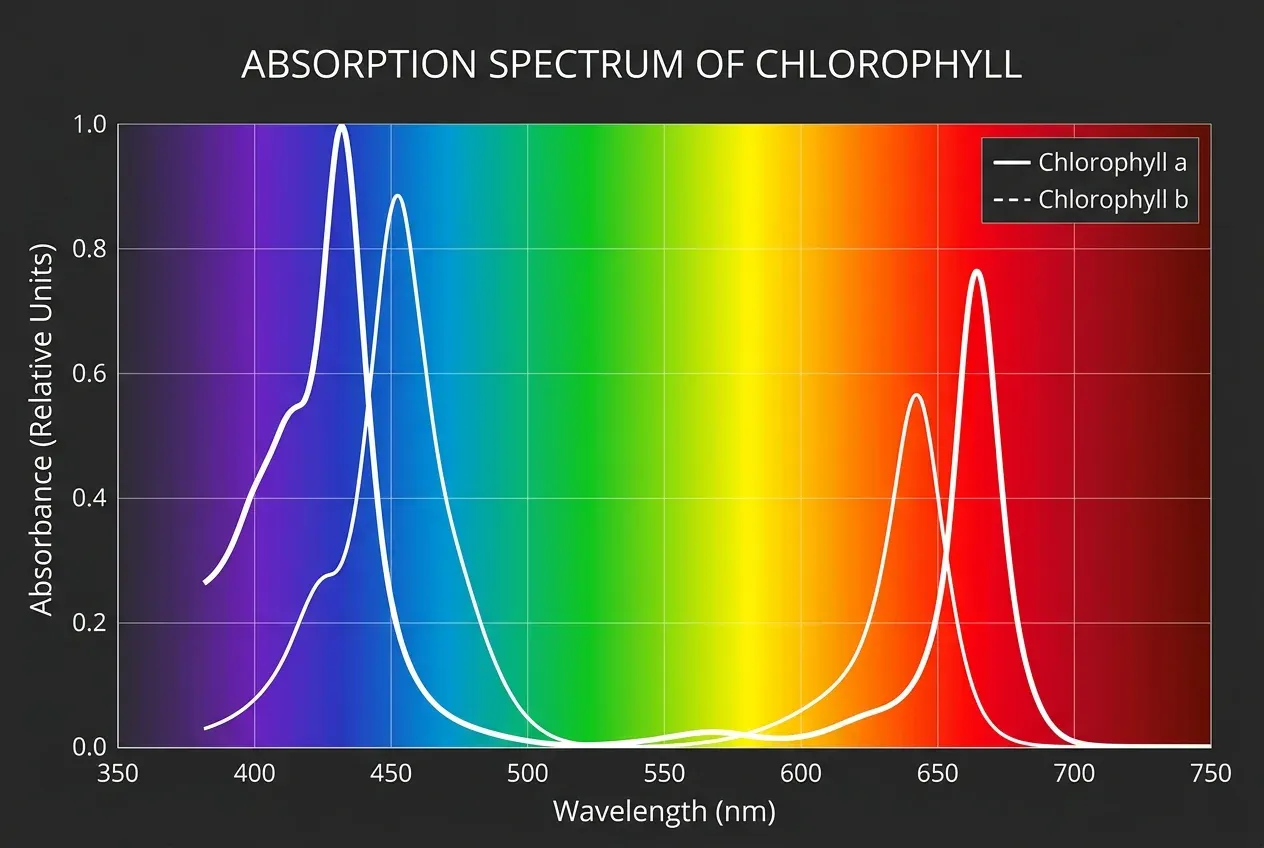
The most important molecules in photosynthesis are the pigments — molecules that absorb specific wavelengths of light. Chlorophyll a is the primary pigment in plants and most algae; it absorbs red light (around 680 nm) and blue-violet light (around 430 nm) most effectively, and reflects green light — which is why plants appear green.
Chlorophyll b and carotenoids (orange and yellow pigments) serve as accessory pigments, absorbing additional wavelengths and transferring that energy to chlorophyll a. This broadens the range of light that a plant can use and also provides the brilliant colours of autumn, when chlorophyll breaks down and the carotenoids are revealed.
Pigment molecules are organised into large protein complexes called photosystems, embedded in the thylakoid membrane. There are two main types: Photosystem I (PSI) and Photosystem II (PSII) — named for the order of their discovery, not the order in which they operate.
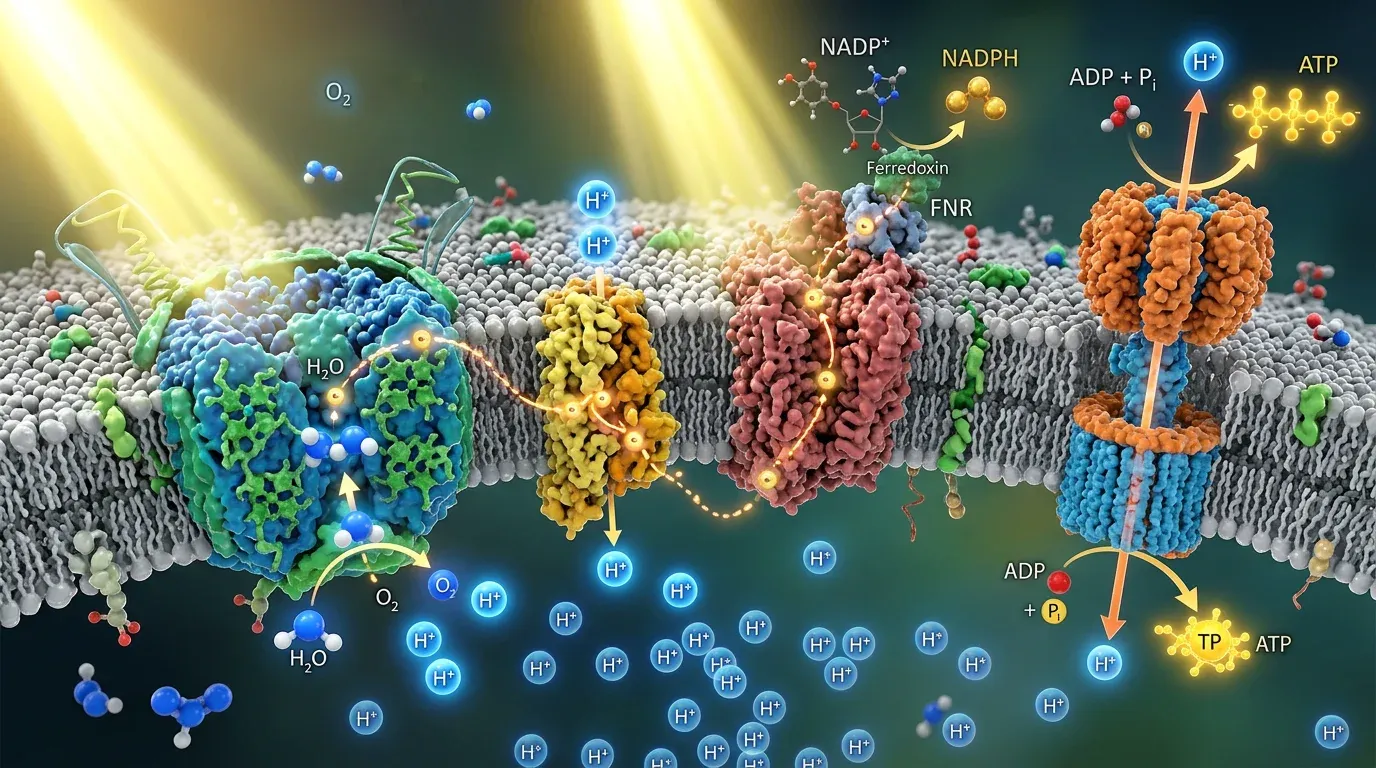
The light-dependent reactions capture the energy of sunlight and convert it into chemical energy — specifically, the energy carriers ATP (adenosine triphosphate) and NADPH. They also split water molecules, releasing oxygen as a by-product.
The sequence begins at Photosystem II. When a photon of light strikes a chlorophyll molecule in PSII, it energises an electron, boosting it to a higher energy level. To replace this lost electron, PSII splits a water molecule in a process called photolysis:
2H₂O → 4H⁺ + 4e⁻ + O₂
The oxygen released here is the source of the oxygen in Earth’s atmosphere. This is not a trivial point: every breath you take contains oxygen atoms that were once part of a water molecule, liberated by a photosystem in a chloroplast somewhere on Earth.
The energised electrons are passed along a series of protein complexes embedded in the thylakoid membrane — the electron transport chain. As electrons move down this chain, their energy is used to pump protons (H⁺ ions) from the stroma into the thylakoid interior, creating a concentration gradient.
Protons can only flow back out through a protein channel called ATP synthase. As they do, the energy of their flow powers the synthesis of ATP from ADP and inorganic phosphate — a process called chemiosmosis. This is the same mechanism used by our mitochondria to make ATP from food, reflecting the deep evolutionary unity of life’s energy systems.
At Photosystem I, a second photon of light boosts the electrons, now at lower energy, again. This time, the re-energised electrons are used to reduce NADP⁺ to NADPH. NADPH is an electron carrier that will be used in the next stage to build glucose.
The net result of the light-dependent reactions: solar energy has been converted into the chemical energy of ATP and NADPH, and water has been split to release oxygen. No glucose yet — that comes next.
[!NOTE] The oxygen we breathe is entirely a by-product of photosynthesis. Before photosynthetic organisms appeared roughly 2.7 billion years ago, Earth’s atmosphere contained almost no free oxygen. The “Great Oxidation Event,” around 2.4 billion years ago, permanently transformed the planet — and paved the way for complex aerobic life.
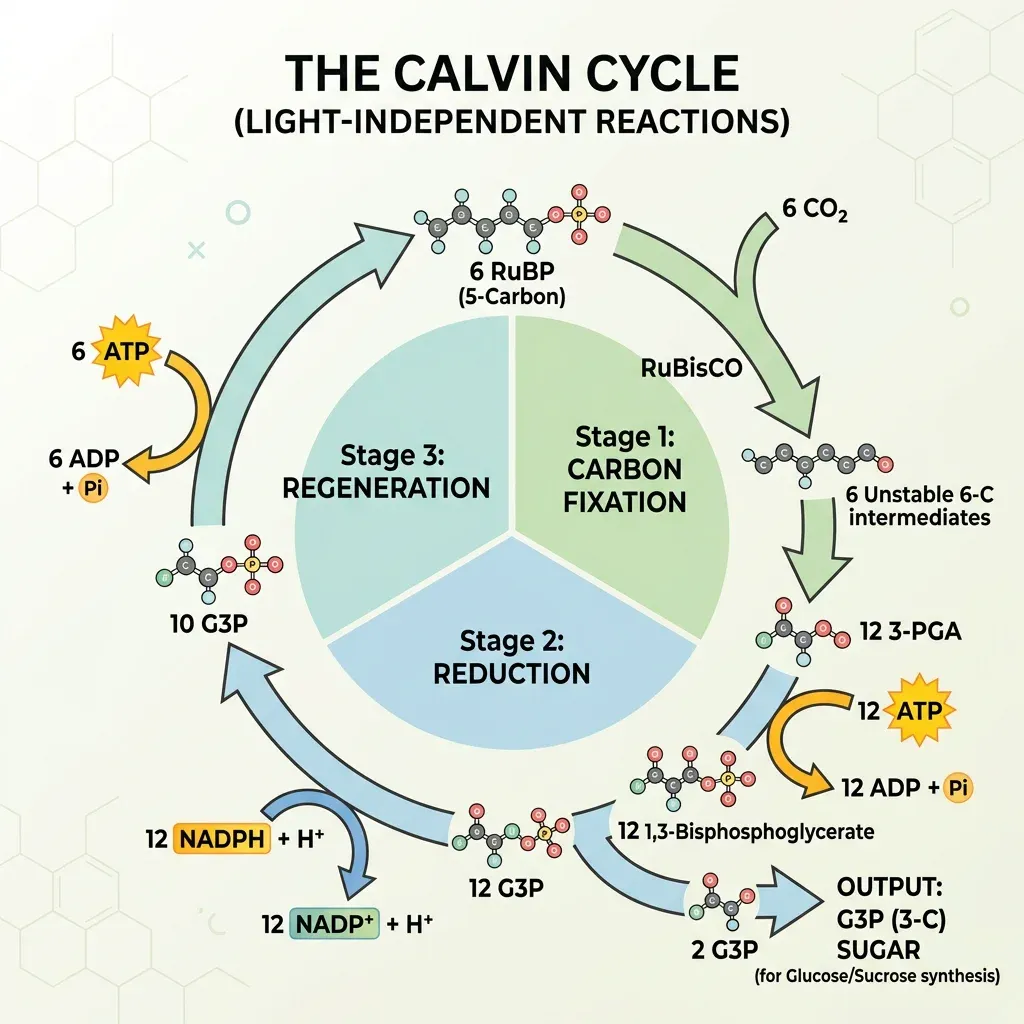
The Calvin cycle, named after Melvin Calvin, who worked out its details in the 1950s using radioactive carbon isotopes, takes place in the stroma of the chloroplast. It uses the ATP and NADPH produced by the light reactions to fix carbon dioxide — that is, to incorporate atmospheric CO₂ into organic molecules.
An enzyme called RuBisCO (ribulose-1,5-bisphosphate carboxylase/oxygenase) — the most abundant protein on Earth and arguably the most important — catalyses the first step. RuBisCO attaches a molecule of CO₂ to a five-carbon compound called ribulose-1,5-bisphosphate (RuBP), producing an unstable six-carbon compound that immediately splits into two molecules of a three-carbon compound called 3-phosphoglycerate (3-PGA).
ATP and NADPH are used to convert 3-PGA into glyceraldehyde-3-phosphate (G3P), a three-carbon sugar. G3P is the actual product of the Calvin cycle — a simple organic molecule that can be used to build glucose, sucrose, starch, cellulose, amino acids, and fatty acids. It is the raw material of virtually everything a plant is made of.
Most of the G3P produced is used to regenerate RuBP, so the cycle can continue. Only about one in every six G3P molecules is exported from the cycle to be used for biosynthesis. For the cycle to produce one molecule of G3P net, three molecules of CO₂ must be fixed, consuming nine ATP and six NADPH.
The G3P produced by the Calvin cycle is the starting point for a vast array of organic molecules. Plants use glucose and its derivatives in several ways:
The energy that animals obtain by eating plants (and that carnivores obtain by eating those animals) is ultimately the solar energy that was originally captured by photosynthesis. In this sense, virtually all food energy on Earth traces back to a chloroplast.
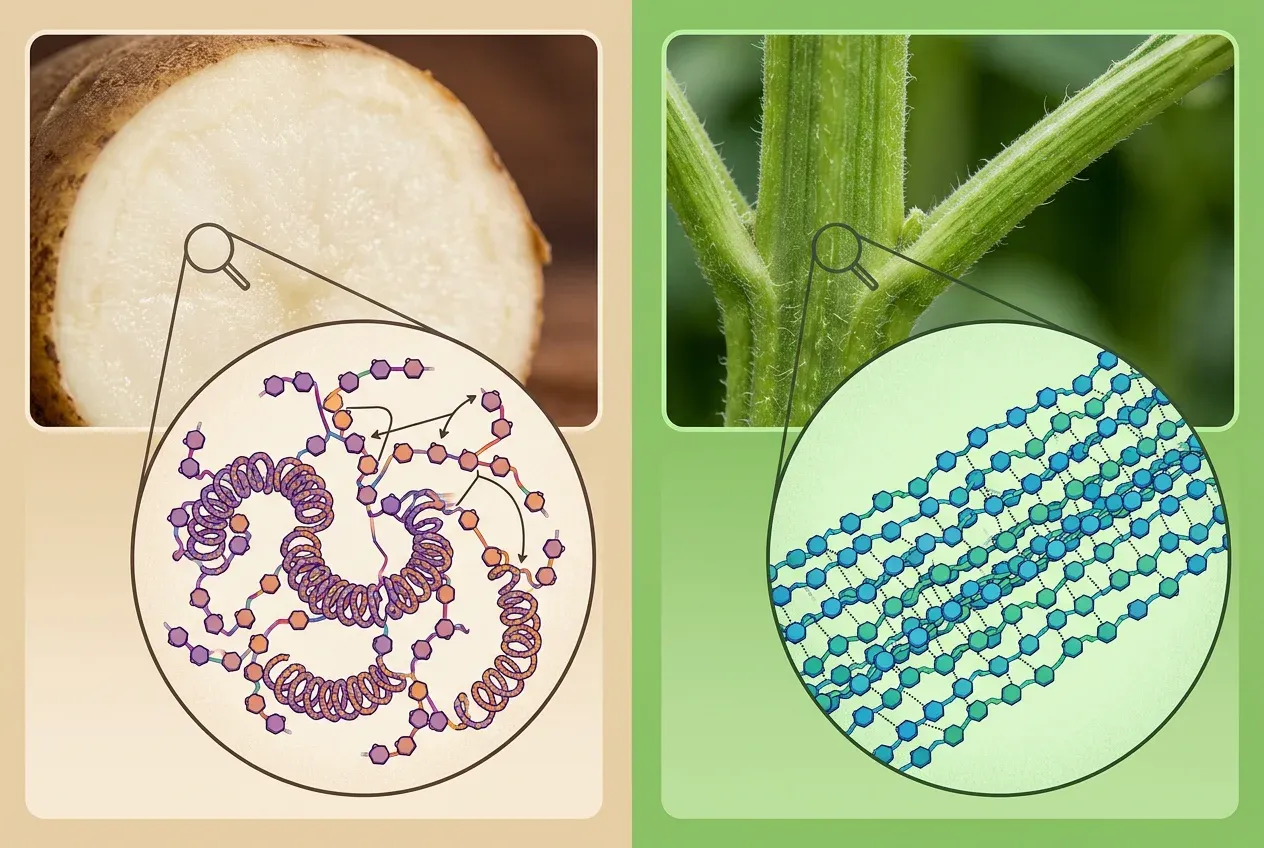
Not all plants perform photosynthesis in exactly the same way. The basic mechanism described above is called C3 photosynthesis (because the first product of carbon fixation is a three-carbon molecule), and it is used by most plant species, including wheat, rice, and trees.
However, RuBisCO has a significant inefficiency: it can also bind to oxygen instead of CO₂, wasting energy in a process called photorespiration. This is particularly problematic in hot, dry conditions, when plants close their stomata to conserve water and CO₂ levels inside the leaf fall.
C4 plants — including maize, sugarcane, and many grasses — have evolved a clever spatial solution. They pre-concentrate CO₂ in specialised bundle sheath cells, effectively suppressing photorespiration and making them highly efficient in warm, sunny conditions. This is why maize and sugarcane are among the most productive crops on Earth.
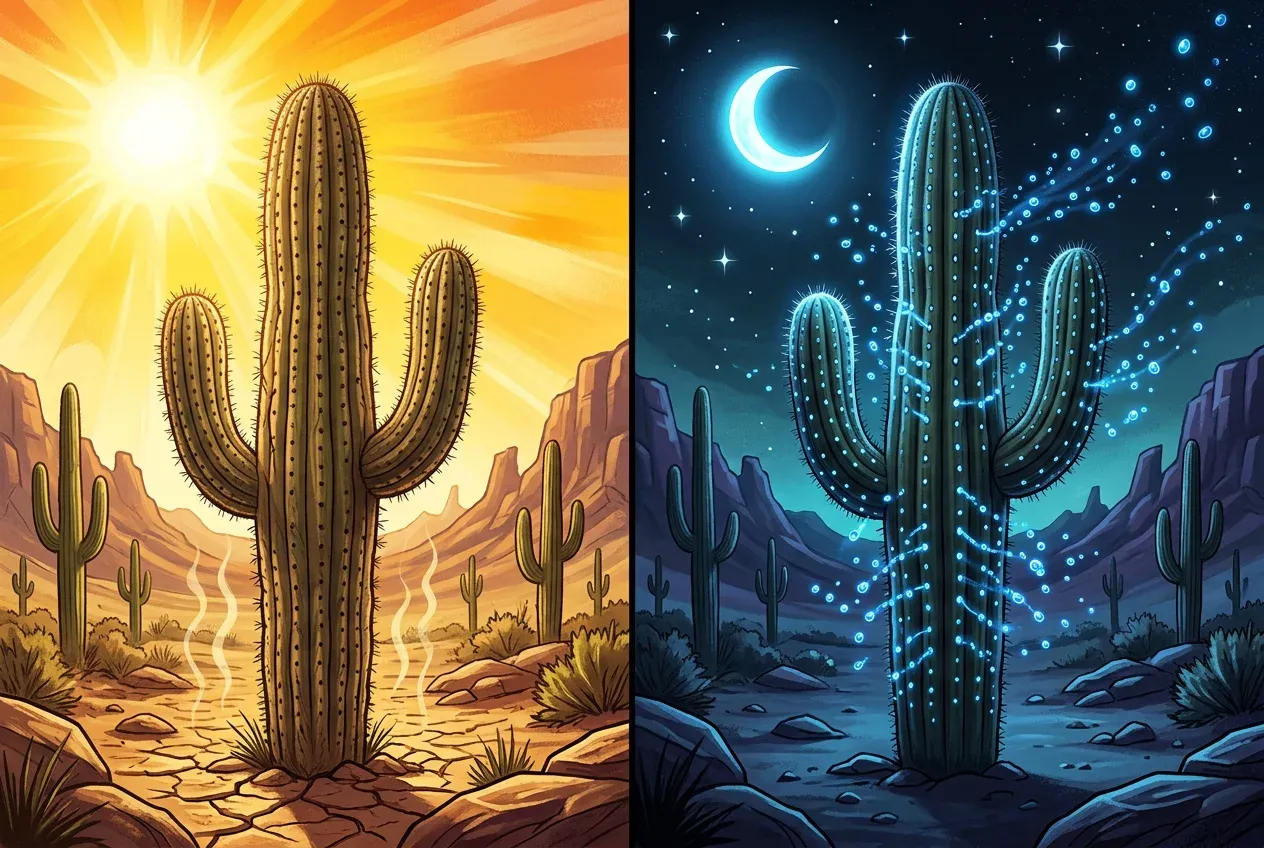
CAM (Crassulacean Acid Metabolism) plants, including cacti and succulents, take a temporal approach: they open their stomata at night to collect CO₂, store it as malic acid, and release it for the Calvin cycle during the day. This allows them to minimise water loss in arid environments, and it is part of why desert plants can survive conditions that would kill most other vegetation.
The scale of photosynthesis is difficult to comprehend. Every year, photosynthetic organisms fix approximately 100–120 billion tonnes of carbon from atmospheric CO₂ into organic molecules. This flux of carbon is the foundation of nearly every food web on the planet, from marine phytoplankton (responsible for about half of all photosynthesis on Earth) to the great terrestrial forests that have been the focus of conservation concern for decades.
Those forests are worth thinking about in their own right. We already understand the imortance of forests, they are not just repositories of biodiversity — they are massive, active massive photosynthetic machines that regulate carbon, water, and energy across the entire globe. Losing forests means losing photosynthetic capacity that took millions of years to build.
Photosynthesis is also the ultimate source of the fossil fuels — coal, oil, and natural gas — that power modern civilisation. These are the compressed remains of ancient photosynthetic organisms, their solar-captured energy stored for hundreds of millions of years. When we burn them, we are releasing that stored sunlight — and the carbon that went with it — back into the atmosphere far faster than photosynthesis can reabsorb it.
Understanding photosynthesis is therefore not just an academic exercise. It is foundational to addressing climate change, feeding a growing global population through improved crop science, and potentially designing artificial photosynthetic systems for clean energy.
Photosynthesis is the process by which plants, algae, and some bacteria use sunlight, water, and carbon dioxide to produce glucose (a sugar) and oxygen. It is the primary way that energy from the sun enters the living world, and the oxygen produced is the same oxygen that all aerobic animals — including humans — breathe.
Photosynthesis takes place inside organelles called chloroplasts, found mainly in leaf cells. Within the chloroplast, the light-dependent reactions occur on the thylakoid membranes, while the Calvin cycle (light-independent reactions) occurs in the fluid-filled stroma surrounding the thylakoids.
Plants are green because chlorophyll — the main photosynthetic pigment — absorbs red and blue-violet light but reflects green light. It is this reflected green light that reaches our eyes and gives plants their characteristic colour. Accessory pigments like carotenoids absorb other wavelengths and appear orange, yellow, or red, which is why leaves change colour in autumn when chlorophyll breaks down.
The Calvin cycle is the second stage of photosynthesis, taking place in the stroma of the chloroplast. It uses the ATP and NADPH produced by the light reactions to convert carbon dioxide into a three-carbon sugar called glyceraldehyde-3-phosphate (G3P), which is the building block for glucose and other organic compounds. It is sometimes called the light-independent stage because it does not directly require light — but it does require the products of the light reactions.
Essentially, yes. The vast majority of Earth's atmospheric oxygen was produced by photosynthesis over billions of years. The process began with ancient cyanobacteria around 2.7 billion years ago, and the Great Oxidation Event around 2.4 billion years ago transformed the atmosphere from one containing almost no free oxygen to the roughly 21% we have today. Each day, photosynthetic organisms continue to replenish atmospheric oxygen that is consumed by respiration and combustion.
Applaud the article to let us know. You can clap multiple times!