How Natural Selection Works
Understand natural selection — Darwin's great insight, the four conditions that drive it, and real-world examples from finches to antibiotic resistance.
Understand natural selection — Darwin's great insight, the four conditions that drive it, and real-world examples from finches to antibiotic resistance.
In 1835, a 26-year-old naturalist named Charles Darwin stepped ashore on the Galápagos Islands — a volcanic archipelago six hundred miles off the coast of Ecuador — and began collecting birds. He noticed that the finches on different islands had strikingly different beaks: some thick and nutcracker-like, ideal for crushing seeds; others slender and probing, suited to extracting insects from bark. At the time, he didn’t fully understand what he was looking at. The insight would come later, back in England, slowly and painstakingly over two decades of thought and evidence gathering.
When Darwin finally published On the Origin of Species in 1859, the idea he unveiled was both breathtakingly simple and genuinely revolutionary: species change over time through a process of natural selection. Individuals with traits better suited to their environment survive longer and reproduce more, passing those advantageous traits to their offspring. Over many generations, populations change, and eventually new species arise.
Nearly 170 years later, natural selection remains the cornerstone of modern biology. If you’ve ever wondered exactly how does evolution work in practice, this mechanism provides the answer. It has been confirmed by genetics, palaeontology, ecology, and molecular biology — fields that didn’t exist in Darwin’s time.
Darwin didn’t arrive at his theory in a vacuum. He was building on a mountain of observations made during his five-year voyage aboard HMS Beagle, as well as the work of predecessors like Thomas Malthus, whose essay on population had argued that organisms reproduce faster than resources can support them, necessarily leading to competition.
Darwin’s crucial observations were:
Put these four observations together and a conclusion follows inevitably: if individuals vary, if some of that variation is inherited, and if some variants survive and reproduce better than others, then over time the population will change. The variants that survive best will become more common; the rest will become rare or disappear. This is natural selection.
Modern biologists formalise Darwin’s observations into four conditions that must all be met for natural selection to operate:
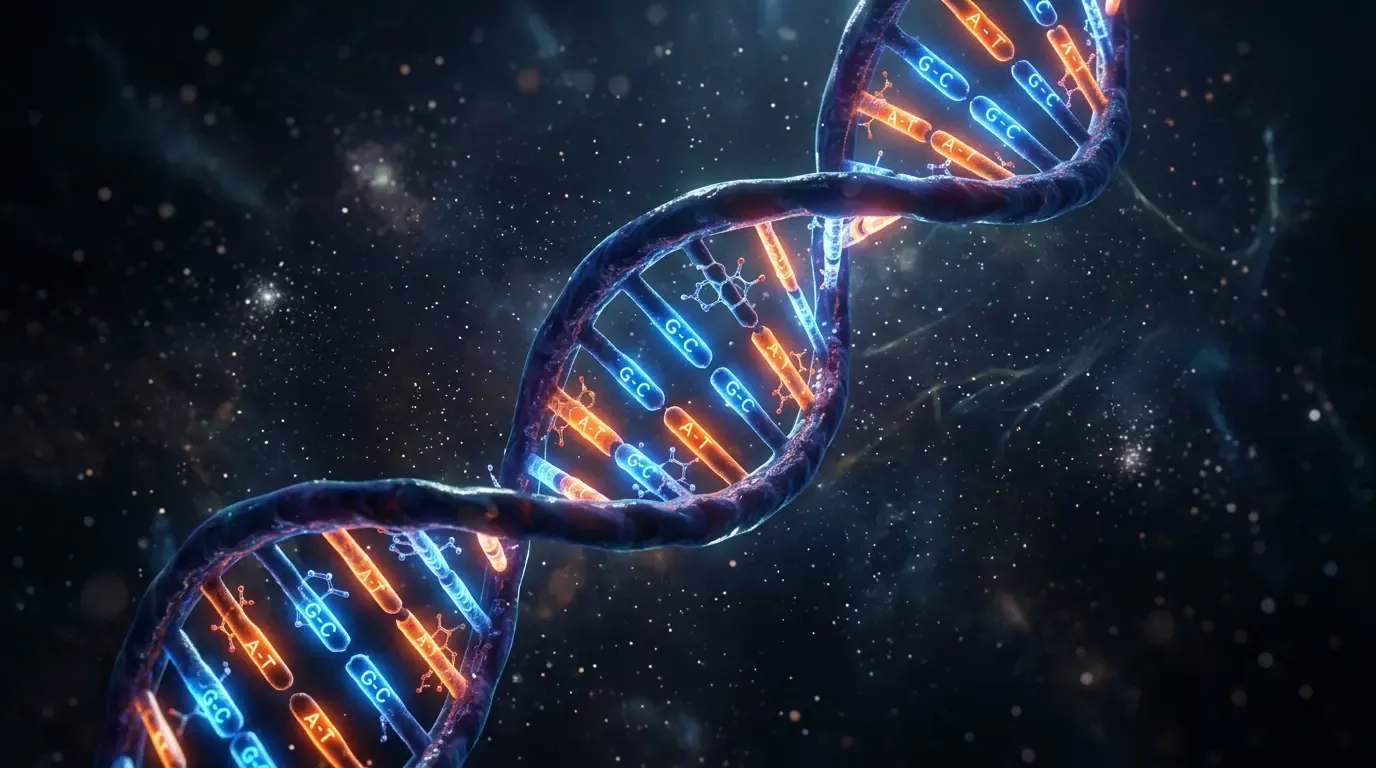
There must be variation in the trait in question within a population. If all individuals were identical, there would be nothing for selection to act on. Variation arises from mutations in DNA — random errors in copying the genetic code — as well as from genetic recombination during sexual reproduction, which shuffles existing variants into new combinations. Variation is the raw material of evolution.
The variation must be heritable — that is, it must have a genetic basis so that it can be passed from parents to offspring. If a giraffe develops a long neck through years of stretching (as the early evolutionist Jean-Baptiste Lamarck proposed), but that acquired length is not encoded in its DNA, it won’t be inherited. Natural selection only operates on variation that is genetically encoded. This is why understanding ** DNA and RNA**, is so central to undestanding the path of evolution.
Some individuals must survive and reproduce more successfully than others — and this difference must be related to the heritable trait in question. This is the “selection” in natural selection. It doesn’t mean the strongest or most aggressive always win; it means those whose traits best match the demands of the current environment leave more offspring.
Natural selection is a slow process operating over many generations. For significant changes to accumulate — enough to produce new species — thousands or millions of generations are typically required. The fossil record, which documents the history of life across hundreds of millions of years, provides ample evidence of this gradual transformation. Some experts known as paleontologists are the people study the fossils to uncover the history of Earth. Their study is know as paleontology.
Natural selection is not just a historical theory or a thought experiment. It is observable in the present day, and the evidence for it is overwhelming.
Darwin’s finches — 15 species of birds on the Galápagos Islands, all descended from a common ancestor that arrived from South America roughly two to three million years ago — remain the most famous example of adaptive radiation. Each species has evolved a distinct beak morphology suited to the food sources available on its island: large, powerful beaks for cracking hard seeds; small, delicate beaks for probing flowers for nectar; hooked beaks for tearing insects from bark.
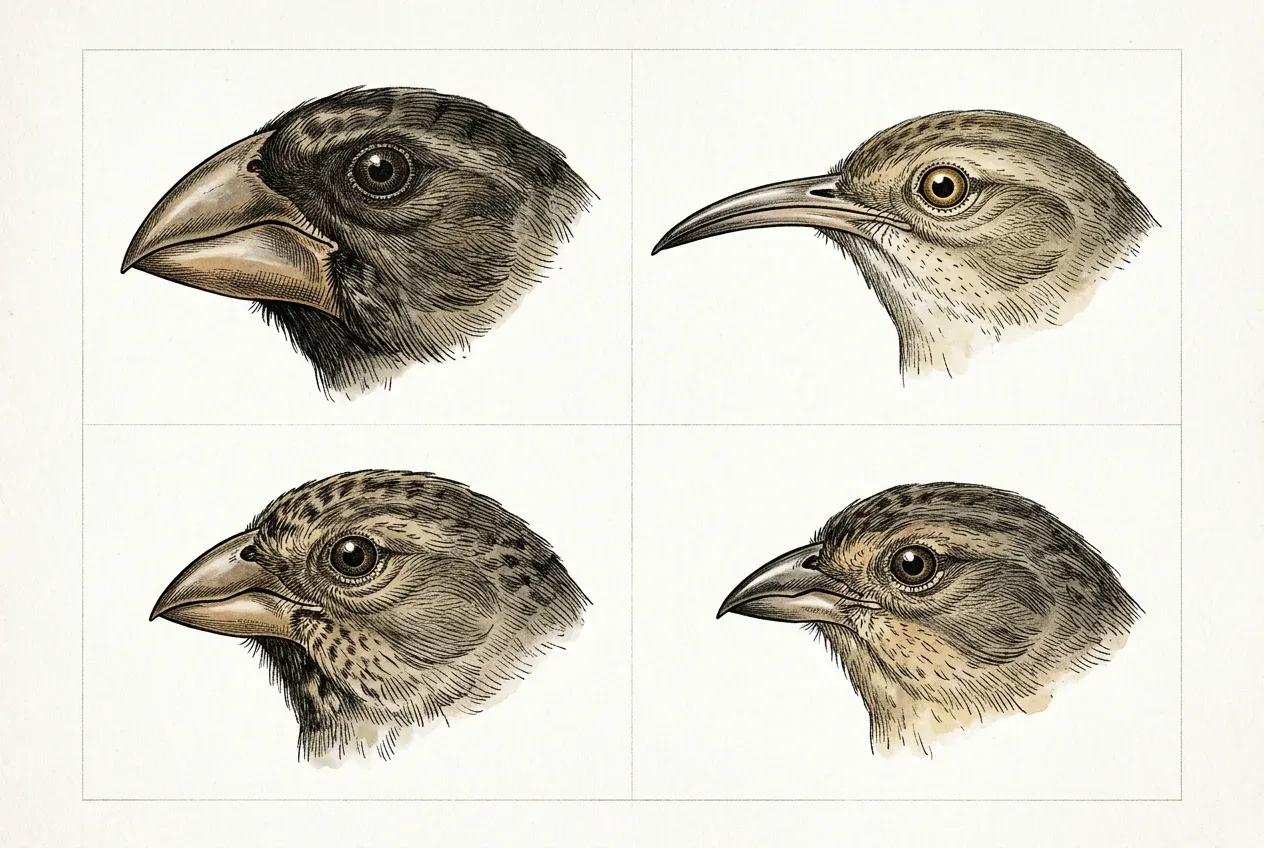
The process has been observed directly. During a drought on Daphne Major Island in 1977, seeds became scarcer and the available seeds were harder and larger. Peter and Rosemary Grant, who had been studying the island’s medium ground finches for years, documented that birds with slightly larger, deeper beaks survived at higher rates (they could crack the larger seeds) and reproduced more successfully. Within just one or two generations, the average beak size in the population had measurably increased. When the drought ended, the pattern partly reversed. Natural selection in action, observed in real time.
One of the most celebrated examples from England involves the peppered moth (Biston betularia). Before the Industrial Revolution, the typical form was pale and mottled — well camouflaged against the lichen-covered bark of trees. A dark (melanic) form existed but was rare, easily spotted and eaten by birds.
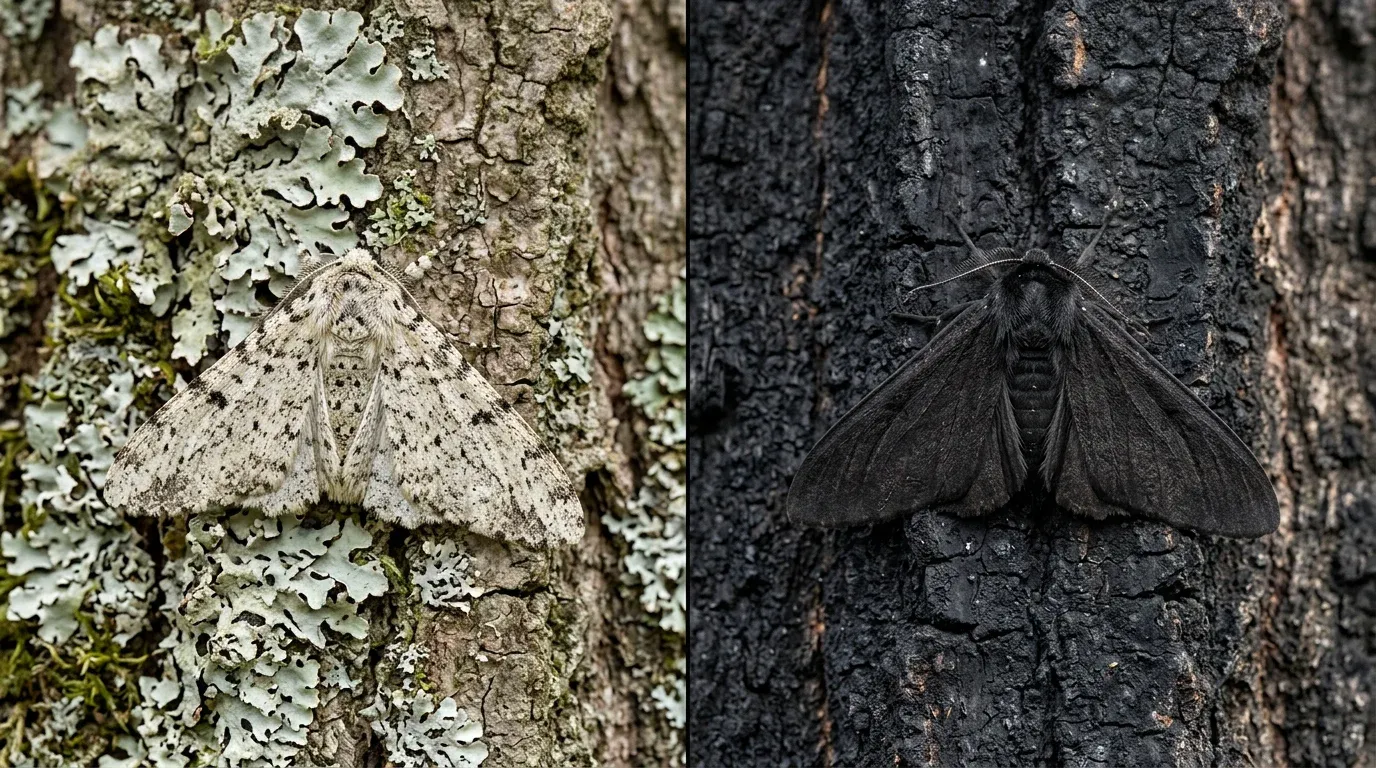
As industrial pollution killed lichens and coated trees with soot in the nineteenth century, pale moths became conspicuous against the dark bark and were preferentially predated. The dark form, now better camouflaged, became dominant in polluted areas. When clean air legislation reduced pollution in the twentieth century, the pale form recovered. The peppered moth is a textbook illustration of selection by predation — and also of its reversibility when the environment changes.
The most urgent real-world example of natural selection today is antibiotic resistance in bacteria. When a patient takes a course of antibiotics, most bacteria in the infected population die.
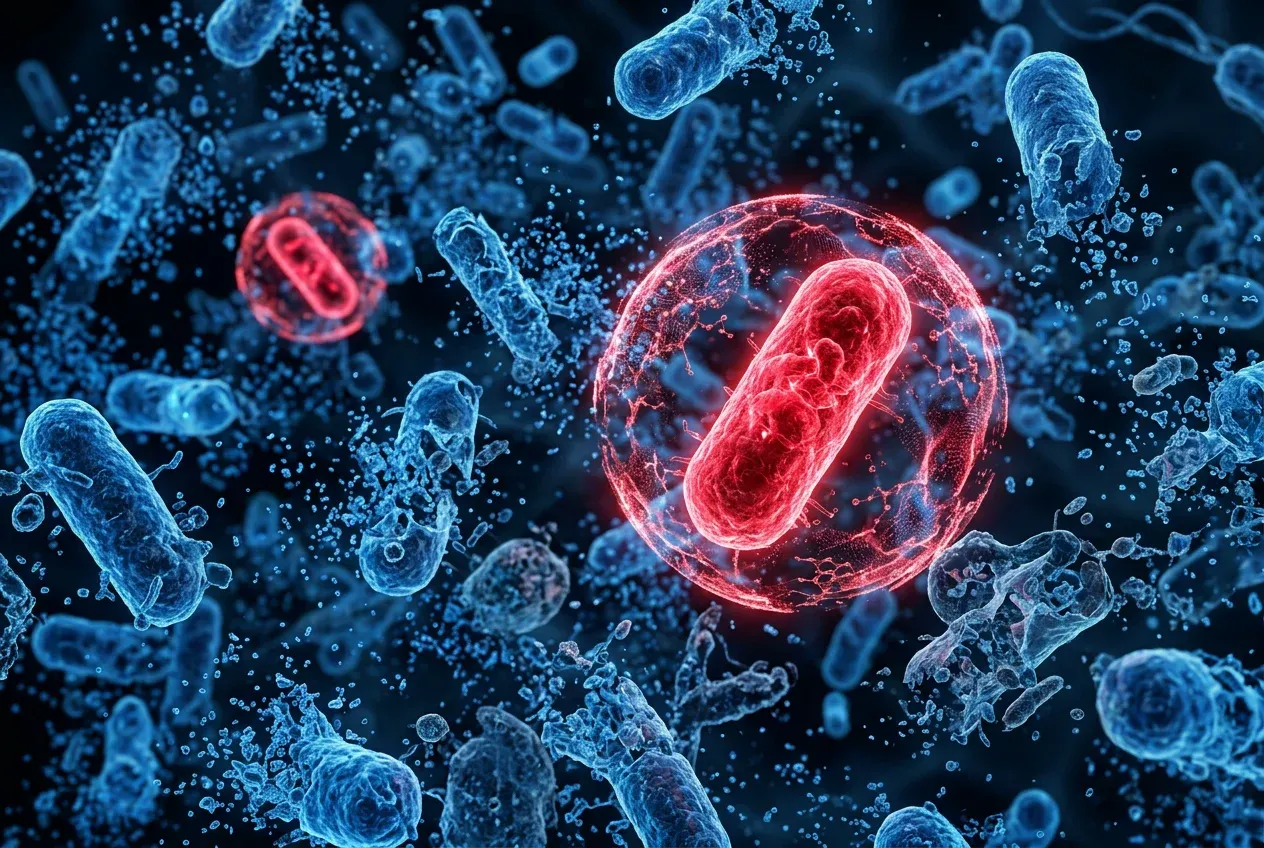
However, if an individual bacterium happens to carry a mutation that confers resistance — perhaps by encoding an enzyme that breaks down the antibiotic, or a modified cell wall that the antibiotic cannot penetrate — that individual survives and reproduces. Its offspring inherit the resistance mutation. Since bacterial populations reproduce every 20 to 30 minutes, this resistance evolves and spreads with alarming speed.
This is exactly how methicillin-resistant Staphylococcus aureus (MRSA) and multidrug-resistant tuberculosis have arisen. There is no mystery or design involved — just natural selection, operating with ruthless efficiency on the variation present in a bacterial population. The World Health Organization regards antimicrobial resistance as one of the greatest threats to global health, and it is a threat created, in large part, by our inadvertent manipulation of the selective environment.
[!NOTE] Natural selection does not “try” to make species better in any general sense. It only produces adaptations to the current environment. If the environment changes, what was once an advantage can become a liability. This is why species go extinct when environments shift faster than selection can track.
Natural selection is often conflated with evolution itself, but they are not the same thing.
Evolution is change in the heritable characteristics of a population over time. It is the broader phenomenon, and it can occur through several mechanisms: natural selection, genetic drift (random changes in trait frequencies, particularly important in small populations), gene flow (the movement of genes between populations), and mutation (the introduction of new variants).
Natural selection is one mechanism of evolution — arguably the most important, and the one that produces adaptations. But it is not the only one.
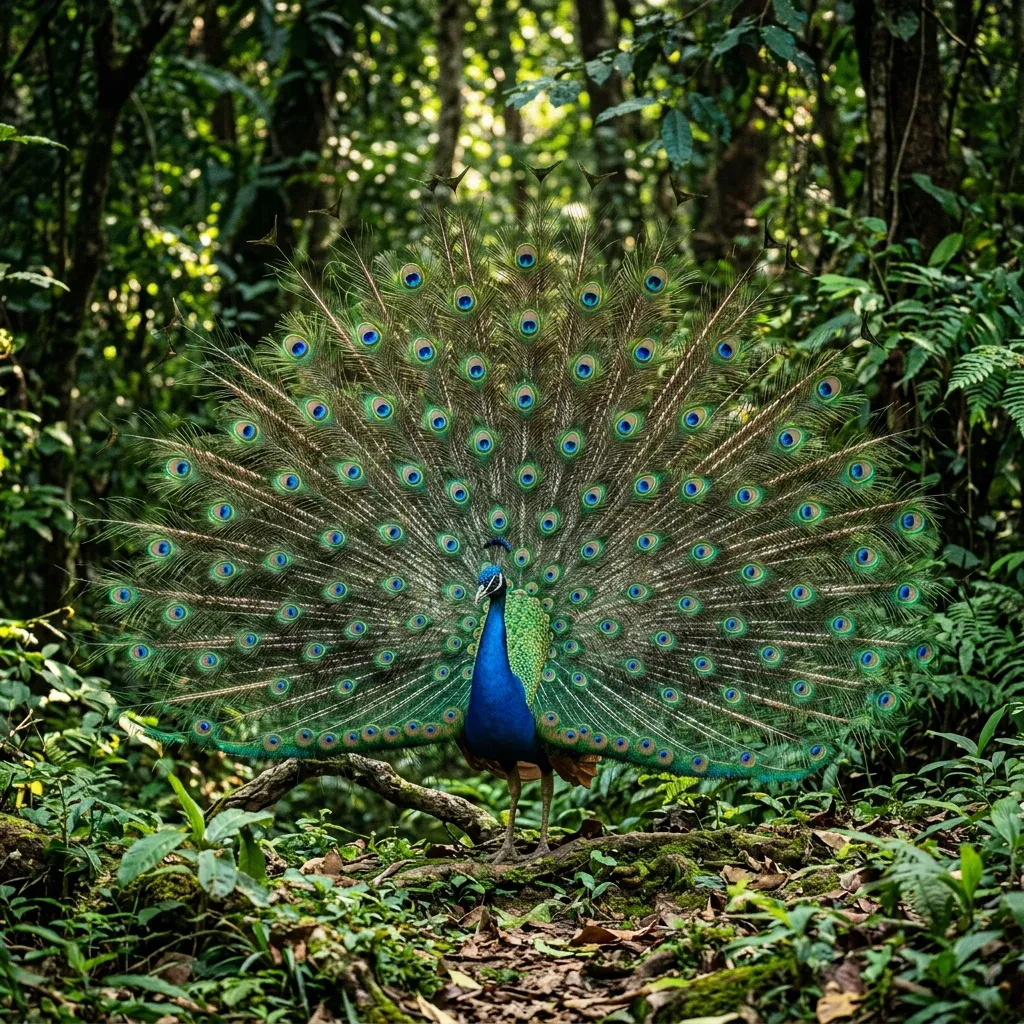
Similarly, “survival of the fittest” — Herbert Spencer’s phrase, which Darwin later adopted — is frequently misunderstood. “Fitness” in evolutionary biology does not mean physical strength or toughness. It means reproductive success relative to other individuals in the population. A small, frail organism that leaves many offspring is, by this definition, more fit than a large, powerful one that leaves none. A peacock’s extravagant tail, which makes him conspicuous to predators, is nonetheless an adaptation favoured by sexual selection because it increases his chances of attracting mates.
Given sufficient time and divergent selection pressures, populations can become so different from one another that individuals can no longer interbreed — they have become distinct species. This process is called speciation.
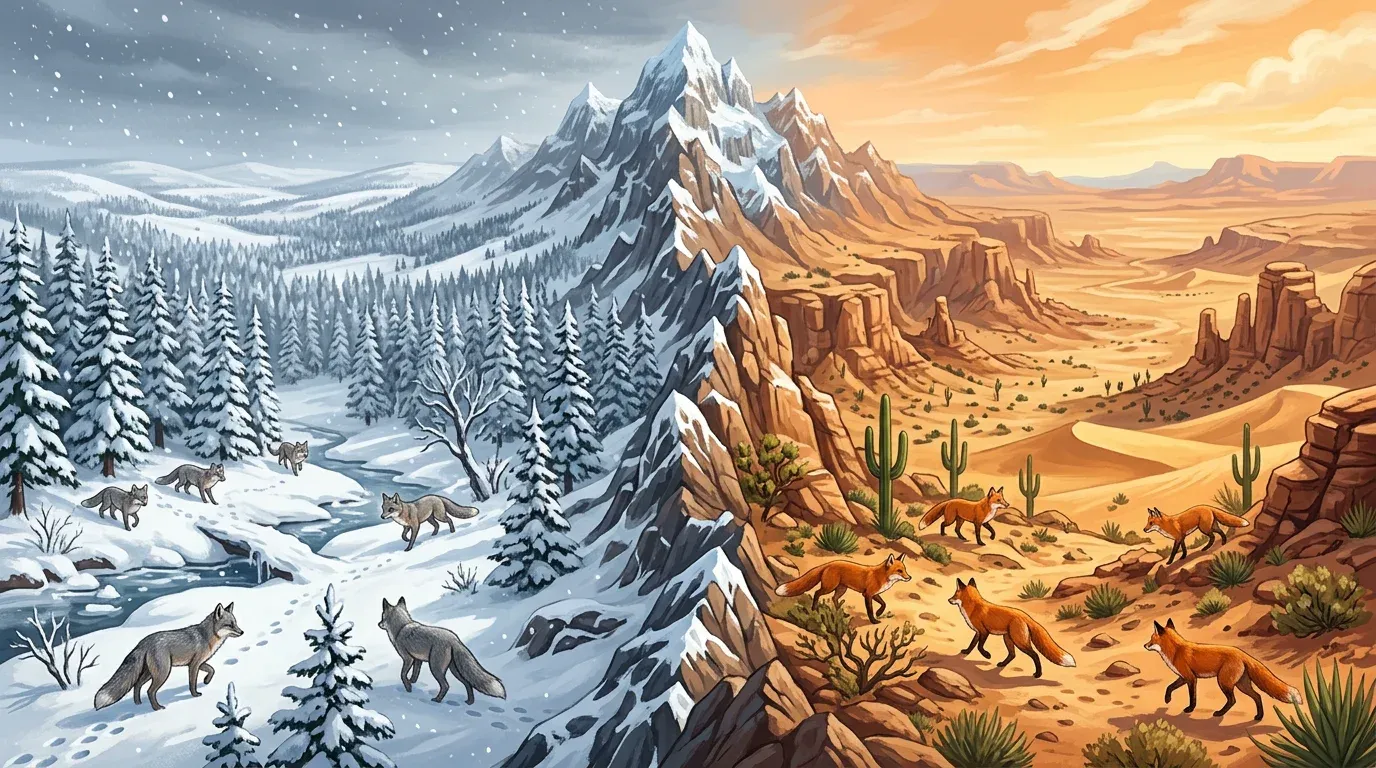
The most straightforward route is allopatric speciation: a geographic barrier (a mountain range, an ocean channel, a glacier) separates a population into two groups, which then evolve independently in their different environments. The Galápagos finches arose this way, as birds colonised different islands and each island’s population adapted to local conditions.
Sympatric speciation — the emergence of new species within the same geographic area — is rarer and more controversial, but does occur, particularly in plants (often through polyploidy, the acquisition of extra chromosome sets) and in some insects.
The timescales involved in speciation are typically very long — tens of thousands to millions of years — but the cumulative result across 3.8 billion years is the extraordinary diversity of living things on Earth today. The history of our Earth’s diversity is recorded in the form fossils and traces back to the origin of life itself.
Several persistent misunderstandings about natural selection are worth addressing directly.
“Evolution has a direction or goal.” It does not. Selection favours whatever traits happen to confer a reproductive advantage in the current environment. There is no predestined endpoint; life could have evolved quite differently under different conditions. The history of life is full of evolutionary dead ends — the vast majority of species that have ever lived are now extinct.
“Individuals evolve.” They don’t. Evolution happens to populations over generations. An individual’s traits are fixed by the time they are born. Selection acts on individuals, but evolution is a change in the population’s overall genetic makeup.
“Humans are no longer evolving.” This is false. Natural selection continues to act on human populations, though the specific pressures have changed dramatically with the advent of medicine, agriculture, and modern living. Genetic drift also continues. Studies have documented ongoing selection for traits ranging from age at first reproduction to resistance to infectious diseases.
“Natural selection is random.” Mutation is random — it does not produce the right variation on demand. But selection itself is not random: it systematically favours whichever variants happen to survive and reproduce better in a given environment.
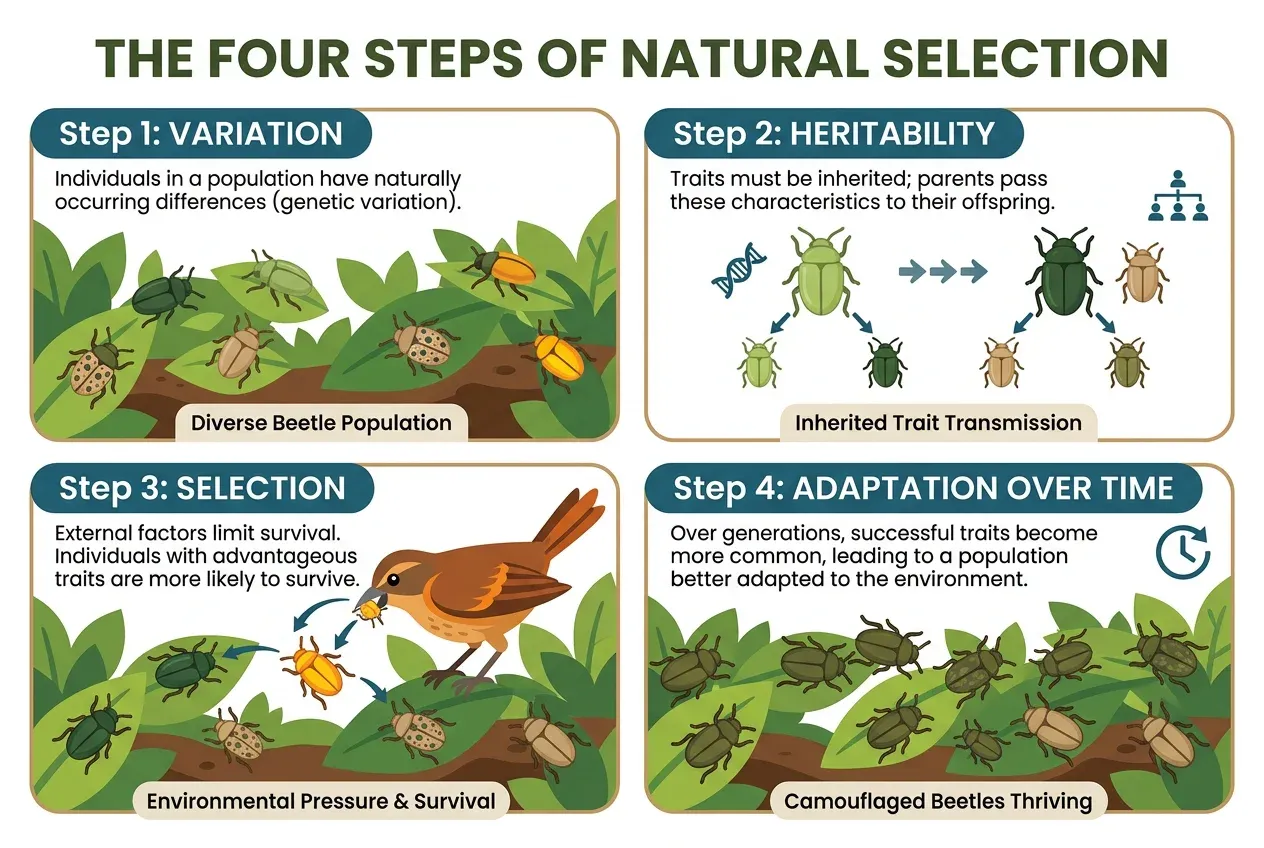
Natural selection is the process by which individuals with traits better suited to their environment tend to survive longer and reproduce more, passing those advantageous traits to their offspring. Over many generations, the population changes — the beneficial traits become more common and less beneficial ones decline. It is the primary mechanism behind evolutionary change and adaptation.
The four conditions are: (1) variation — individuals in a population must differ in some heritable trait; (2) heritability — that variation must be genetically encoded so it can be passed to offspring; (3) differential reproductive success — individuals with certain variants must survive and reproduce more than others; and (4) time — the process must operate over many generations for significant changes to accumulate.
Evolution is the broader phenomenon of change in heritable characteristics of populations over time. It can be driven by several mechanisms: natural selection, genetic drift, gene flow, and mutation. Natural selection is the mechanism that produces adaptations — traits that improve fitness in a given environment — and is generally the most powerful driver of directional evolutionary change.
Yes. Natural selection continues to act on human populations, though modern medicine, hygiene, and nutrition have changed the pressures considerably. Researchers have documented ongoing selection for traits such as age at first reproduction and resistance to certain diseases. Genetic drift also continues to operate, particularly in isolated populations.
Antibiotic resistance is natural selection operating in bacterial populations. When antibiotics are used, most bacteria are killed, but those that happen to carry resistance mutations survive and reproduce. Their offspring inherit the resistance, and quickly it spreads through the population. This process is accelerated by the rapid reproduction of bacteria and the widespread, sometimes inappropriate, use of antibiotics.
Applaud the article to let us know. You can clap multiple times!