How Artificial Intelligence is Transforming Science
Discover how Artificial Intelligence and machine learning are revolutionizing scientific discovery, from solving protein folding with AlphaFold to accelerating astronomy.
Discover how Artificial Intelligence and machine learning are revolutionizing scientific discovery, from solving protein folding with AlphaFold to accelerating astronomy.
For centuries, scientific discovery has relied on a familiar, methodical process: observation, hypothesis, rigorous experimentation, and theoretical analysis. While this scientific method has yielded the technological marvels of the modern world, the sheer volume of data generated by 21st-century science has outpaced human analytical capacity. Enter Artificial Intelligence (AI). The role of AI in science is expanding rapidly, driving breakthroughs previously thought impossible.
Over the past decade, AI — specifically deep learning and machine learning algorithms — has transitioned from a niche computer science concept into an indispensable tool across virtually every scientific discipline. To understand the underlying mechanics of these algorithms, see demystifying neural networks. AI is no longer just assisting scientists in analyzing data; it is fundamentally transforming how science is done. By identifying hidden patterns in massive datasets, simulating complex physical systems, and predicting molecular structures, AI is drastically accelerating the pace of scientific discovery.
It is not an exaggeration to say that AI has done one of the most significant impacts in the field of biology, especially regarding the decades old “protein folding problem”.
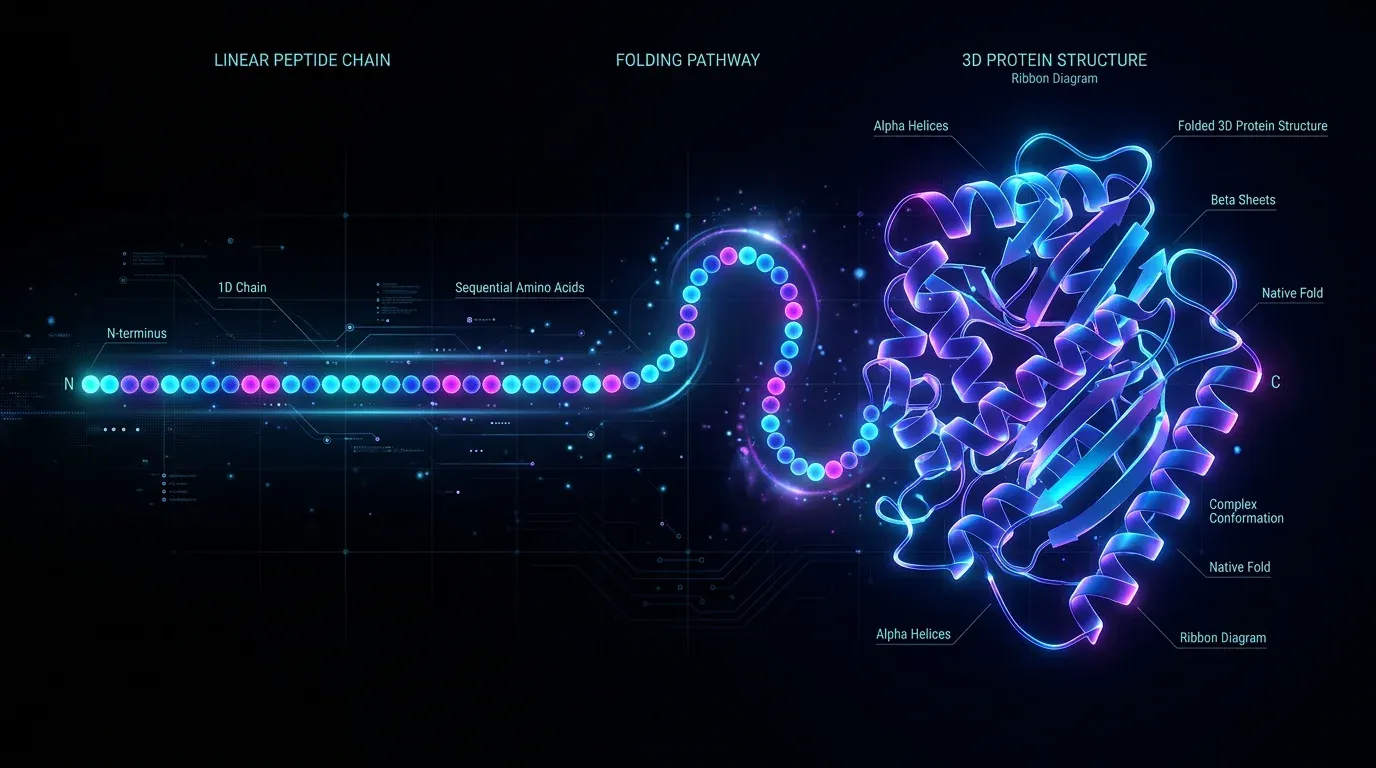
Proteins are the workhorses of life. They form our muscles, catalyze chemical reactions as enzymes, and defend our bodies as antibodies (often working closely with cells). The function of a protein is entirely dictated by its unique 3D structure. However, proteins begin as simple, one-dimensional chains of amino acids. Based on the laws of physics, these chains rapidly fold into highly complex 3D shapes. Predicting exactly how a 1D chain of amino acids will fold into a 3D structure was considered one of the grandest challenges in biology for over 50 years.
In 2020, Google’s DeepMind fundamentally solved the protein folding problem with an AI system called AlphaFold. By training deep neural networks on hundreds of thousands of known protein structures, AlphaFold learned to predict the 3D structure of unmapped proteins with astonishing, near-experimental accuracy.
In 2022, DeepMind released the structures of nearly 200 million proteins—representing almost every known protein known to science—into a public, open-source database. This breakthrough has saved biologists thousands of years of manual laboratory work (using slow techniques like X-ray crystallography) and has opened the floodgates for advanced research in genetics, disease understanding, and agricultural science.
The development of new pharmaceutical drugs is notoriously slow, incredibly expensive, and prone to high failure rates. Historically, it can take over a decade and billions of dollars to bring a new drug from initial discovery to market. AI is revolutionizing this pipeline by optimizing the drug discovery process at a molecular level.
Machine learning models are now being used to sift through vast chemical libraries containing millions of potential compounds. AI can quickly evaluate these molecules, predicting how effectively they will bind to a specific disease target (like a virus receptor or a cancer cell protein).
AI models are also capable of generating entirely novel molecular structures that do not yet exist in nature. The can optimize the molecular structures for high efficacy and low toxicity before a chemist even steps into a laboratory to synthesize them.
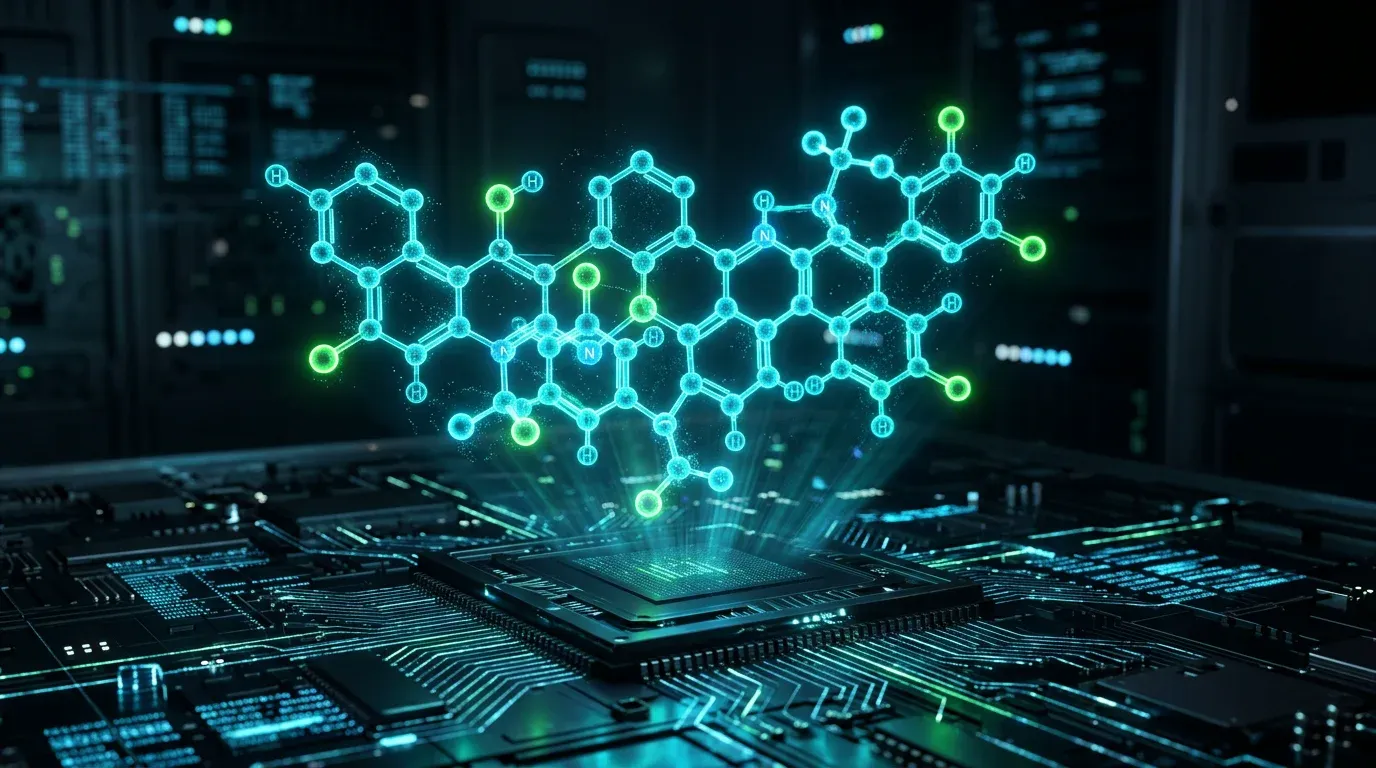
In 2020, a drug candidate designed entirely by AI (specifically for obsessive-compulsive disorder) entered human clinical trials. This milestone marked the beginning of an era where AI-generated therapeutics could become the norm, a shift explored further in how AI is revolutionizing healthcare. By drastically narrowing down the pool of viable candidates, AI cuts years off the research timeline and saves millions of dollars in development costs.
Astronomy is currently facing a “data deluge.” Modern telescopes and observatories, such as the James Webb Space Telescope (JWST) and the upcoming Vera C. Rubin Observatory, generate petabytes of data every night. There are simply not enough human astronomers on Earth to analyze all these images. AI has stepped in as an essential cosmic assistant.
Machine learning algorithms, particularly convolutional neural networks (CNNs), are exceptionally good at image recognition. Astronomers have trained these algorithms to sift through millions of telescope images to automatically classify the shapes of distant galaxies (spiral, elliptical, or irregular).
More impressively, AI is actively hunting for exoplanets (planets orbiting stars outside our solar system) and even rogue planets wandering in the dark. Detecting an exoplanet often relies on the transit method—monitoring the minuscule, temporary dip in a star’s brightness when a planet passes in front of it. The Kepler space telescope gathered vast amounts of this light-curve data. Google AI engineers trained neural networks to analyze this data, successfully discovering new planets that human researchers and traditional software had missed in the statistical noise.
AI is also being used to map the invisible universe. By analyzing the subtle gravitational lensing (the bending of light from distant galaxies caused by massive objects in the foreground), AI models can reconstruct maps of dark matter distribution across the cosmos with unprecedented precision.
We all are aware of the first ever real image of a black hole’s event horizon, it was captured by the Event Horizon Telescope, and relied on advanced machine learning algorithms to piece together the fragmented data from radio telescopes scatttered across the globe.
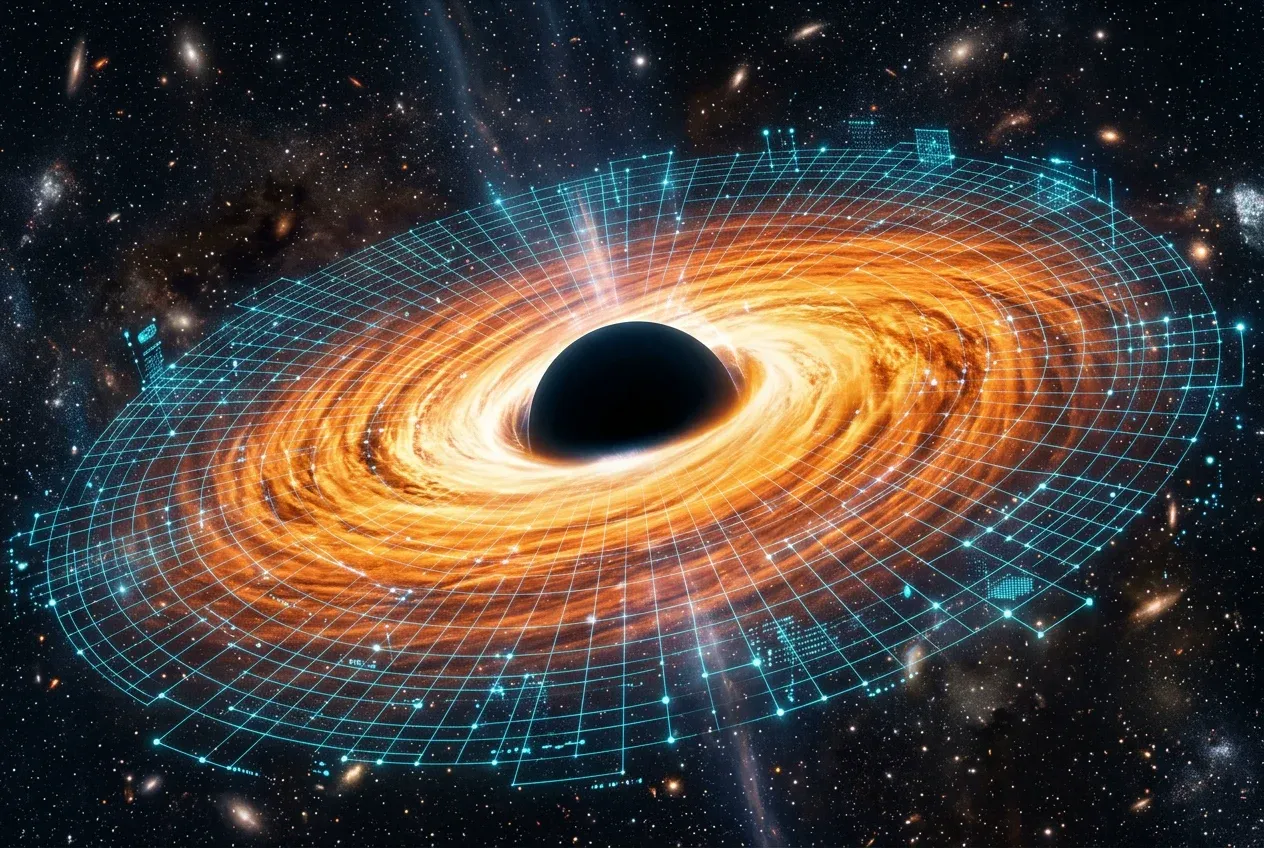
[!NOTE] Did You Know? The Vera C. Rubin Observatory will soon begin capturing a time-lapse of the southern sky, generating 20 terabytes of data every single night. AI systems are actively being deployed to automatically flag supernovas, asteroids, and unusual transient events within seconds of them being recorded.
Understanding and predicting the complex dynamics of Earth’s climate is one of the most critical challenges of our time. Traditional climate models require massive supercomputers to simulate fluid dynamics, thermodynamics, and atmospheric chemistry over decades. While highly accurate, they are incredibly computationally expensive.
AI is bridging the gap between accuracy and efficiency. Researchers are using machine learning to “emulate” these complex physics-based climate models. Once trained, an AI model can predict weather patterns and climate shifts thousands of times faster than a traditional supercomputer, allowing scientists to run millions of different scenarios to understand the impacts of specific carbon emission trajectories.
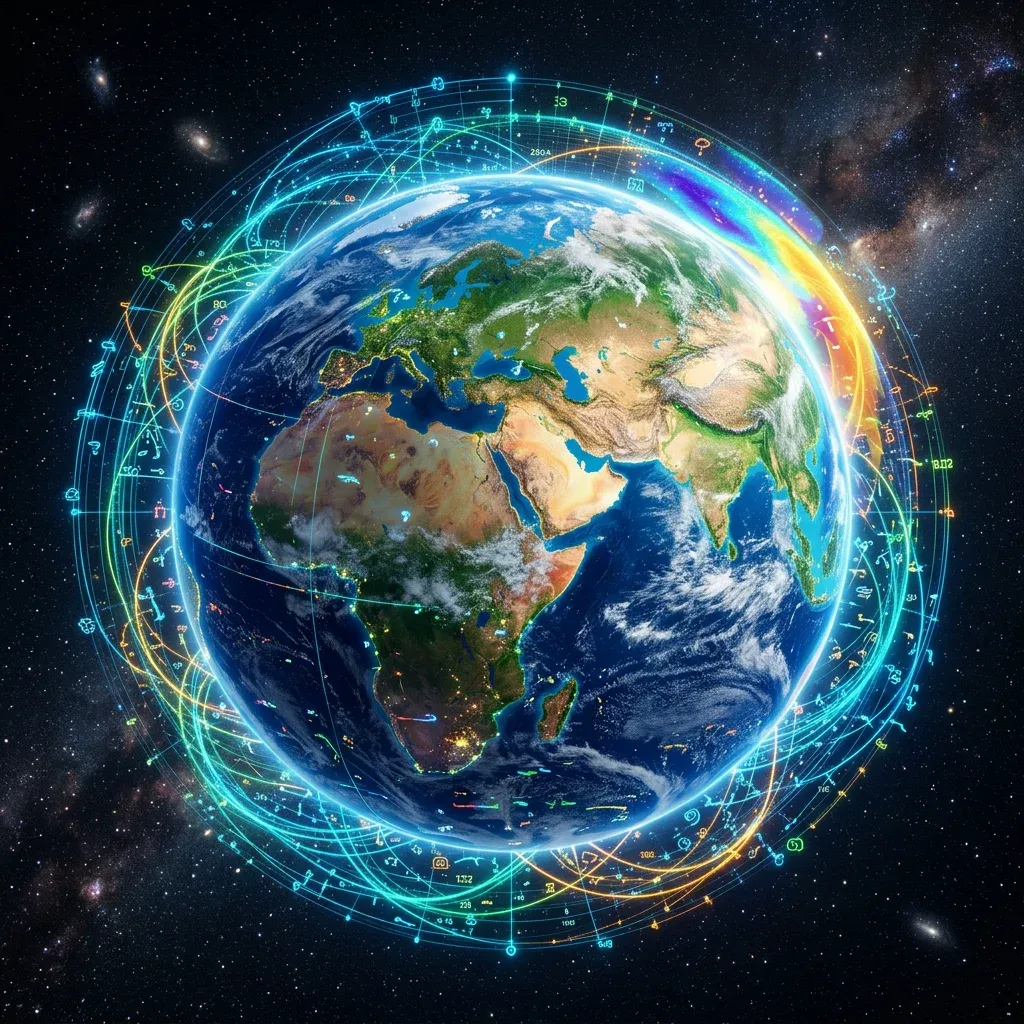
Additionally, researchers use AI to monitor the Earth in real-time. By analyzing satellite imagery, AI tracks deforestation rates in the Amazon and predicts the path and intensity of hurricanes. It also optimizes the integration of renewable energy into power grids by forecasting wind and solar conditions with high precision.
The discovery of new materials—such as more efficient solar panels, lighter aerospace alloys, or better battery chemistries—has traditionally been a process of trial and error. AI is changing the paradigm by predicting the properties of materials based solely on their atomic composition.
Using Graph Neural Networks (GNNs) and deep learning, scientists can simulate quantum mechanical interactions without needing to solve the impossibly complex Schrödinger equation for large systems. Recently, researchers used an AI system called GNoME (Graph Networks for Materials Exploration) to discover over 2.2 million new crystal structures, a process that expanded the catalog of known stable materials by an order of magnitude. These AI-discovered materials hold the potential to revolutionize solid-state batteries and high-temperature superconductors.
We are currently witnessing a shift from “AI for Science” to “AI as a Scientist.” The next frontier involves automated laboratories, sometimes called “self-driving labs,” where AI systems hypothesize a new material or compound, command robotic arms to synthesize and test it, analyze the results, and update their own models to run the next optimized experiment—all without human intervention.
While AI will not replace the creativity, intuition, and ethical reasoning of human scientists, it acts as a profoundly powerful exoskeleton for the human mind. By taking over the tedious burdens of data analysis and complex pattern recognition, AI frees scientists to do what humans do best: ask the profound, fundamental questions about how the universe works.
No. AI is an incredibly powerful tool for data analysis and pattern recognition, but it lacks human intuition, creativity, and the ability to formulate original hypotheses or ethical frameworks.
AlphaFold is an AI system that predicts the 3D structure of proteins from their amino acid sequence. It is important because protein structure dictates function, and knowing these structures accelerates drug discovery and our understanding of diseases.
AI helps by creating faster, highly accurate climate models, optimizing energy grids, discovering new materials for clean energy technologies, and monitoring deforestation and emissions via satellite imagery.
Applaud the article to let us know. You can clap multiple times!