A History of the Apollo Missions
Explore the full history of NASA's Apollo missions — from the Space Race origins to the Moon landings, Apollo 11, and the lasting scientific legacy of humanity's greatest adventure.
Explore the full history of NASA's Apollo missions — from the Space Race origins to the Moon landings, Apollo 11, and the lasting scientific legacy of humanity's greatest adventure.
On the evening of July 20, 1969, a 38-year-old former Navy pilot named Neil Armstrong crouched through a hatch, descended a nine-rung ladder, and placed his left boot on the surface of the Moon. “That’s one small step for man,” he said, his words reaching six hundred million people on Earth — the largest television audience in history to that point. “One giant leap for mankind.”
The moment felt sudden, almost miraculous. In reality, it was the culmination of eight years of intense work by more than 400,000 engineers, scientists, technicians, and astronauts. It was also the product of a Cold War rivalry that had pushed two superpowers to the limits of engineering and political will.
Let’s go through the story of Apollo missions.
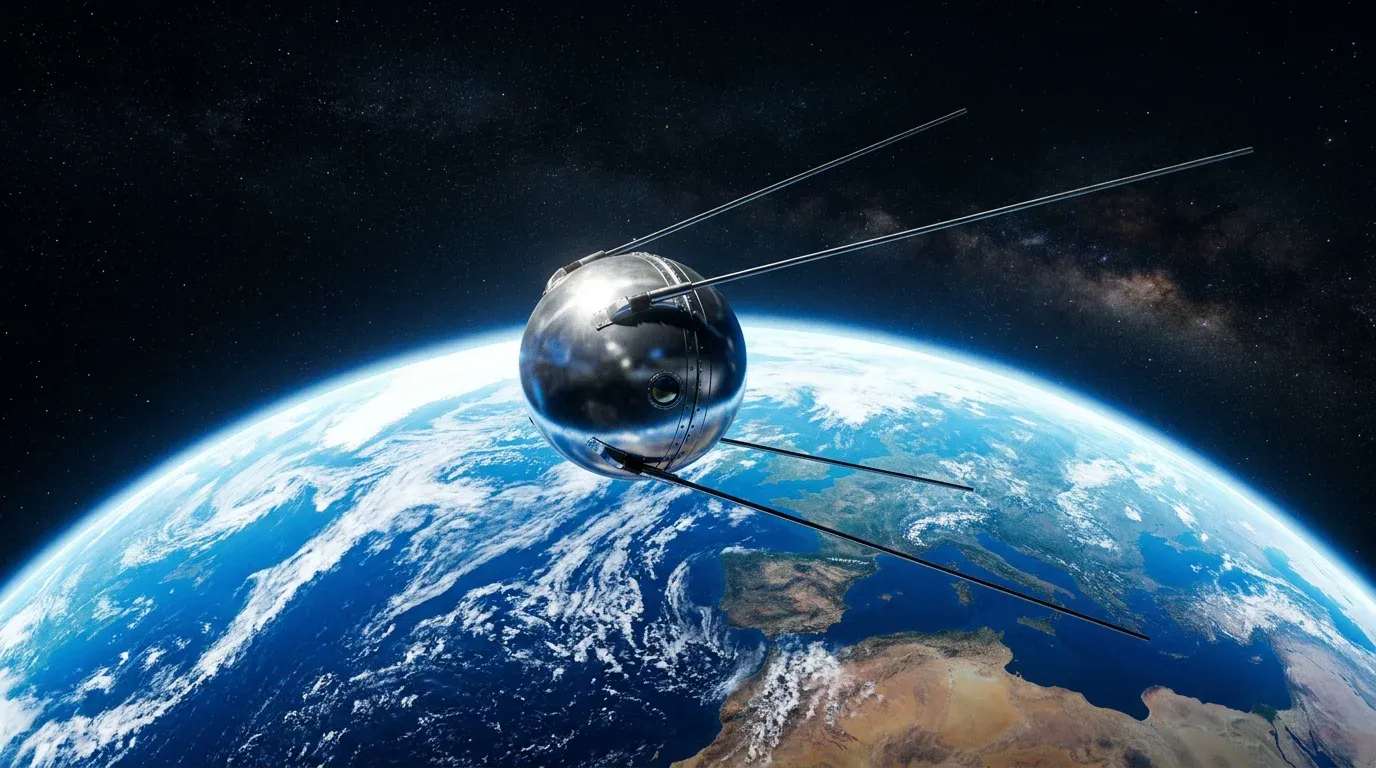
To understand Apollo, you must first go back to October 4, 1957. On that date, the Soviet Union launched Sputnik 1, the world’s first artificial satellite, into orbit. It was a metal sphere about the size of a beach ball, weighing 83 kilograms, and it did little more than emit a radio beep. But its implications were seismic.
If the Soviets could put a satellite into orbit, they could put a nuclear warhead on an intercontinental ballistic missile. The United States, which had considered itself the dominant technological power in the world, found itself suddenly, humiliatingly behind. Public panic was immediate. Congress passed the National Defense Education Act. NASA was created in 1958. The NASA space race had officially begun.
The Soviets pressed their advantage relentlessly. In November 1957, they launched Sputnik 2, carrying a dog named Laika — the first living creature in orbit. In April 1961, cosmonaut Yuri Gagarin became the first human to orbit the Earth, completing one orbit in 108 minutes aboard Vostok 1. The American response — Alan Shepard’s 15-minute suborbital hop in Freedom 7 the following month — felt modest by comparison.
On May 25, 1961 — just three weeks after Shepard’s flight and a month after the disastrous Bay of Pigs invasion had humiliated the Kennedy administration — President John F. Kennedy stood before a joint session of Congress and issued what would become one of the most consequential political commitments in American history.
“I believe that this nation should commit itself to achieving the goal, before this decade is out, of landing a man on the Moon and returning him safely to Earth.”
It was an extraordinary statement. NASA had, at that point, accumulated a total of 15 minutes of human spaceflight experience. Nobody had spacewalked. Nobody had rendezvoused two spacecraft in orbit. Nobody had guided a spacecraft to a soft landing on another world. Kennedy was asking the nation to accomplish all of these things — and more — in less than nine years.
The budget followed the ambition. NASA’s funding grew from 5 billion by 1965, representing roughly 4% of the entire federal budget. At its peak, the Apollo program employed 400,000 people across government, universities, and private contractors.
Apollo did not emerge from nothing. It was built on two predecessor programs that systematically developed the skills required for a lunar landing.
Project Mercury (1958–1963) put the first Americans in space, proving that humans could survive and work in the space environment. Six astronauts flew in Mercury capsules, with John Glenn becoming the first American to orbit the Earth in February 1962.
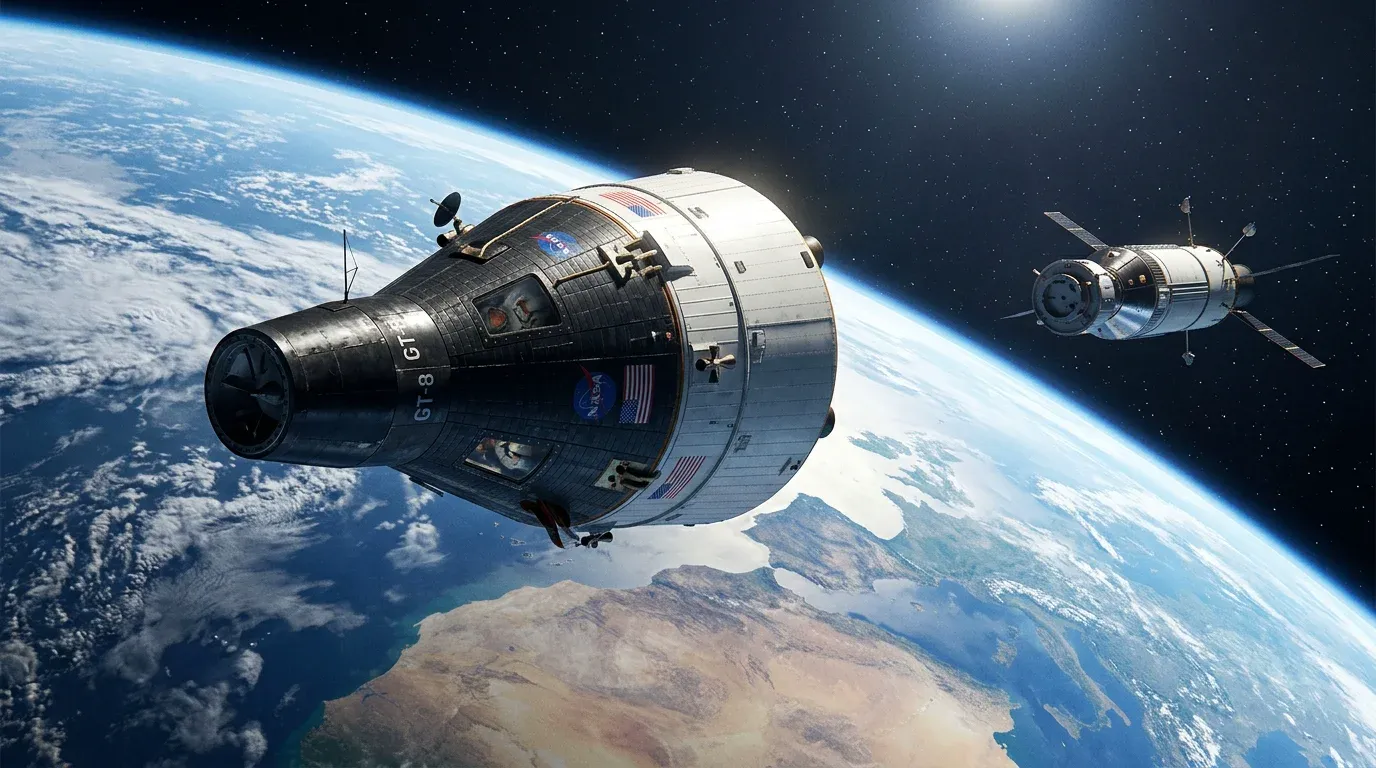
Project Gemini (1961–1966) was the crucial middle step. Ten crewed Gemini missions demonstrated orbital rendezvous — the technique of having two spacecraft meet in orbit, essential for the lunar mission plan — as well as spacewalks, long-duration flights, and precision reentry. Without Gemini’s lessons, Apollo would have been impossible.
Although the current thrust power of SpaceX rockets far surpass the Saturn V rockects, we must pause to honor the engineering achievement that made everything else possible: the Saturn V rocket. Developed under the leadership of Wernher von Braun at NASA’s Marshall Space Flight Center, the Saturn V remains the most powerful operational rocket ever built.
Standing 111 meters tall — taller than the Statue of Liberty on her pedestal — and weighing 2.8 million kilograms fully fueled, the Saturn V generated 34.5 million newtons of thrust at liftoff, enough to propel 130,000 kilograms to low Earth orbit or 48,600 kilograms to the Moon. Its five F-1 engines, each burning 2,500 liters of kerosene per second, produced a sound powerful enough to shatter windows for miles around.
Thirteen Saturn Vs flew. All thirteen missions succeeded. Not a single Saturn V failed in flight — a record of reliability that still commands astonishment from engineers.
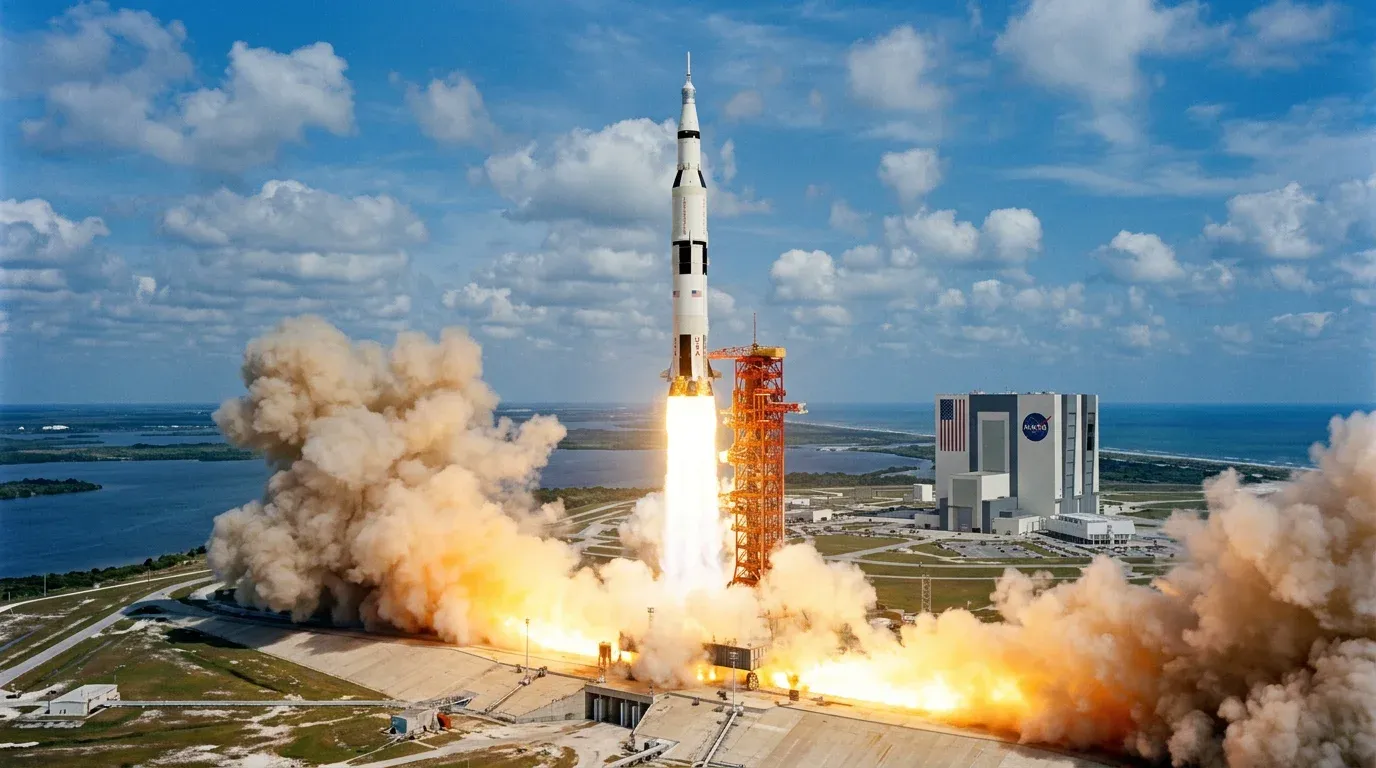
[!NOTE] The Saturn V’s F-1 engines were so powerful that NASA engineers struggled to believe their own test data. Each engine produced more thrust than all three main engines of the Space Shuttle combined.
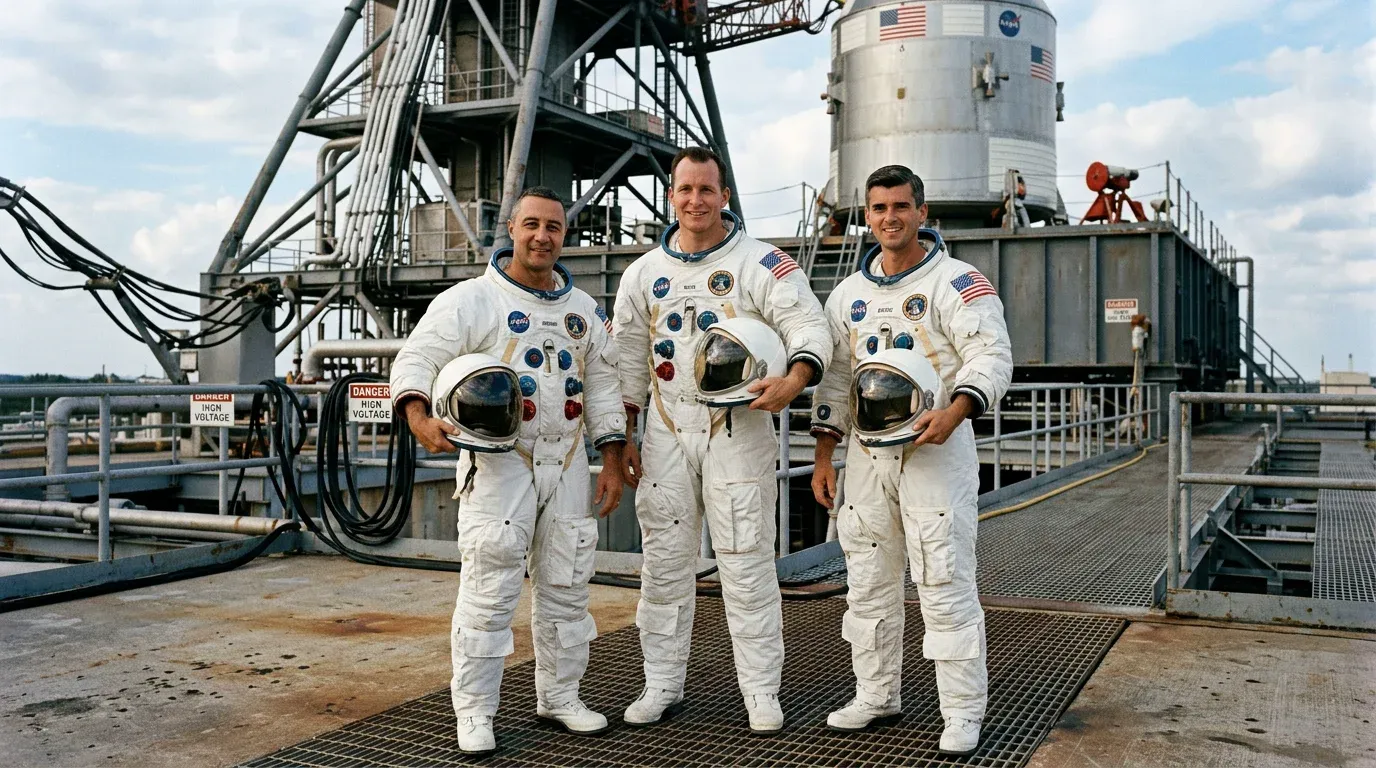
The Apollo program’s first crewed mission never flew. On January 27, 1967, during a routine launch rehearsal, a fire broke out inside the Apollo 1 command module on the launchpad at Cape Kennedy. Astronauts Gus Grissom, Ed White, and Roger Chaffee died within seconds, unable to escape the pure-oxygen atmosphere that turned the cabin into an inferno.
The accident grounded the program for 18 months. The command module was completely redesigned. Fire-resistant materials replaced flammable ones. The hatch was modified to open outward. The tragedy was devastating, but the redesign likely saved the lives of later crews.
Apollo missions 2 through 6 were uncrewed test flights of the Saturn V and command module systems. The first crewed Apollo flight, Apollo 7 (October 1968), spent 11 days in Earth orbit testing the command and service module. It was a textbook mission.
Apollo 8 (December 1968) was one of the boldest decisions in spaceflight history. NASA sent astronauts Frank Borman, James Lovell, and William Anders not just into orbit but all the way to the Moon, even without a lunar module. It was the first time humans left Earth’s gravity. It was also the first time anyone orbited another world. On Christmas Eve, the crew read from the Book of Genesis while broadcasting live from lunar orbit. During this mission, William Anders took what became one of the most famous photographs in history: Earthrise, showing a blue Earth rising above the lunar horizon.
Apollo 9 (March 1969) tested the lunar module in Earth orbit — the first time the full Apollo stack had been flown together. Apollo 10 (May 1969) was the full dress rehearsal, flying to the Moon and descending to within 15 kilometers of the lunar surface before pulling up. Everything was ready.
On July 16, 1969, Saturn V AS-506 ignited its five F-1 engines and lifted astronauts Neil Armstrong, Buzz Aldrin, and Michael Collins into the Florida sky. Four days later, the lunar module Eagle separated from the command module Columbia, with Armstrong and Aldrin aboard.
The descent to the lunar surface was not smooth. At 30,000 feet, a program alarm — code 1202 — flashed on the guidance computer. In Houston, a 26-year-old engineer named Steve Bales recognized the alarm: the computer was overloaded, rebooting to handle essential tasks, and could be allowed to continue. “Go,” he said. The decision took about four seconds.
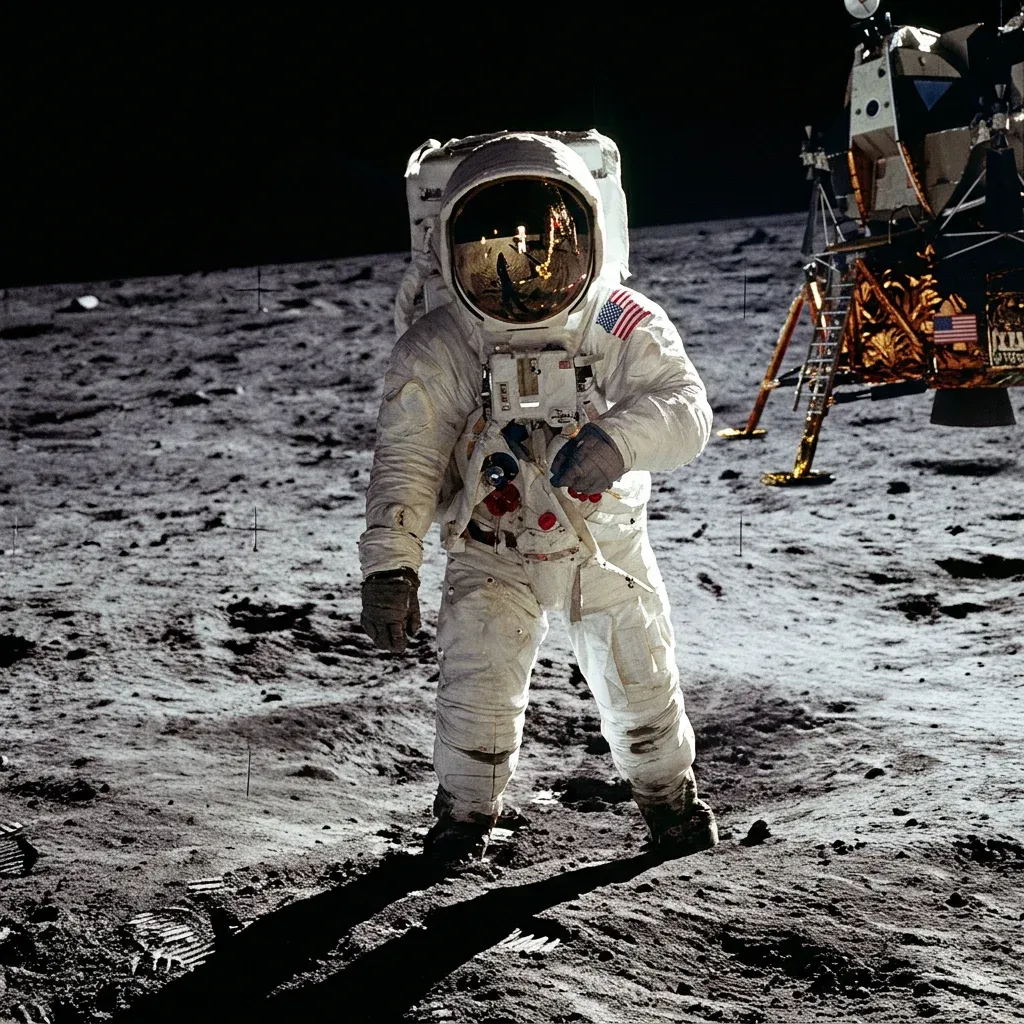
With the landing zone proving rocky and unsuitable, Armstrong took manual control and flew the Eagle past boulders the size of cars, searching for open ground. With only 30 seconds of fuel remaining, the Eagle settled onto the Sea of Tranquility. “The Eagle has landed.”
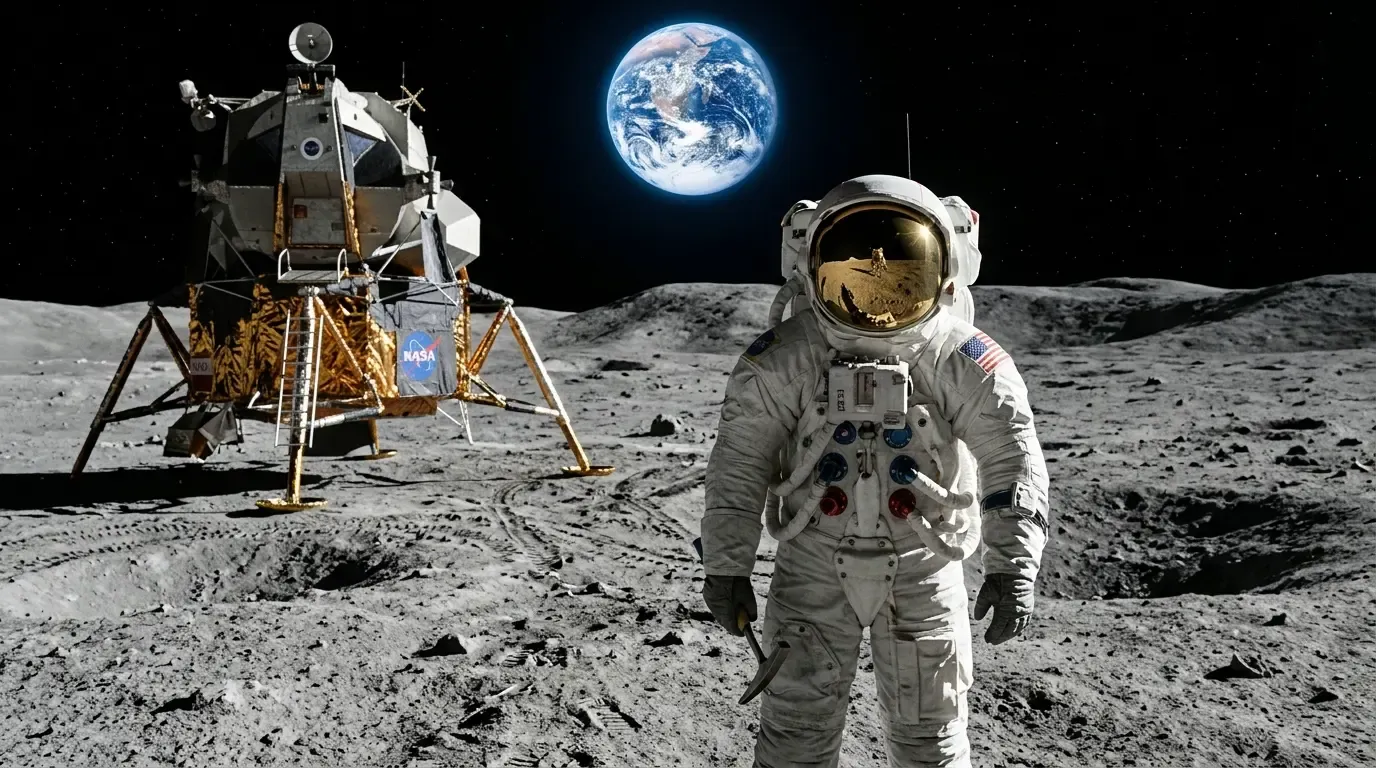
Armstrong stepped onto the surface at 02:56 UTC on July 21. Aldrin joined him 20 minutes later. For two and a half hours they planted a flag, collected 21.5 kilograms of lunar rocks, deployed scientific instruments, and spoke with President Nixon. Collins, orbiting alone in Columbia, became the most isolated human being in history.
They returned to Earth on July 24, splashing down in the Pacific. The world exhaled.
With the goal of the first landing achieved, subsequent missions became more scientifically ambitious. Apollo 12 (November 1969) landed within walking distance of the Surveyor 3 probe, which had landed on the Moon two years earlier. Astronauts Pete Conrad and Alan Bean retrieved pieces of Surveyor 3, allowing scientists to study the effects of long-term exposure to the lunar environment.
Apollo 13 (April 1970) never landed. An oxygen tank in the service module exploded 56 hours into the flight, crippling the spacecraft. Astronauts Jim Lovell, Jack Swigert, and Fred Haise used the lunar module as a lifeboat, looping around the Moon and returning to Earth safely after six harrowing days. The mission became a testament to human improvisation under pressure — and to the ground teams at Mission Control who found solutions to problems that had no manual.
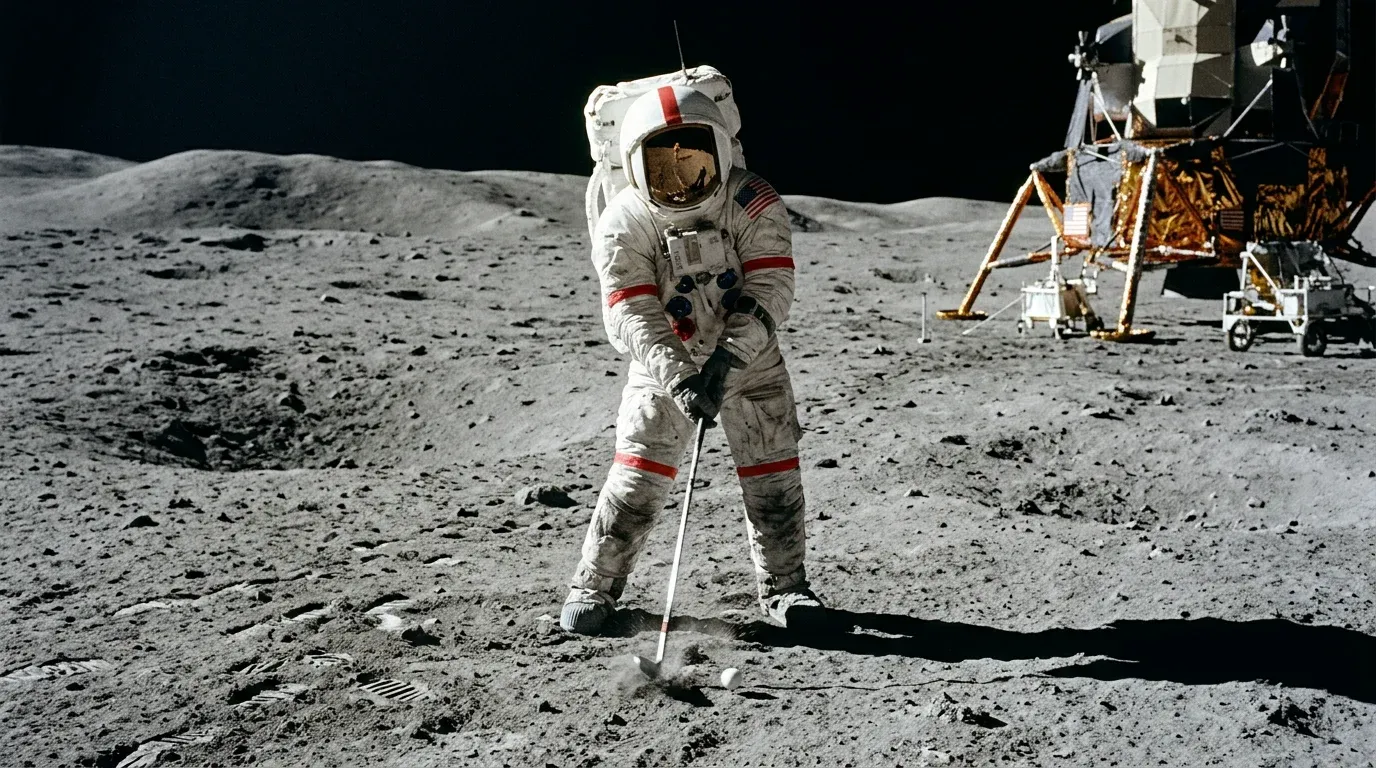
Apollo 14 (February 1971) returned to flight with astronaut Alan Shepard — the first American in space a decade earlier — walking on the lunar surface. At 47, he was the oldest person to walk on the Moon. He famously hit two golf balls with a makeshift club.
The final three Apollo missions — 15, 16, and 17 — were the most scientifically productive. Each carried the Lunar Roving Vehicle, an electric car that gave astronauts a range of several kilometers from the landing site.
Apollo 15 (July–August 1971) explored the Hadley Rille, a sinuous channel near the base of the Apennine Mountains. Astronaut David Scott found a piece of anorthosite that became famous as the “Genesis Rock” — an ancient piece of the Moon’s original crust, 4.5 billion years old.
Apollo 16 (April 1972) explored the Descartes Highlands, the only Apollo landing site in the lunar highlands. Its discoveries challenged preexisting models of highland geology.
Apollo 17 (December 1972) was the last, and the most remarkable. It carried the only professional scientist to walk on the Moon: geologist Harrison “Jack” Schmitt. The crew spent 75 hours on the surface, collected 110 kilograms of rock samples, and deployed the most comprehensive set of scientific instruments of any Apollo mission. Commander Gene Cernan was the last human to walk on the Moon, and his parting words — “We leave as we came, and God willing, as we shall return, with peace and hope for all mankind” — took on a poignant irony that the program would not continue.
For background on the Moon’s formation and geology, see our article on the formation of the Moon.
The scientific returns from Apollo were extraordinary. The 382 kilograms of lunar rocks and soil returned by six missions have been studied continuously for more than half a century, and they continue to yield new findings.
One of the most important scientific consequences of Apollo was the development of the Giant Impact Hypothesis for the Moon’s origin. The lunar samples showed that the Moon shares the same oxygen isotope ratios as Earth. This was strong evidence that it formed from material derived from Earth. Combined with the Moon’s low density and relative lack of iron, this led to a new theory. The now-accepted theory is that the Moon formed when a Mars-sized body called Theia collided with the early Earth roughly 4.5 billion years ago. This collision ejected a cloud of debris that eventually coalesced into the Moon.
Apollo established that the Moon is geologically dead — its volcanic activity ceased roughly 3 billion years ago. The dark maria (basaltic plains) visible from Earth formed when ancient lava flooded low-lying basins created by asteroid impacts. The lunar highlands are far older, representing the original crust. The Apollo seismometers measured thousands of moonquakes, revealing a layered internal structure with a small iron core.
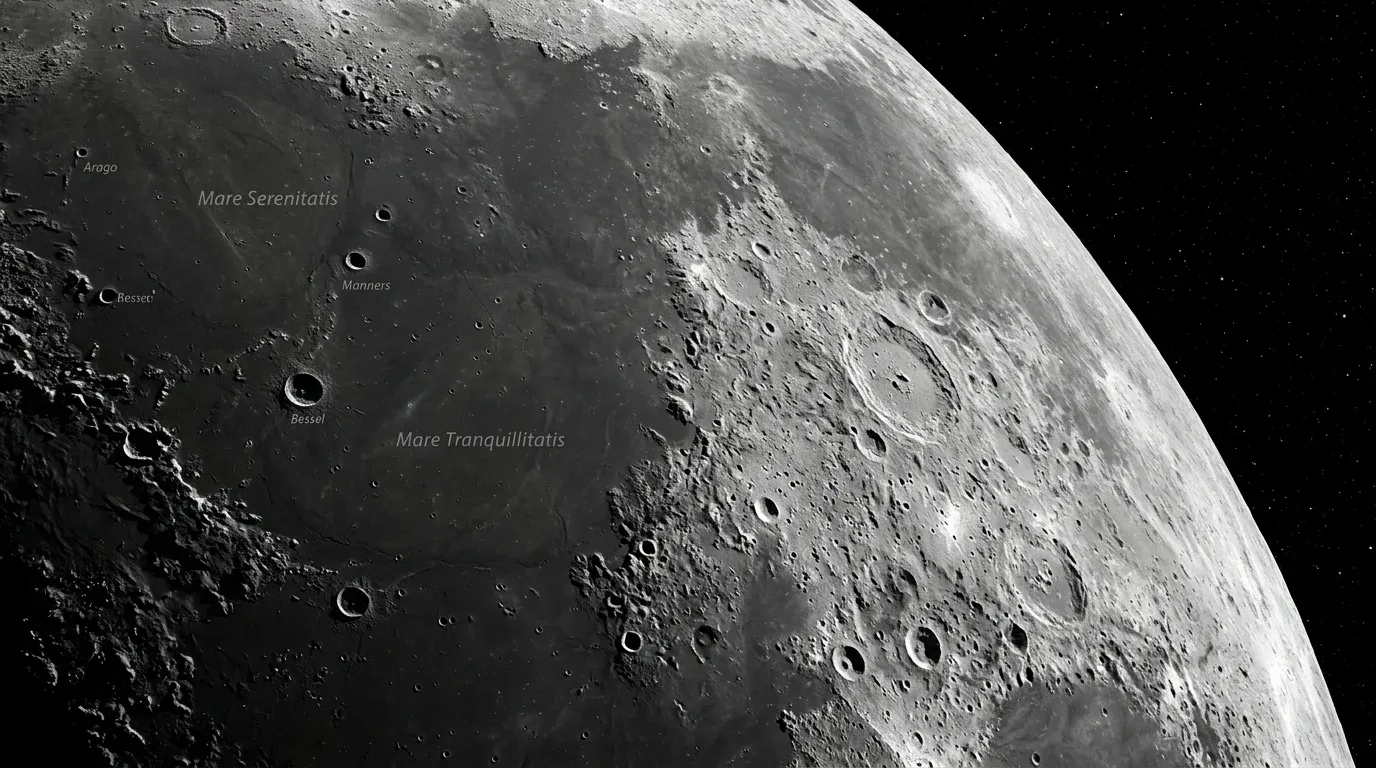
Precise age dating of lunar rocks established a timeline for the bombardment history of the inner solar system — the “Late Heavy Bombardment” that pockmarked all the inner planets roughly 3.9 billion years ago. This bombardment shaped conditions on early Earth at the time when life was first emerging.
Apollo 17 splashed down in December 1972, and no human has returned to the Moon since. Why?
The simple answer is that the political imperative had been achieved. Kennedy’s challenge was to beat the Soviets to the Moon, and that goal had been accomplished with Apollo 11. By 1970, with the Vietnam War draining resources and public attention, and with three upcoming Apollo missions already cancelled (18, 19, and 20), Congress was unwilling to fund a continuation. The Soviet Union had quietly abandoned its crewed lunar program after a series of N1 rocket failures.
The deeper answer involves what comes after a purely political goal. Apollo succeeded because it had a clear, binary objective: land on the Moon before the decade is out. Scientific exploration, by contrast, is open-ended. Congress struggled to fund a program without a finish line.
For more on why space exploration matters beyond political competition, see our article on why we explore space and an overview of our solar system.
Six Apollo missions successfully landed on the Moon: Apollo 11, 12, 14, 15, 16, and 17. Apollo 13 failed to land after an oxygen tank explosion but returned safely to Earth. Three planned later missions (18, 19, 20) were cancelled.
Neil Armstrong, commander of Apollo 11, became the first human to walk on the Moon on July 21, 1969, at 02:56 UTC. Buzz Aldrin followed approximately 20 minutes later. Michael Collins orbited above in the command module.
The six Apollo missions that landed on the Moon returned a total of 382 kilograms (842 pounds) of lunar rocks, soil, and core samples. These samples have been studied continuously since 1969 and have informed our understanding of the Moon's origin, geology, and the early solar system.
Apollo ended primarily because the political goal — beating the Soviet Union to the Moon — had been achieved. With public and congressional support waning, the Vietnam War consuming resources, and the Soviets having abandoned their own crewed lunar program, NASA's budget was cut and three planned missions (Apollo 18, 19, 20) were cancelled.
The Saturn V stood 111 meters (363 feet) tall when assembled on the launchpad with the Apollo spacecraft. It remains the most powerful rocket ever flown successfully, generating 34.5 million newtons of thrust at liftoff.
Applaud the article to let us know. You can clap multiple times!