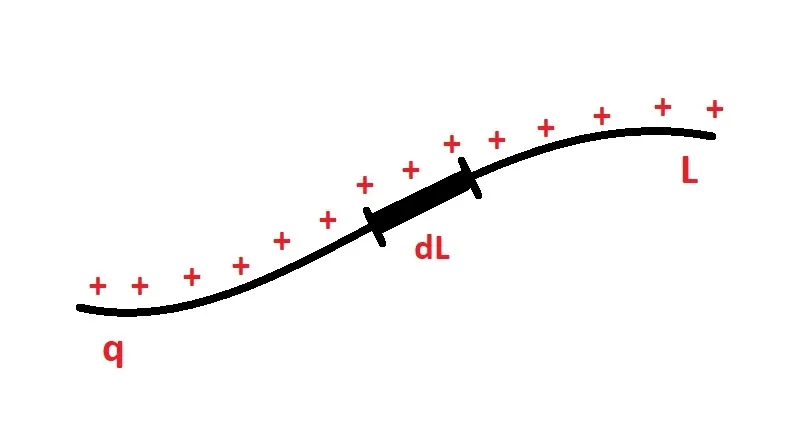
Electric Field

An introduction to the concept of the electric field, how it permeates space, and its effects on charged particles.

Electric field is the space around an electric charge in which another electric charge feels an electrostatic force.

Intensity Of Electric Field

The strength or intensity of an electric field at a point in an electric field is defined as the electrostatic force acting on a unit positive charge kept at that point in the electric field.

If Q0Q_0 is kept in electric field of QQ at a point then, intensity of electric field at that point will be
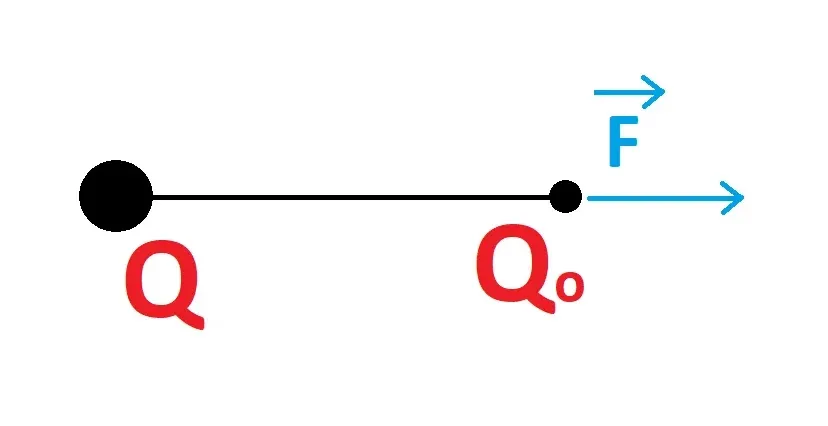
E=FQ0E = \frac{F}{Q_0}

Electric Field

Intensity of the electric field is a vector quantity and is directed along the direction of electrostatic force acting on a positive charge.

Unit = NC1\text{NC}^{-1} or Newton per Coulomb.

Dimensional Formula = [MLT2]/[AT]=[MLT3A1][MLT^{-2}]/[AT] = [MLT^{-3}A^{-1}].

  • Electric field can still exist without an electric charge. But it can’t be generated from nothing. It requires either electric charge or manetic field.
  • Since an electric field has its own existence, it takes a definite time to propagate in space. It means that if a charge moves a distance r, then time taken by its electric field to propagate will be r/c (c = speed of light).
  • Generally strength or intensity of electric field is also termed as value of electric field or simply electric field.
  • Test Charge
  • Very small amount of positive charge.
  • Point Charge.
  • Very less or negligible inertia.

Direction Of Electric Field

To find the direction of an electric field at a point, put a test charge or any positive charge at that point. The direction of electric force acting on a positive charge is the direction of the electric field at that point.
Direction of electric field

Force on an Electric Charge kept in an Electric Field

An electric charge experiences electrostatic force due to another electric field.

In an electric field electric charge experiences electric force given by
F=qEF = qE

  • FF is the electrostatic force on qq due to electric field EE.
  • FF on qq depends on the value of EE and qq both.

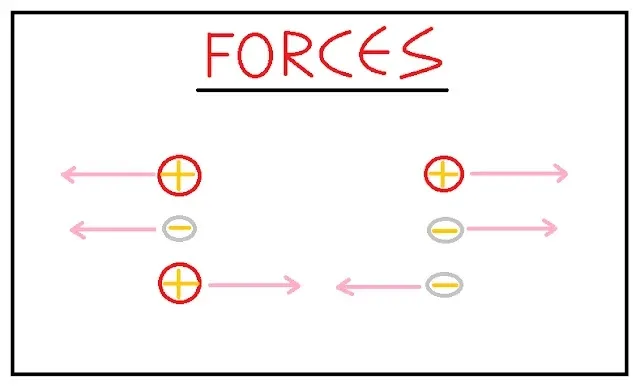
Direction Of Forces

Direction of forces

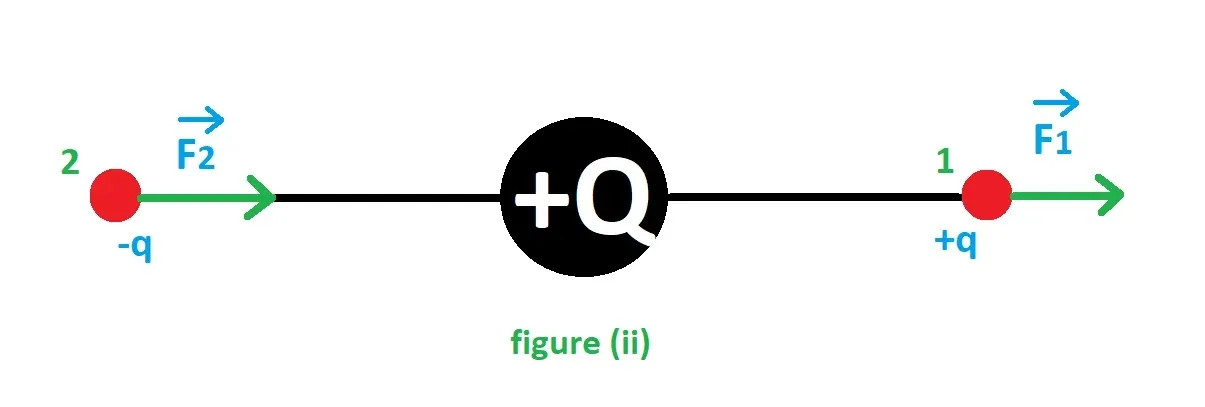
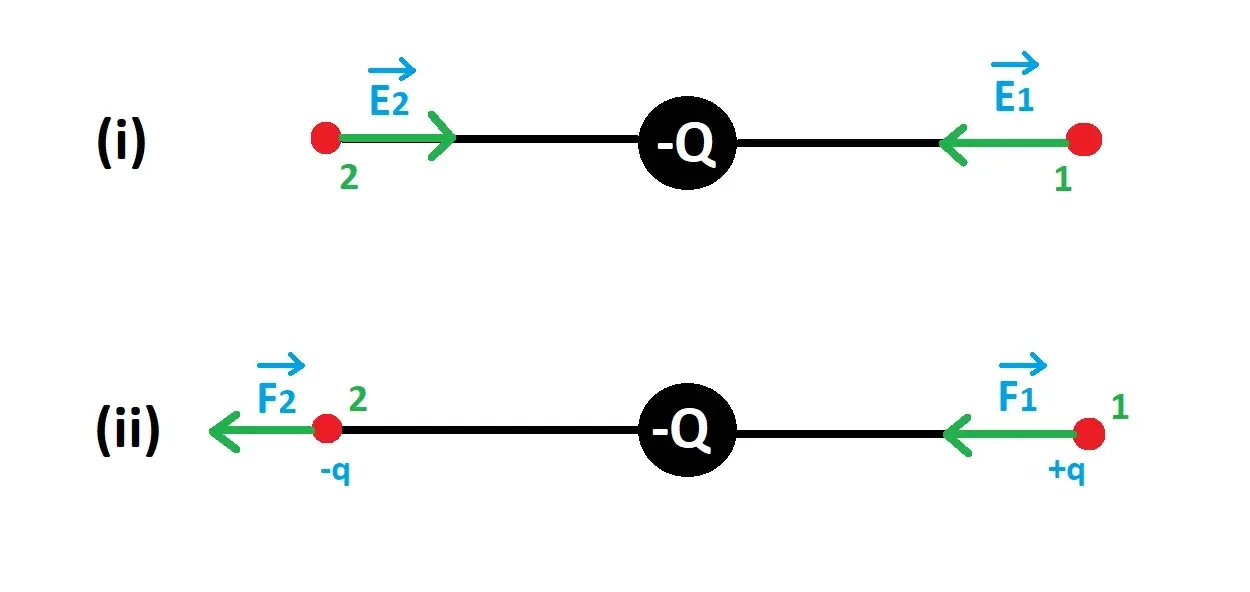
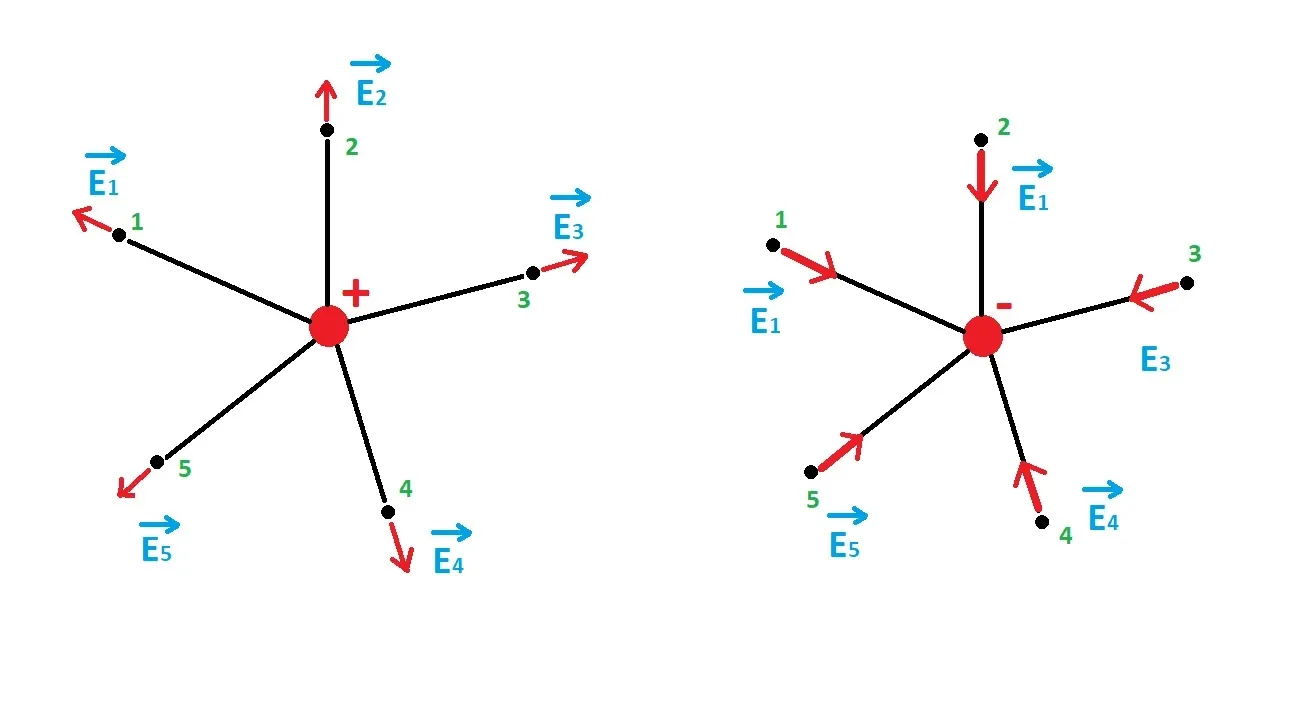
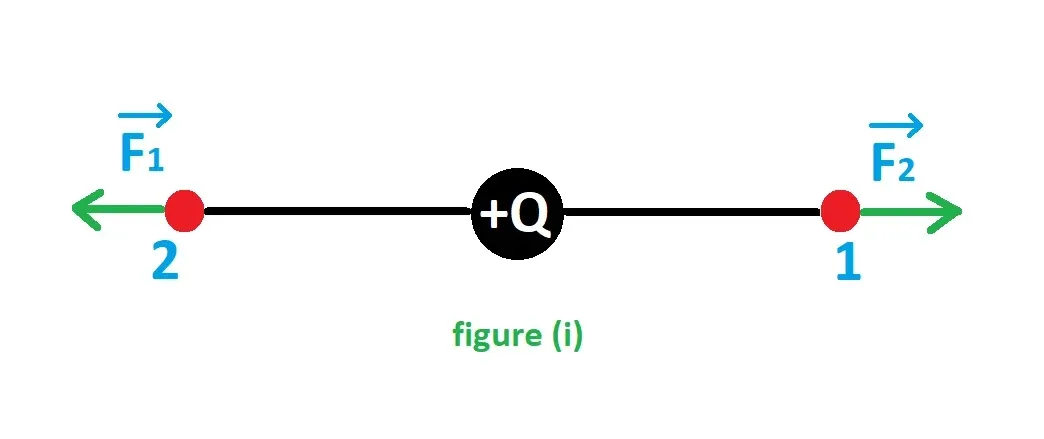
Consider the electric field around a positive charge +Q+Q and E1E_1 and E2E_2 be the intensities of Electric fields at point 1 and 2.

Now put a positive charge +q+q at 1 and negative charge q-q at 2.

Figure II shows direction of forces acting on +q+q and q-q in the electric field of +Q+Q (as per attraction and repulsion).

Direction of forces 2

If we combine both figures, it is clear that F1F_1 on +q+q is in the same direction of E1E_1 while F2F_2 on q-q is in the opposite direction of E2E_2. Similarly for an Electric field due to Q-Q.

Direction of forces 3

Again F1F_1 on +q+q is along E1E_1 at 1 and F2F_2 on q-q is in opposite direction of E2E_2 at 2.

Therefore, a positive charge experiences electrostatic force in an electric field in the same direction of electric field and a negative charge experiences force in electric field in the opposite direction of electric field.
Electric Field Intensity due to a Point Charge

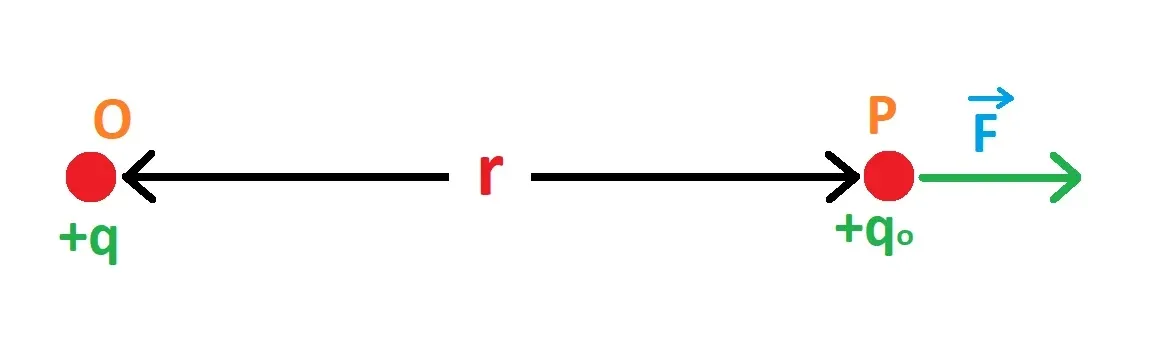
Intensity due to a point charge

Consider a point charge ‘P’ at a distance ‘r’ from a point charge +Q at O, where electric field intensity is required.

Take a test charge +Q0+Q_0 at P.
Electrostatic force on +Q0+Q_0 due to +Q+Q
F=14πϵQQ0r2F = \frac{1}{4\pi\epsilon} \frac{Q Q_0}{r^2}

Electric field intensity at P↴
E=FQ0E = \frac{F}{Q_0}
E=14πϵQr2E = \frac{1}{4\pi\epsilon} \frac{Q}{r^2}

Relation Graphs

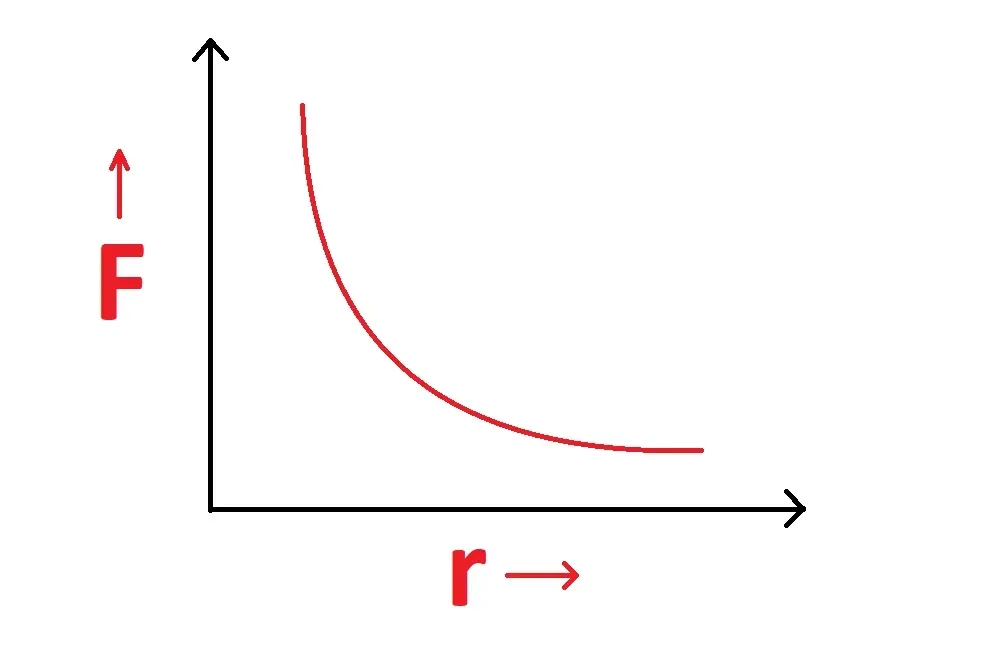
Relation graphs
  • E1/r2E \propto 1/r^2 Intensity of electric field is greater near the charge and decreases as we move away from charge. Or as rr increases, EE decreases.
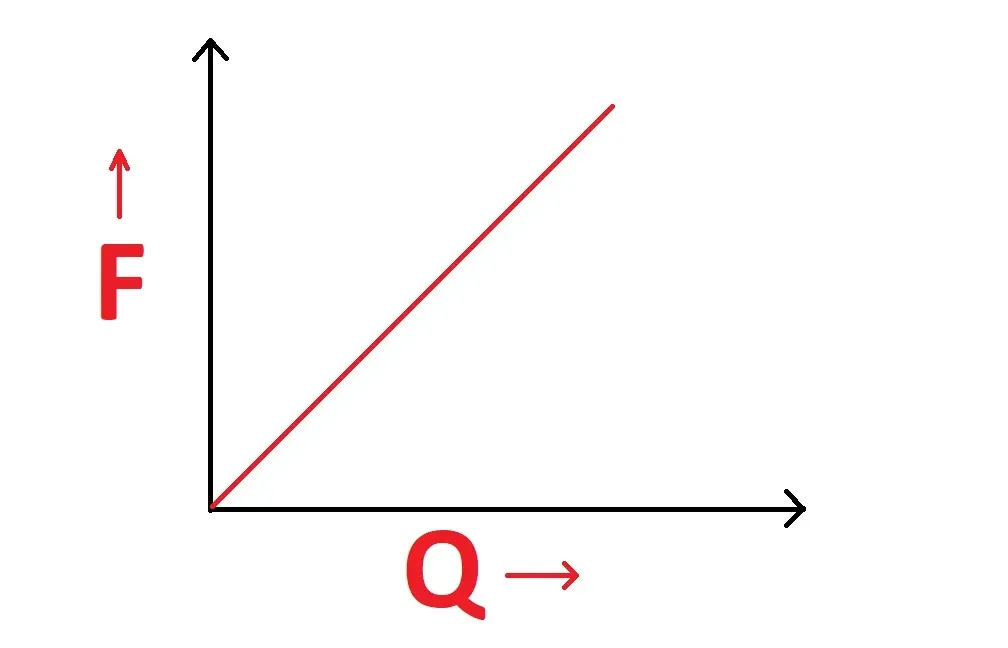
Relation graphs 2
  • EQE \propto Q Electric field intensity at a point in an electric field is greater for a greater charge. Or as QQ increases, EE also increases.
  • For a medium with dielectric constant KK, electric field intensity at a point due to a point charge ⟶ E=14πϵ0KQr2E = \frac{1}{4\pi\epsilon_0 K} \frac{Q}{r^2}

For air or vacuum K=1K=1

E0=14πϵ0Qr2E_0 = \frac{1}{4\pi\epsilon_0} \frac{Q}{r^2}

EE0=1KorK=E0E\frac{E}{E_0} = \frac{1}{K} \quad \text{or} \quad K = \frac{E_0}{E}

Dielectric constant of a medium affects the electric field.

Electric Lines of Forces

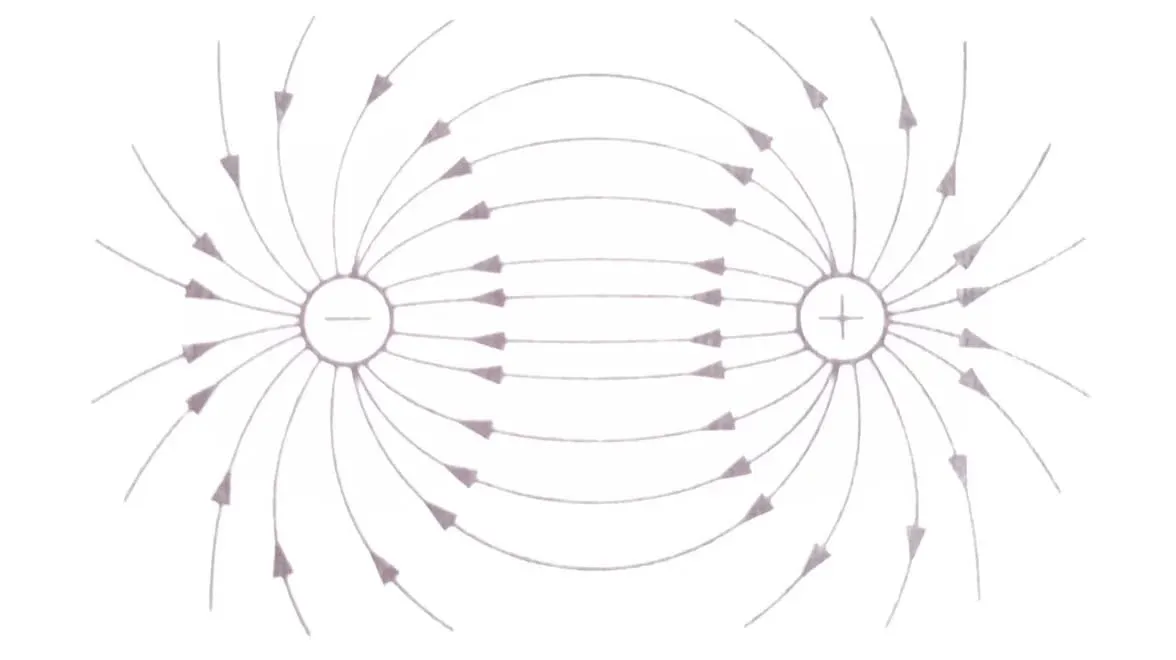
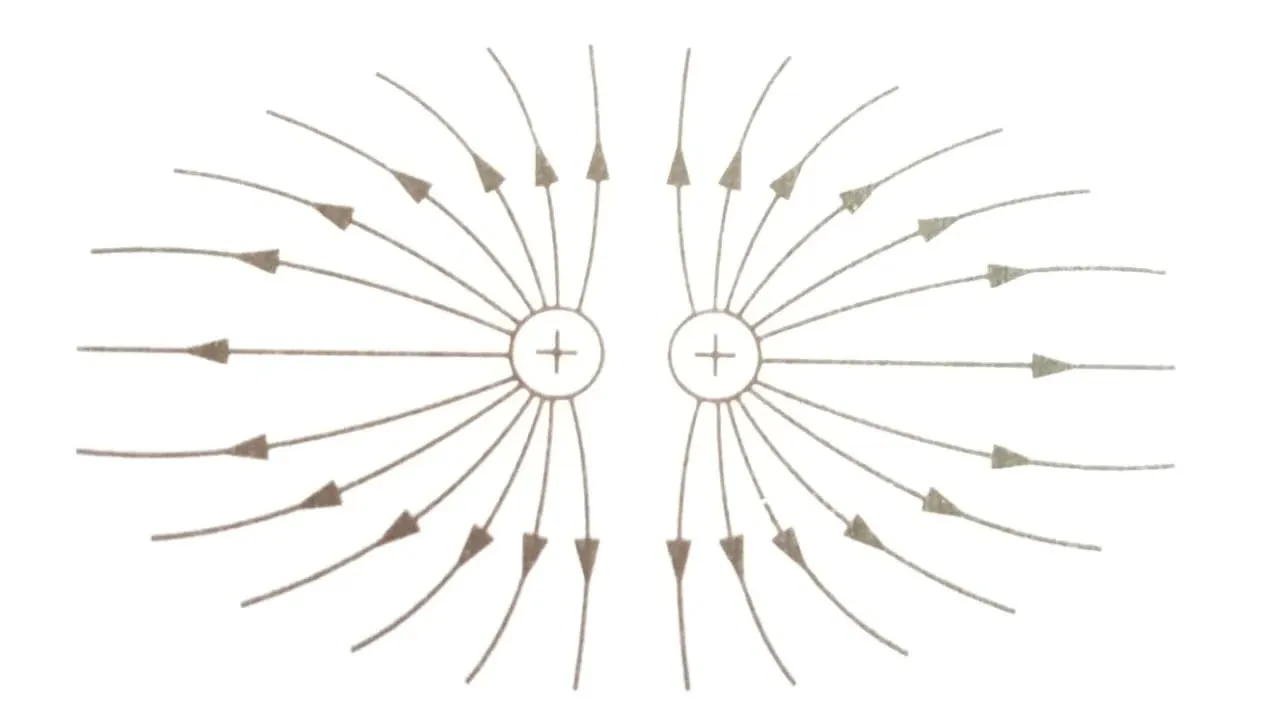
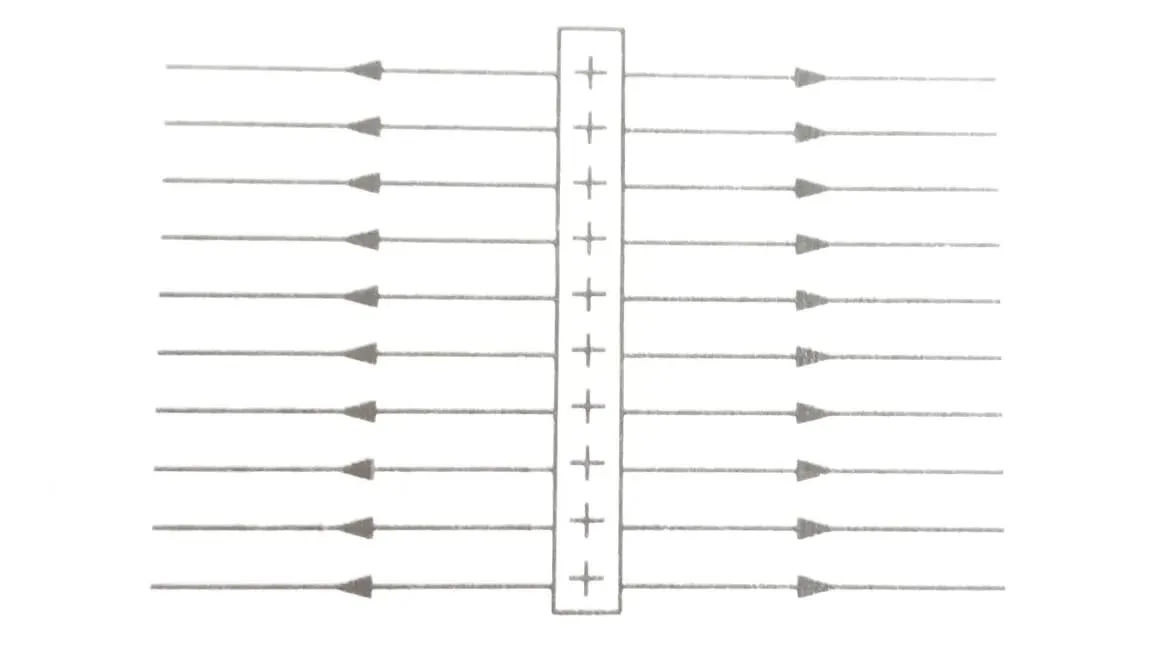
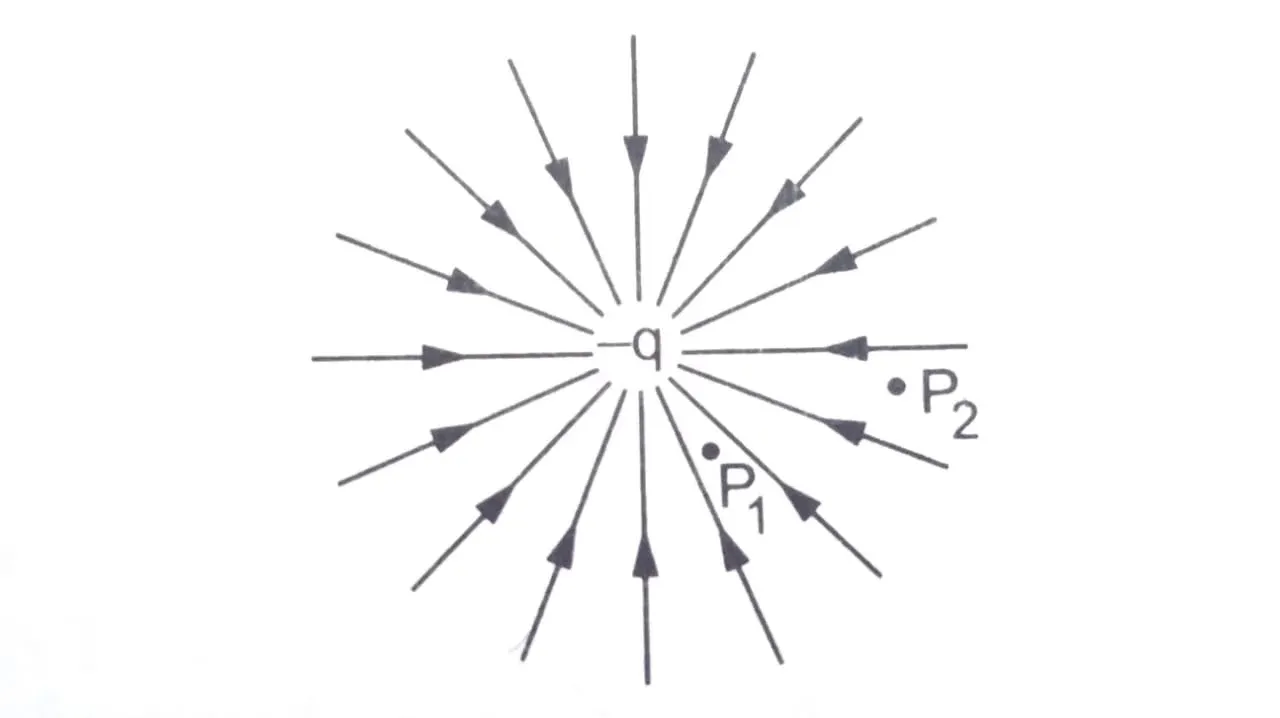
Also known as electric field lines. Electric lines of force are the imaginary smooth curves drawn in an electric field along which a free, isolated, positive charge would move. Electric fields can be easily visualized by electric lines of force.
Pattern of Electric Lines of Forces

Due to a Positive Point Charge

Due to a positive point charge

Due to a Negative Point Charge

Due to a negative point charge

For a pair of Equal and Opposite Charges

For a pair of equal and opposite charges

For a pair of Equal and Like Charges

For a pair of equal and like charges

For a uniform Electric Field

For a uniform electric field

Uniform electric field in a region has the same magnitude and same direction at each point.

Properties of Electric Lines of Force

  • Originate from positive charge and terminate on negative charge.
  • Tangent drawn at any point gives direction of Electric field intensity at that point.
  • Electric lines of force are continuous curves, having no breaks in between.
  • No two Electric lines of force can intersect each other in an electric field.
  • Relative closeness indicates the relative strength of the electric field. It means where these lines are closer or denser, electric field is stronger and where field lines are far or less dense, electric field is weaker.

Principle Of Superposition for Electric Field

Net Electric field intensity at a point due to a number of charges around it is given by the vector sum of all the electric field intensities due to each charge individually.
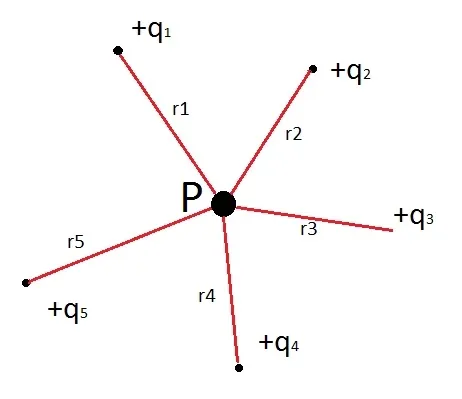
Principle of superposition for electric field

Resultant electric field at ‘P’ is the vector sum of all the electric fields at that point.

Enet=E1+E2+E3+E4+E5E_{\text{net}} = E_1 + E_2 + E_3 + E_4 + E_5
OR
Enet=E1+E2+E_{\text{net}} = E_1 + E_2 + \dots

Shivam
Written by

Shivam

Science Writer • Engineering Student • AI & Machine Learning Enthusiast

Exploring the intersection of science, astronomy, physics, and artificial intelligence through evidence-based educational content.

View Full Author Profile →