Coulomb's Law
A comprehensive guide to Coulomb's Law, explaining the mathematical relationship between electric charges and the forces between them.
A comprehensive guide to Coulomb's Law, explaining the mathematical relationship between electric charges and the forces between them.
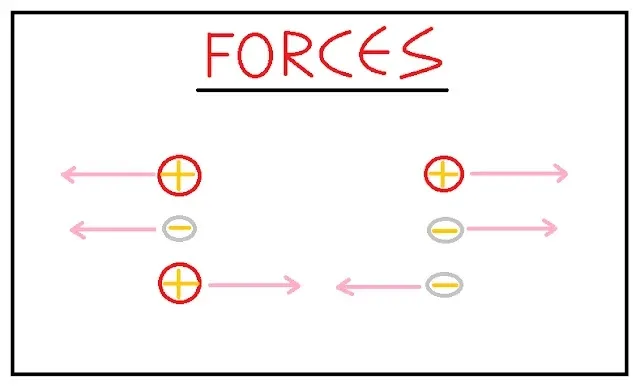
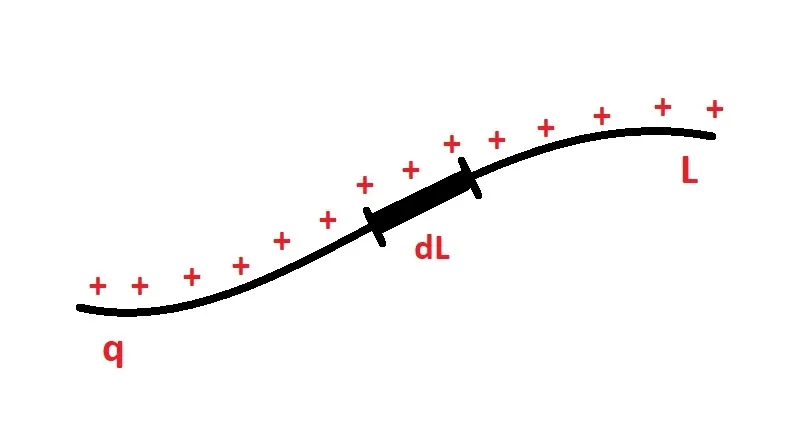
Coulomb’s law helps us to determine the magnitude and direction of an electrostatic force between two point charges. We need to keep in mind that it works only on point charges.
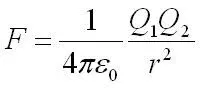
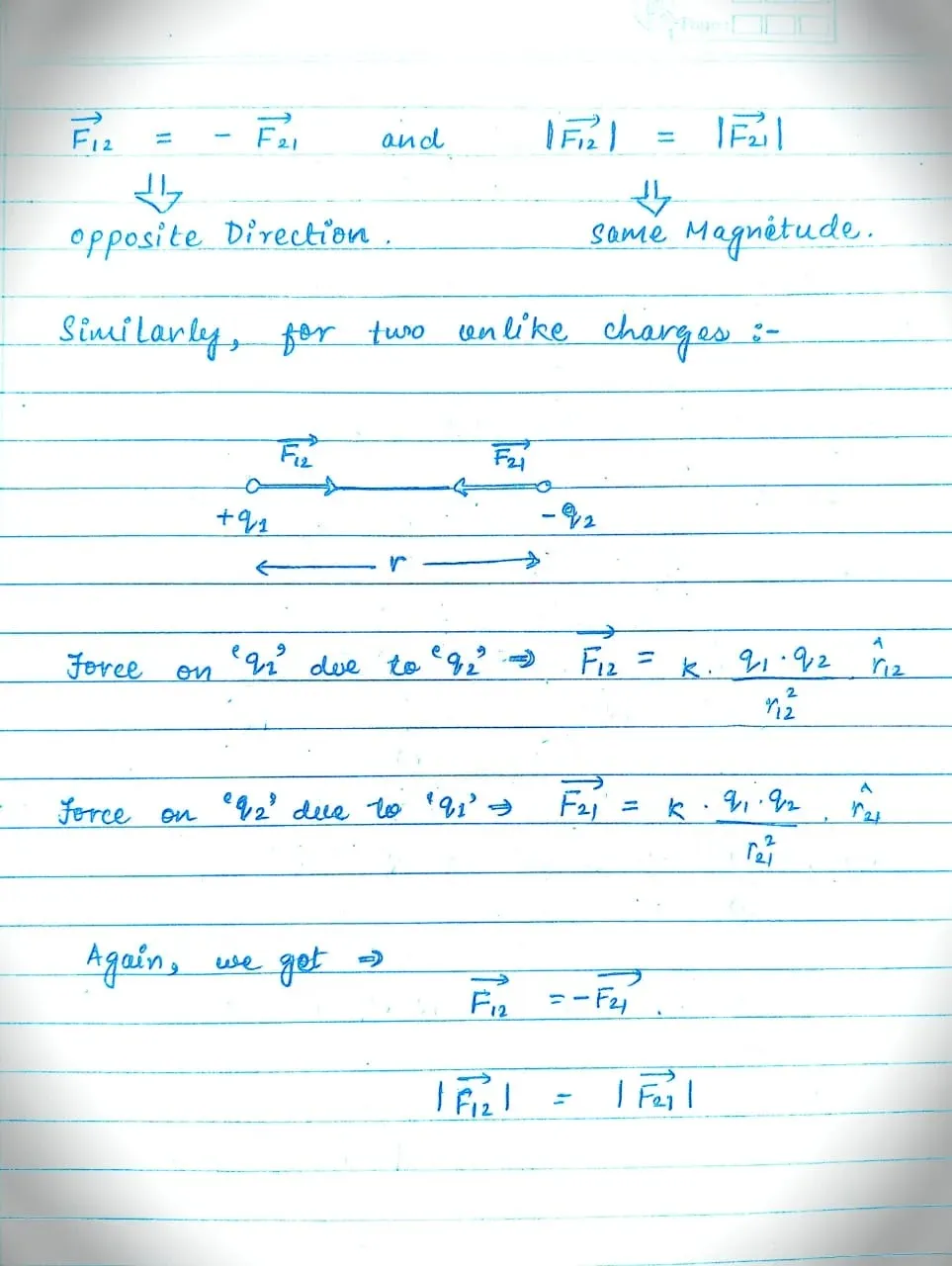
The magnitude of electrostatic force of attraction or repulsion between two point charges is directly proportional to the product of magnitudes of two charges and is inversely proportional to the square of distance between their centers. The force is directed along the line joining the centers of the two charges.
For two charges and at distance
magnitude of electrostatic force will be
and
or
or
where is a proportionality constant whose value depends upon the nature of medium between charges.
value of for air or vacuum is .
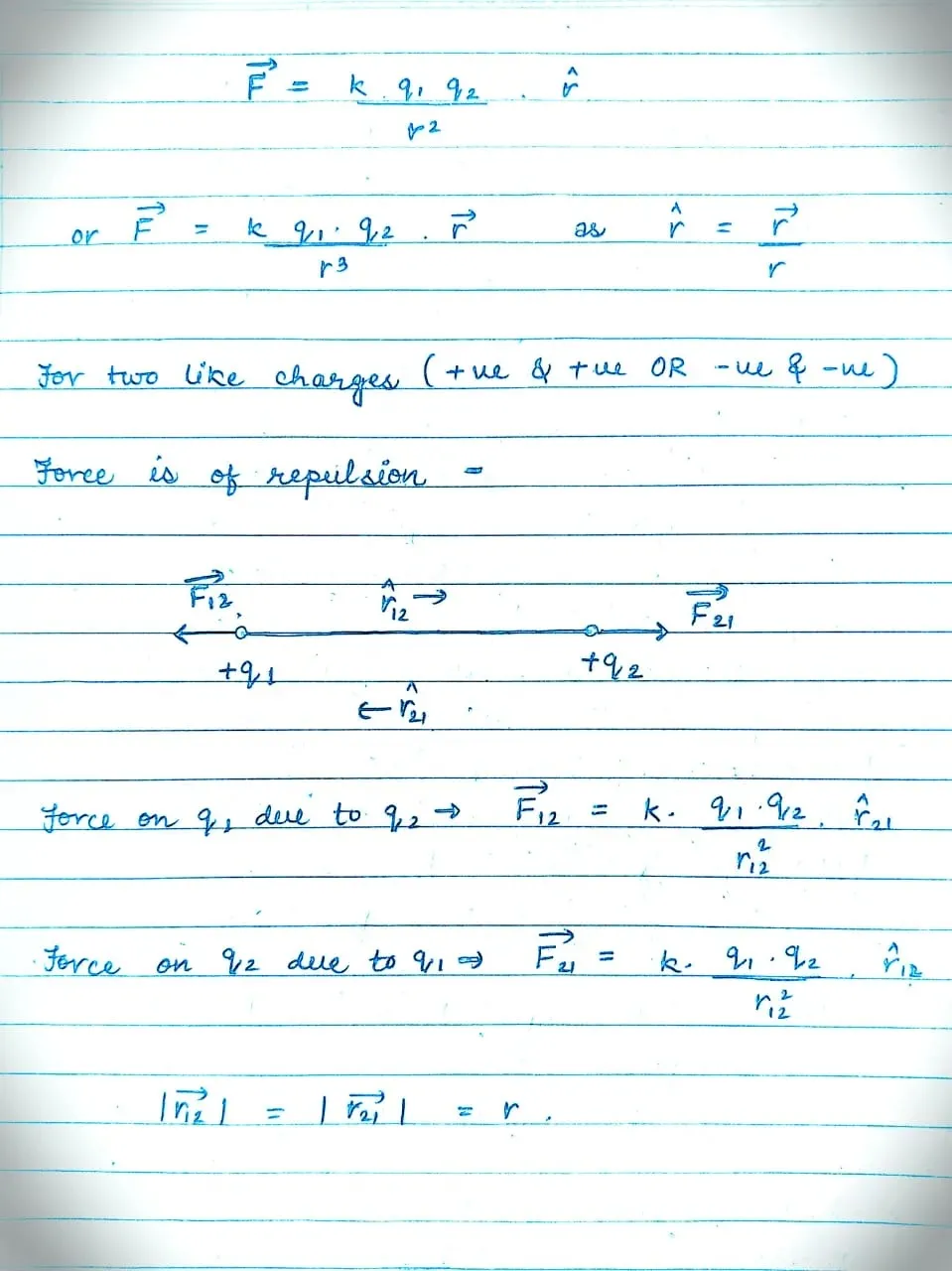
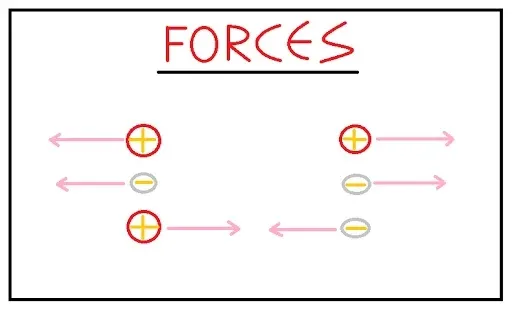
Electrostatic force between two charge is given by
depends on constant ,
depends on the surrounding medium to the charge.
For simplicity we write:
is read as Epsilon Zero.
where is known as Absolute permittivity of free space (air or vacuum).
for any other medium:
where is known as Absolute permittivity of the medium.
Absolute permittivity is the property of a medium and
now force between two charges kept in a medium of permittivity
clearly, .
Therefore, higher the value of , less the electrostatic force between charges.
⤵️⤵️⤵️
Let two charges and are kept in air at distance .
Electrostatic force between them ⟶
When the same two charges are kept at the same distance in a medium of absolute permittivity .
Electrostatic force will be ⟶
Now dividing by
here is a constant and we write or , where is known as relative permittivity of the medium or dielectric constant of that medium.
Therefore, or .
Dielectric constant K is the property of a medium which affects electric field and electrostatic force. Note that dielectric constant K is different from the k used in the formula of Coulomb’s law.
Dielectric constant of a medium is defined as the ratio of the Absolute permittivity of the medium to that of the permittivity of air or vacuum.
Since, dielectric constant is a ratio of similar quantities, it has no unit.
For air or vacuum, . It means , only for air or vacuum.
For water, . And this is the reason why bond strength ionic compound decreases by 81 times when it enters in water.
Absolute permittivity of any medium or is .
Dielectric constant of a medium is defined as the ratio of electrostatic force between two point charges kept in air or vacuum to that between two point charges kept in another medium at the same distance.
Absolute permittivity of any dielectric medium (insulating medium or other than conductors) is greater than that of air or vacuum.
It means,
or
Hence, force between two charges when kept in a dielectric medium decreases. And it decreases by times, the dielectric constant.
also, .
This principle is used to determine the net force on a point charge due to multiple charges in surroundings.
👉 The net electrostatic force experienced by a point charge due to a number of charges around it is the vector sum of all the electrostatic forces acting on it due to all point charges individually.
(do the vector sum).
Value of is .
Dimensional formula for is
Since, 4 and are mathematical numbers, they do not have any specified dimensions. So the actual result will come from
, inverse square relation.
is inversely proportional to .
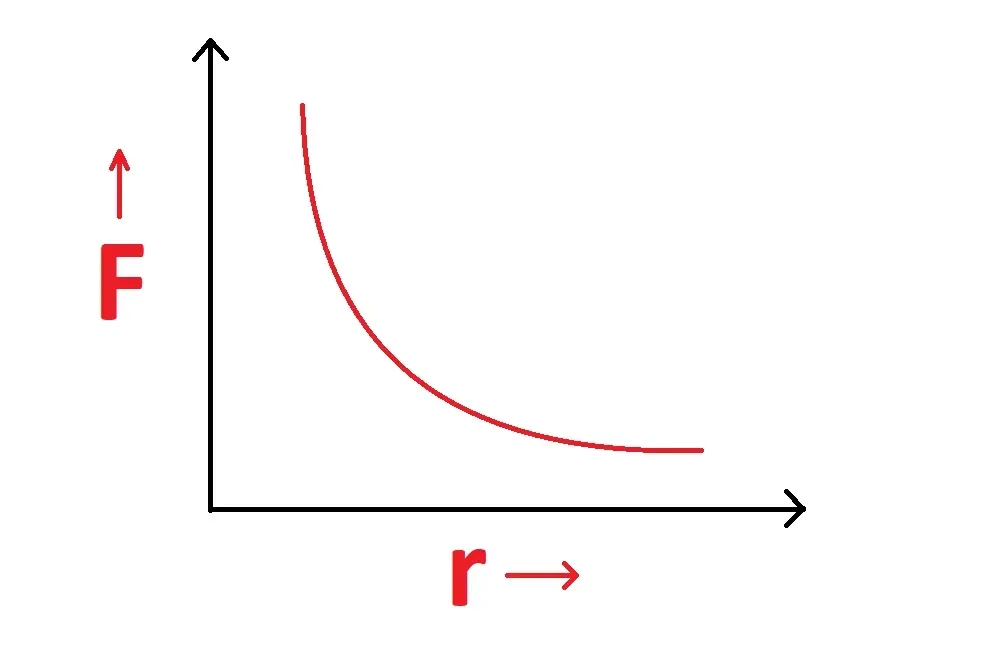
Graph shows “inverse square relation between F and r.”
it is directly proportional, that is why the graph is a straight line.
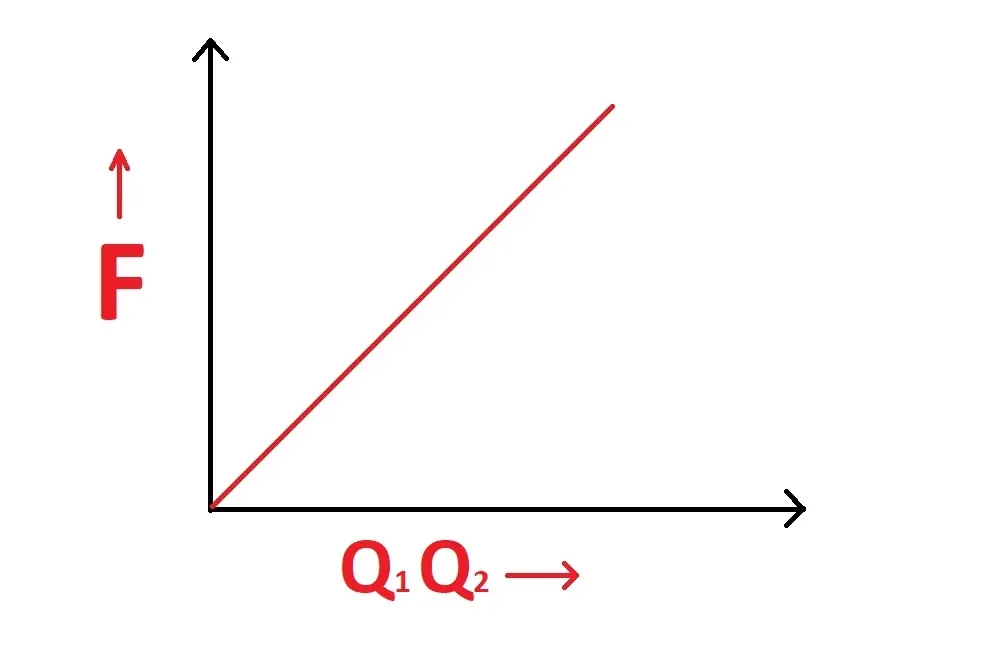
Graph shows “a straight line, showing as increases or decreases also increases or decreases.”
Slope of this graph is :
, is directly proportional to .
So the graph will be a straight line.
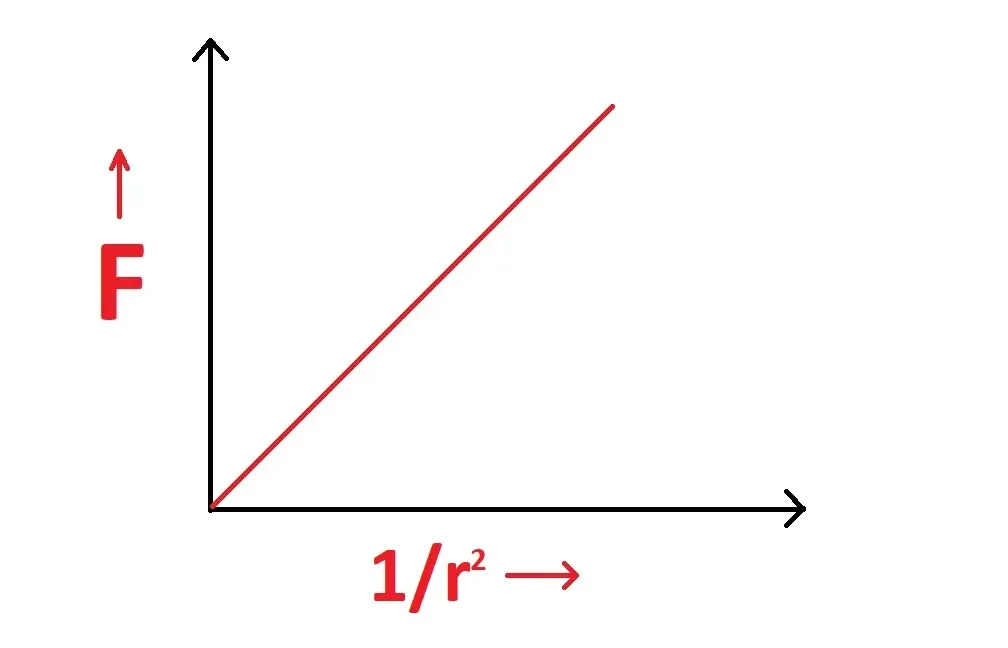
Graph shows ” is directly proportional to , hence the graph is a straight line.”
Slope of this graph is,
This slope depends on and here it is kept constant and therefore the whole ratio becomes a constant, this constant ratio is the slope of this graph. Since the slope is constant, the graph will be a straight line. This is also a way to find whether the graph is a straight line or not.